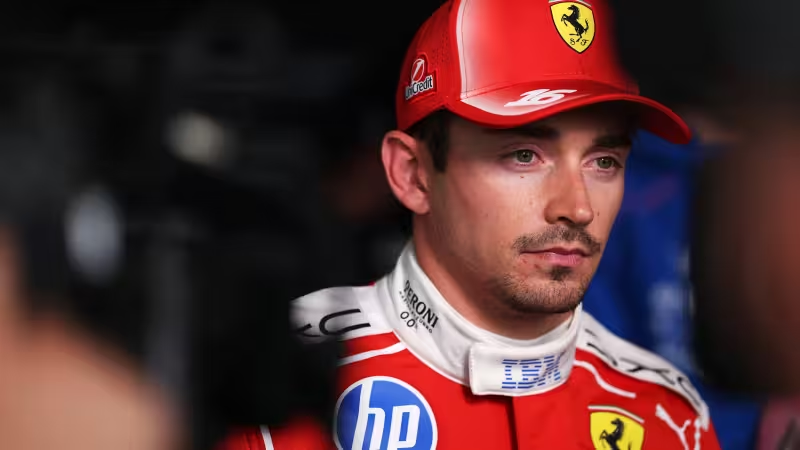
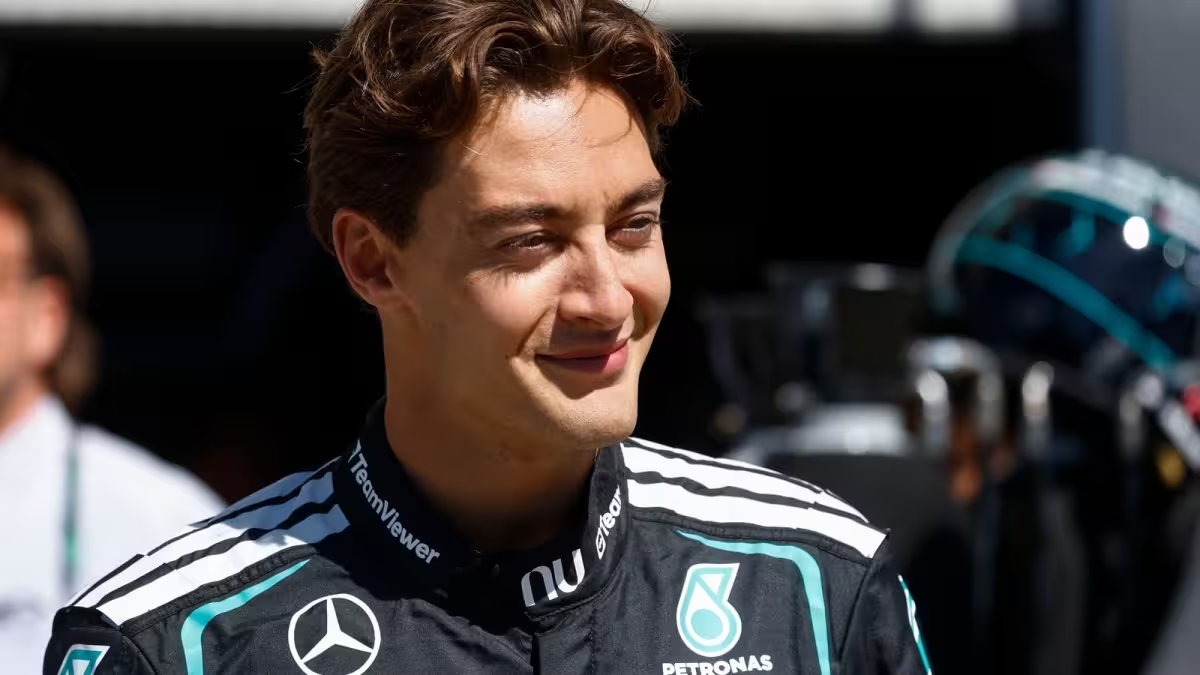
Charles Leclerc said the build-up to the Canadian Grand Prix had been "the worst weekend of my career" after a Saturday in Montreal that left him stranded in P8 for Sunday's race and four tenths off polesitter George Russell.
Leclerc, who had earlier qualified sixth for tomorrow's opening sprint race, told engineers immediately after the sessions that he had "not had one lap since FP1 where I could feel the car." He warned his team and the paddock aloud: "Honestly, it's one, if not the worst weekend of my career."
The numbers made the complaint concrete. Leclerc finished qualifying P8, a gap of four tenths to Russell, and said tyre temperature and brake behaviour were the core problems. "I just felt like I was going to put it into the wall in every single corner I do just because the tyres were completely out of the window today," he said.
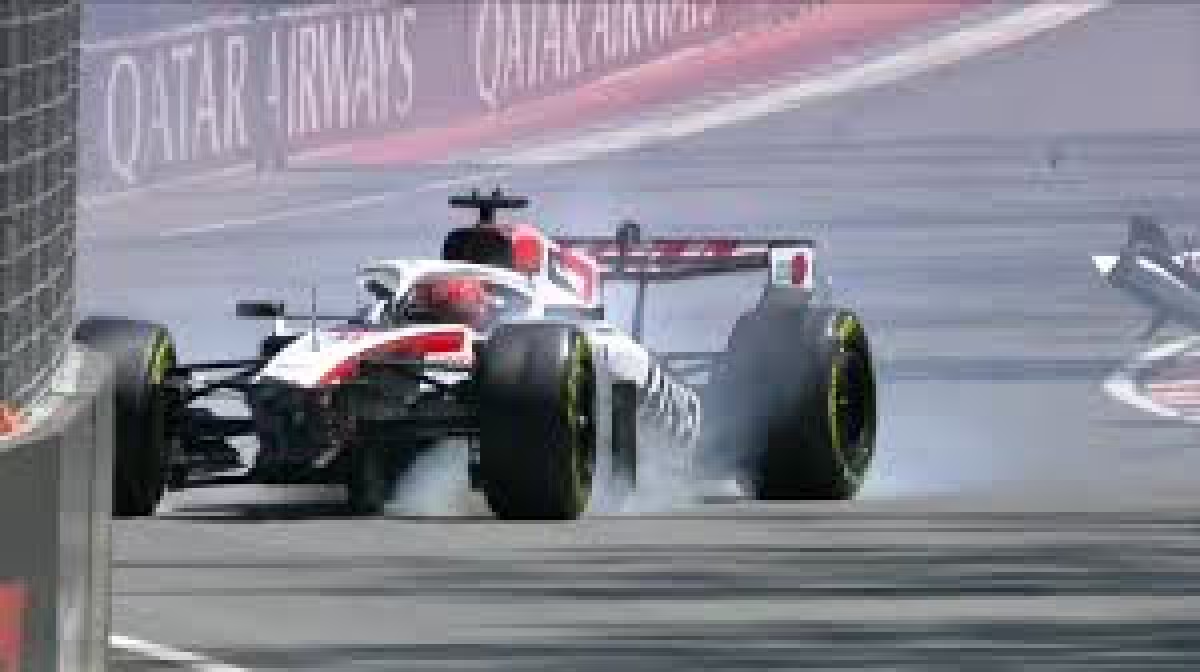
That issue, he added, sat alongside a separate brake problem. "The brakes yesterday that were not in the window as well," Leclerc said. He described being forced into corners hoping not to go straight on: "On the brakes, I get into the corners hoping that I don't end up going straight on, that's the main issue at the moment."
There was more than setup and temperature to the weekend's friction. After sprint qualifying, Leclerc asked his engineer to report rivals for slow cool-down laps in Montreal, saying some of them were "for sure, for sure illegal." The complaint came on the night of 22 May 2026 at 23:31, and the stewards later issued official warnings to Andrea Kimi Antonelli and Lindblad for driving too slowly between the Safety Car lines and failing to allow others to overtake.
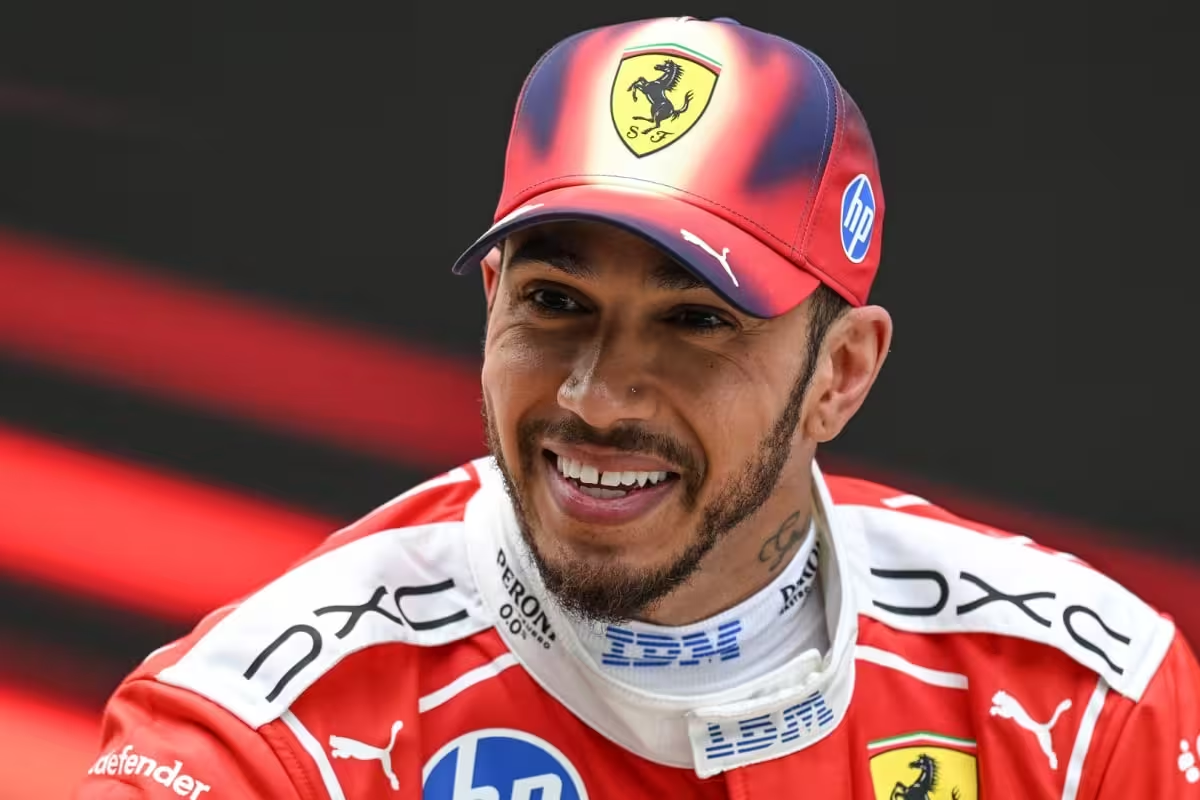
The chase-and-response highlighted a split between raw on-track performance and procedural enforcement. Leclerc singled out Lewis Hamilton as the benchmark he could not match: "But surely Lewis managed to do that throughout Qualifying and I didn't." The stewards' intervention produced warnings rather than penalties, and that limited response amplifies a separate risk Leclerc kept returning to—the brakes.
Leclerc repeatedly returned to the same, basic admission: "I haven't been at all at ease with the car" and "I'm really, really struggling with the brakes on my side of the garage for some reason." He told his team they would "look into everything" or face the consequences: "We need to look into it and try to find something for tomorrow otherwise it's going to be a very long weekend."
The context sharpens what this weekend means. Ferrari's Charles Leclerc has struggled to match Hamilton in Montreal across the sessions, and he arrives at Sunday's Grand Prix third in the Drivers' Championship with two podiums from four Grands Prix. His lowest result so far this season was P8 in Miami; another low finish here would be damaging to both race and title math.
The tension now is straightforward and specific. The stewards have warned Antonelli and Lindblad for slow running, but Leclerc's complaints about tyre warm-up and an asymmetric brake problem on his side of the garage remain unresolved. He used stronger language in the heat of the session—"Guys, what the fuck?" and "This traffic, for fuck’s sake. Come on."—but the practical next step is mechanical. Ferrari must find whatever is causing the brake oddity overnight, because Leclerc warned plainly that without a fix the weekend will only get harder.
For Leclerc, the most consequential fact is also the simplest: he will start the Canadian Grand Prix from P8. If the team cannot restore tyre and brake confidence, a recovery through the field will be the only remedy—and that would leave his championship challenge more precarious than it looked before Montreal.