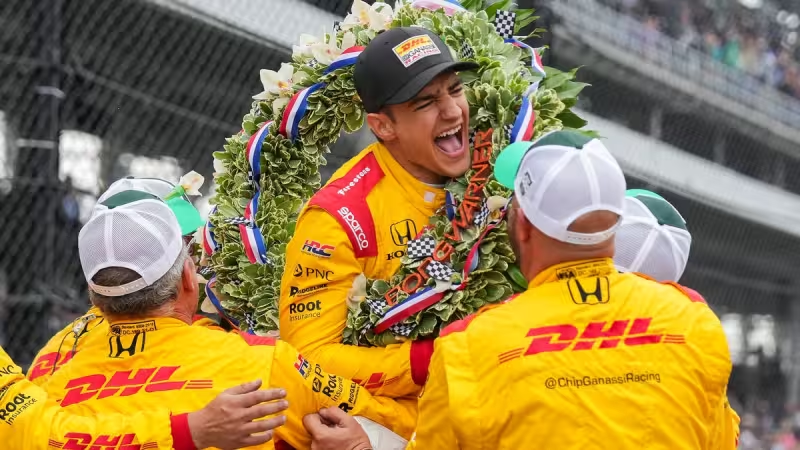
Alex Palou won $3.833 million from a record $20.283 million purse at the 2025 Indianapolis 500.
So how much does the indy 500 winner get in real terms? Palou’s payday — the largest single share paid out in 2025 — was nonetheless down 11% from Josef Newgarden’s record $4.288 million winner’s check in 2024, a figure that included a $440,000 rollover bonus from BorgWarner for repeat victory.
The size of the purse is the clearest measure of the race’s money story. Indianapolis Motor Speedway announced a record $20.283 million in 2025 after a four-year run of rising totals: $16 million in 2022, $17.0215 million in 2023 and $18.456 million in 2024. Those totals are shared across a 33-car field; every driver in the field has taken home a check since 1924, and competitors finishing near the back still typically receive six-figure payouts.
Money flows to drivers in several ways beyond final finishing position: the pole winner collects a large bonus, drivers earn for laps led, and organizers distribute qualifying bonuses, sponsorship incentives and additional awards throughout the month of May at Indianapolis Motor Speedway. Taken together, those programs mean the headline winner’s figure can rise sharply depending on how bonuses are applied.
That structure matters because the costs to compete dwarf many payouts. Fielding an entry costs at least $1 million for an established team and about $2 million for a start-from-scratch effort. Drivers and smaller teams long ago learned there is no guarantee a race check produces a net gain; Conor Daly warned in 2018 that “That’s something you start to think about,” meaning the math of expenses and payouts often forces drivers to chase top results to break even.
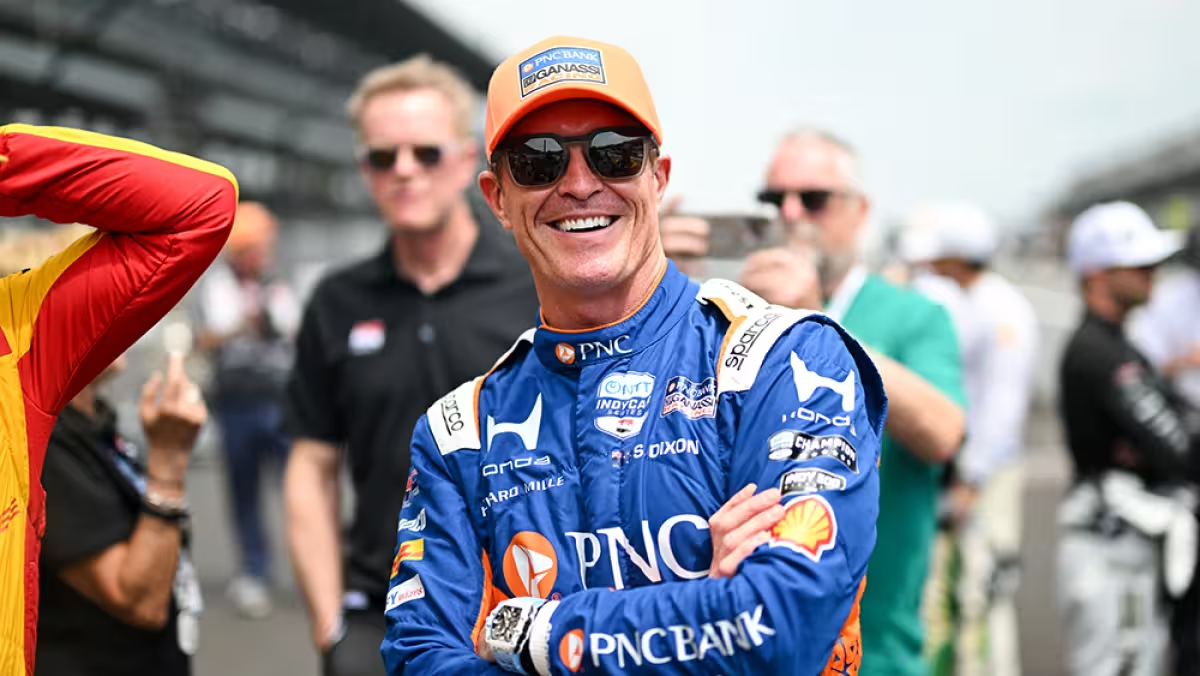
The immediate tension in the payouts is visible in the numbers: the sport set new purse records each year even as the winner’s take fluctuated. Marcus Ericsson earned $3.1 million in 2022, Helio Castroneves set a record at $3.048 million back in 2009, Josef Newgarden hit $4.288 million in 2024 thanks in part to the BorgWarner rollover, and then Palou’s 2025 share fell to $3.833 million despite the largest-ever total purse.
Why that can happen is simple and decisive: bonuses change the distribution. A large rollover or sponsor incentive to one driver can lift a particular winner’s check well above the base amount distributed for finishing position. That same system means organizers can advertise a headline purse while still shaping who takes the biggest slices.
Attendance and atmosphere amplify the stakes. Indianapolis Motor Speedway routinely draws more than 300,000 fans on race day, and the commercial ecosystem — sponsors, broadcasters and sanctioning fees — is the source of the increasing purses. For drivers and teams, however, a big crowd does not erase the headline reality that expenses often eat a large portion of winnings.
Looking ahead, the next winner is expected to collect well over $4 million in the 2026 edition of the Indy 500 once bonuses are included. That projection incorporates prize money tied to finishing position plus qualifying bonuses, sponsorship incentives and additional awards distributed during May. The practical consequence is plain: bonuses and incentive programs, not base finishing pay alone, will decide whether winners cross meaningful thresholds — and whether smaller teams ever turn a real profit from the month.
Palou’s $3.833 million will go down in the record books as the 2025 headline, but the clearest takeaway for teams and drivers is that the final tally is negotiable — a product of race-week bonuses and sponsor deals as much as of the checkered flag itself.