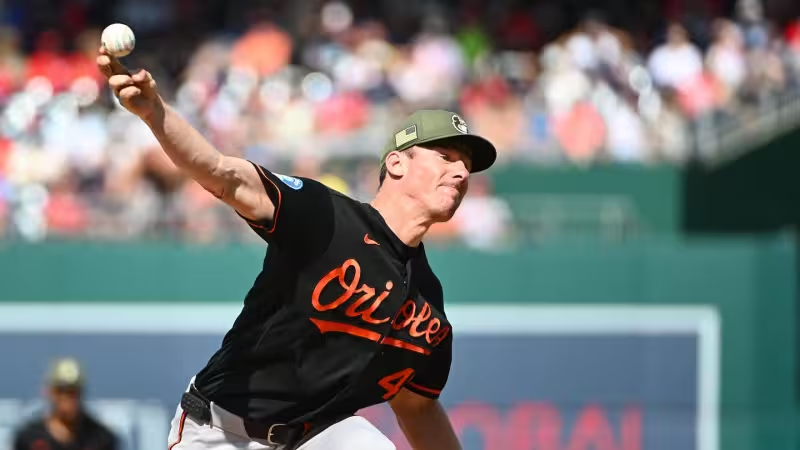
A year after the Baltimore Orioles fired Brandon Hyde following a 4-3 loss to the Washington Nationals, the club finds itself staring at many of the same problems that triggered that decision.
As of today the Orioles sit at 20-26 and carry the worst run differential in all of baseball. Yesterday they were blown out by the Washington Nationals, a striking turn given how the Nationals rebuilt in the offseason — trading away their best pitcher in anticipation of being one of the worst teams in the league.
The numbers matter. The 4-3 loss that led to Hyde’s dismissal dropped the Orioles to 15-28 exactly a year ago. Today they are two games better in the loss column than they were then, but only marginally better in results, and they remain just 1.5 games out of a playoff spot.
Mike Elias spoke publicly a few days after the Hyde firing and framed the problem plainly: "Our starting pitching staff has been a huge problem, and I put that on myself and the front office in terms of roster construction." That admission sits at the center of the team’s current moment: the on-field failures are tied, in Elias’s own words, to how the roster was built.

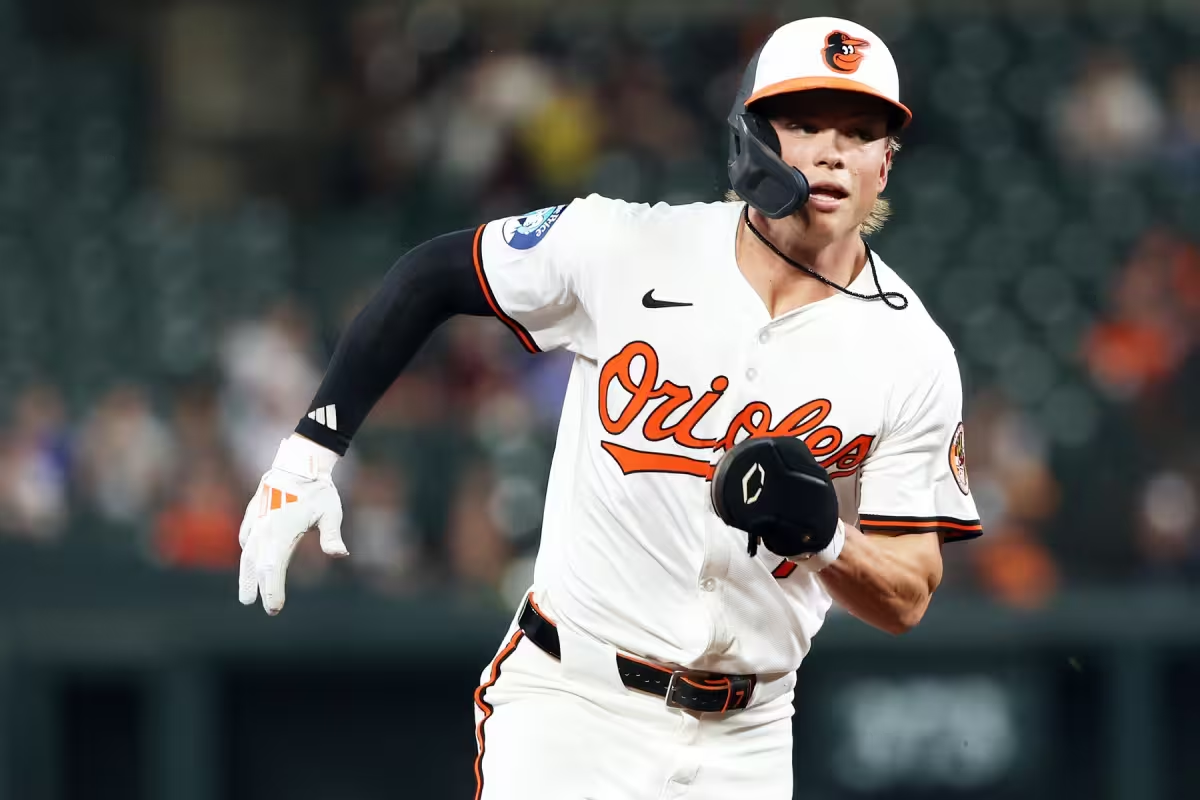
Context sharpens the choice the organization faces. The franchise removed its manager a year ago when it believed a change was necessary to stop a slide that began with that 4-3 loss and a 15-28 mark. Management then placed the diagnosis on the starting staff and roster construction. Today’s standing — 20-26 and baseball’s worst run differential — suggests that the underlying problem Elias identified has not been fixed.
The tension is obvious on its face. The Orioles are being routed by a Nationals team that spent the offseason shedding top pitching. That makes yesterday’s blowout harder to explain as merely bad luck or managerial failure. If a club that traded away its best pitcher can hand the Orioles a lopsided defeat, the fault lines point back toward roster depth and starting rotation performance — the precise areas Elias said were his responsibility.
There is also a narrower competitive paradox. Despite the run differential and the blowout, the American League is weak enough that Baltimore remains 1.5 games out of a playoff spot. That reality has preserved hope in a way last year’s clubhouse could not, but it also raises the stakes: time and margin for error are limited, and wins do not erase structural weaknesses.
What happens next is the question the front office must answer. The simplest reading of the past year is this: the Orioles’ on-field slide is less about who is in the dugout and more about who is on the mound and why they are there — a point Elias conceded by assigning blame to roster construction. If that diagnosis is accurate, the front office will be judged on its ability to fix starting pitching, not by managerial changes alone.
Mike Elias owns that framing. A year after Brandon Hyde was fired, the organization’s immediate fate hinges on whether Elias can translate his admission into roster moves that stop the bleed in runs allowed. On a day that marks a managerial turning point in the club’s recent history, the test is no longer theory: it is measurable, clear and urgent — reduce the runs against, and the team’s 20-26 ledger and worst-in-baseball run differential will begin to mean something different.