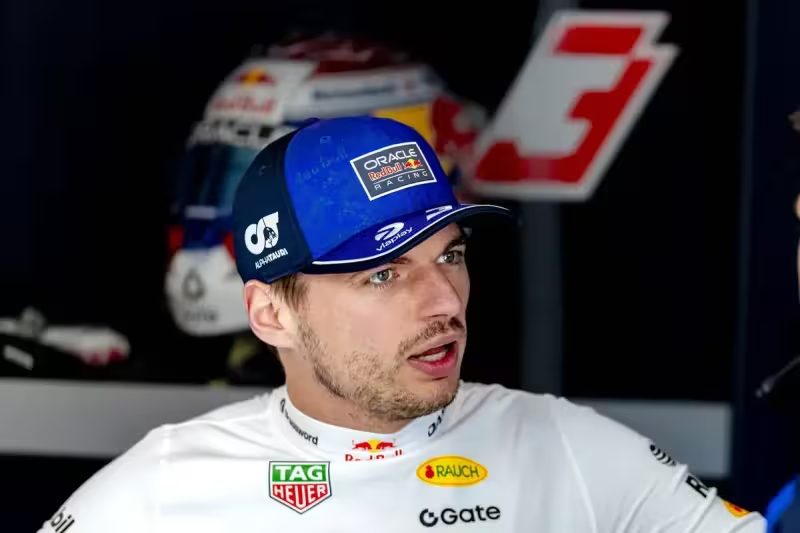
Max Verstappen publicly hit back at Juan Pablo Montoya on Sunday after weeks of criticism from the former Formula 1 driver about Verstappen’s comments and performances under the sport’s new 2026 regulations.
Verstappen spoke to Dutch outlet Telegraaf and questioned Montoya’s commentary and his presence in the F1 paddock, rejecting the criticism of drivers who have been vocal about rule changes this year.
The exchange has its roots in widespread unhappiness among drivers over sweeping 2026 changes — including power units that draw roughly 50% of their output from electrical battery power and active aerodynamic systems branded Straight Mode and Overtake Mode. Verstappen has been blunt about the effect on the racing: he called the new format “playing Mario Kart,” said it was “not fun at all,” added, “You are boosting past, then you run out of battery the next straight, they boost past you again,” and concluded, “For me, it’s just a joke.”
Montoya levelled his criticism on the ’s Chequered Flag podcast alongside Harry Benjamin and Damon Hill, saying drivers must show deference to the sport. “You’ve got to respect the sport,” he said, and added, “I’m OK with you not liking the regulations, but the way you were speaking about what you’re living off and your own sport, you should be… There should be consequences for that.” He went further in hypothetical punishment: “Park him. Add seven points to the licence, eight points to the licence.”
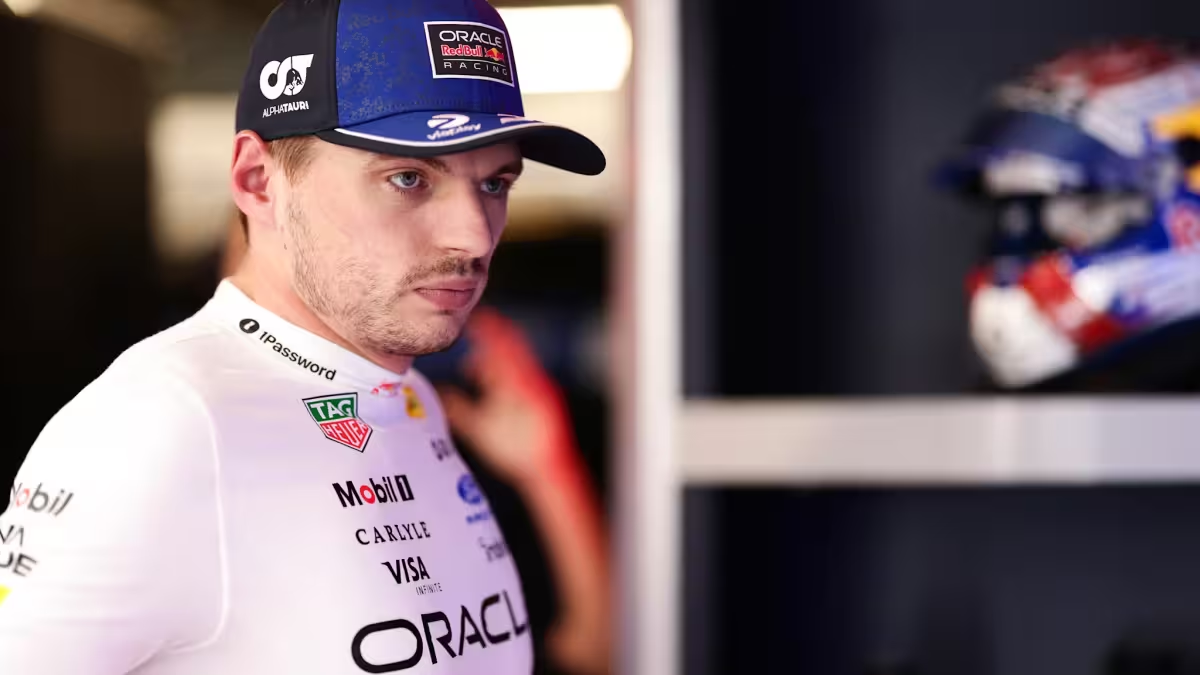
The spat sharpened after the Miami Grand Prix, where Verstappen spun 360 degrees on the opening lap, recovered to finish fifth and later received a five-second penalty for crossing the white line at the pit exit during a safety car period. Montoya questioned the quality of that performance, calling the recovery luck rather than skill and being dismissive of the pit-lane incident — a line of attack Verstappen addressed directly in his Telegraaf interview.
Context matters: this row is one symptom of how contentious the 2026 rule changes have become inside the paddock. The FIA’s super licence system also frames the stakes — under current rules a driver who accumulates 12 penalty points on their super licence within 12 months receives an automatic race ban — a threshold Montoya’s suggested seven or eight points would not itself trigger but would move a driver toward.
The tension in this story is obvious. Montoya demanded punitive action for public criticism of the sport even as many drivers voice frustration about the new technical package. Verstappen’s rebuttal questioned Montoya’s role in the paddock and defended drivers who complain about regulations that have changed how races unfold.
What happens next is clear: the debate over the 2026 regulations will not be settled in soundbites. The immediate consequence is reputational — Montoya has reignited scrutiny of how former champions comment on current drivers, while Verstappen’s public pushback signals he will not accept consequences for speaking out. The larger consequence is procedural: with the super licence points system in place, any stewarding, points or formal action would need to follow existing FIA rules rather than rhetoric.
The row leaves one person squarely at the center of the argument: juan pablo montoya’s vocal call for penalties has forced the paddock to choose whether dissent about the 2026 package is a punishable breach of respect or part of an intense season of adaptation and debate.