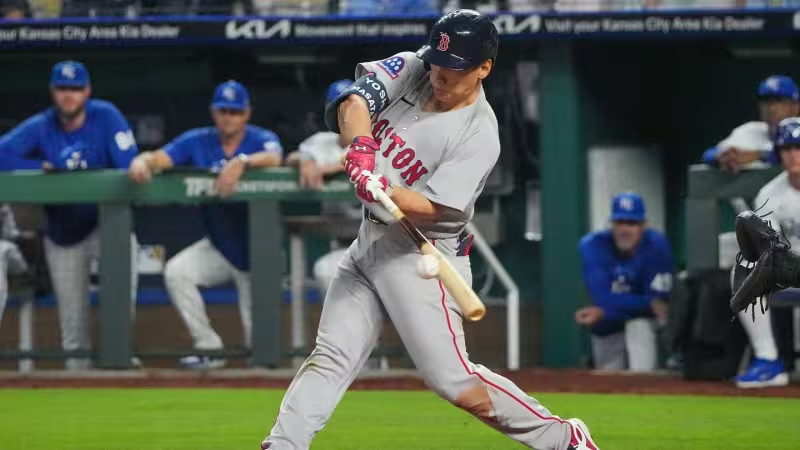
Masataka Yoshida, the Boston Red Sox designated hitter, has produced a 100 wRC+ and a 0.0 fWAR through just shy of 100 plate appearances this season.
The numbers that define the month do not read like a collapse. Yoshida is drawing walks more often than he is striking out; he has struck out three fewer times than he's walked and carries a.356 on-base percentage. He has made consistent contact, he has a.284 BABIP, and yet he has not barreled a ball this year — an unusual stat line for a major league regular. Yoshida summed up the stretch in one word: "difficult."
Put plainly, the box score suggests league-average production while the underlying picture is split. A 100 wRC+ is exactly average offense; a 0.0 fWAR registers no value above a replacement-level player. The counting and rate stats that make a lineup move — walks, contact, low chase rates — are there, but the batted-ball profile that turns those skills into clear wins for the club is missing.
That contrast matters in a season that has felt frustrating for the Red Sox. Yoshida is 32 years old and built as a contact-oriented hitter whose value comes from patience at the plate rather than raw pop. Those traits have been visible this year: fewer strikeouts, a willingness to take close pitches, and a steady on-base skill set. Earlier in the year he could not buy a hit even when the peripherals looked promising; now the peripherals and results have collided in a way that leaves his overall value neutral.


The tension in Yoshida's profile is simple to state and hard to resolve. Plate discipline and contact typically translate into positive value; here they coexist with a complete absence of barreled balls and a BABIP (.284) that has not translated into consistent, game-changing hits. The result is an odd ledger: patience without punch, contact without authority, and a season that lands precisely at replacement value.
For Boston, the immediate consequence is strategic and roster-minded. A designated hitter who keeps getting on base but cannot lift his offensive impact above average forces choices about lineup construction and how much managerial patience to extend. For Yoshida personally, being 32 amplifies the stakes; a hitter whose profile is grounded in contact and discipline does not have the same runway as a developing prospect to rework swing mechanics or waiting for a power spike.
This is not a story about a sudden decline so much as a stalled conversion. Yoshida’s discipline has kept him out of damaging counts and minimized strikeouts, but without barreled contact the on-base work does not translate into extra runs. The season shows how specific skill sets can be both stabilizing and limiting: they keep a player useful and yet can also cap his ceiling when one dimension — hard contact — is absent.
The single most consequential unanswered question is whether Yoshida can turn his clear contact and plate-discipline strengths into batted-ball authority that lifts him above neutral value for the Red Sox. If he does, the team gets a steady on-base performer with upside; if he does not, his season will remain a tidy, patient ledger that ultimately reads as exactly average.