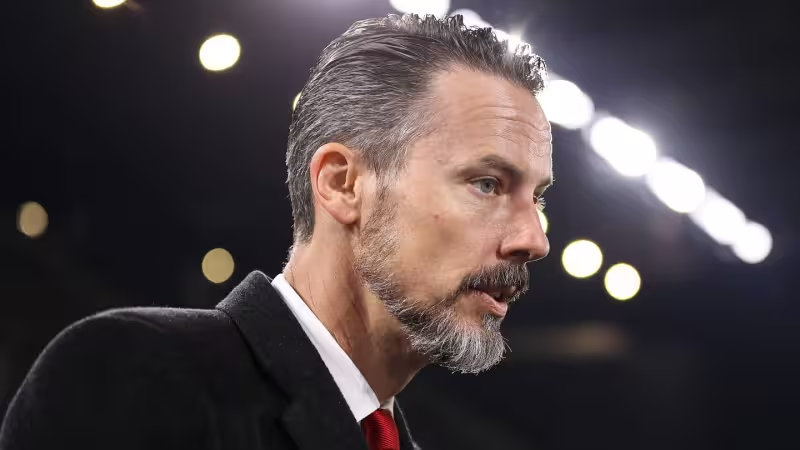
Josh Kroenke told reporters this week that "everything has to be on the table, including running it back," framing continuity as a live option for the Denver Nuggets as they enter the 2026 offseason.
Kroenke said the healthy version of this group could have been much better than the 54-28 finish and third place in the West the team posted in the 2025-26 season. "I thought that if this group was healthy that this could be a 60-65 win team, but we never got a chance to fully show it," he said, and added bluntly: "If we deem running it back the most competitive thing we can do for the roster, that’s probably what we’re going to be doing."
Still, Kroenke cautioned that "When I say running it back, you’re talking about a lot of different variations of what ‘running it back’ could look like" and stressed roster fluidity: "Is it gonna be the exact same team? I don’t think there’s ever the exact same team of the 13 to 16 guys in there." He repeated the organization’s general posture toward spending, saying of his family’s ownership that "we love to pay for talent on the floor" and that they have "run it aggressively as we can at different points in time."
The nuance matters. Bennett Durando of The Denver Post noted that "running it back" does not necessarily mean bringing back every rotation player, and several league sources told The Denver Post they expect the Nuggets to trade one of their starters this summer. Those sources mentioned Cameron Johnson or Christian Braun as potential trade pieces and said trade chatter would grow if Denver re-signs Peyton Watson.
Kroenke acknowledged those trade levers implicitly by insisting the front office must consider all options. "Everything has to be on the table, including running it back," he said again. He also appealed to roster cohesion: "We need some stability," he said, and complained that he was "annoyed that there were so many people trying to fracture the group." "The only guys you can trust are the ones in the room with you. That's all I know," Kroenke added.
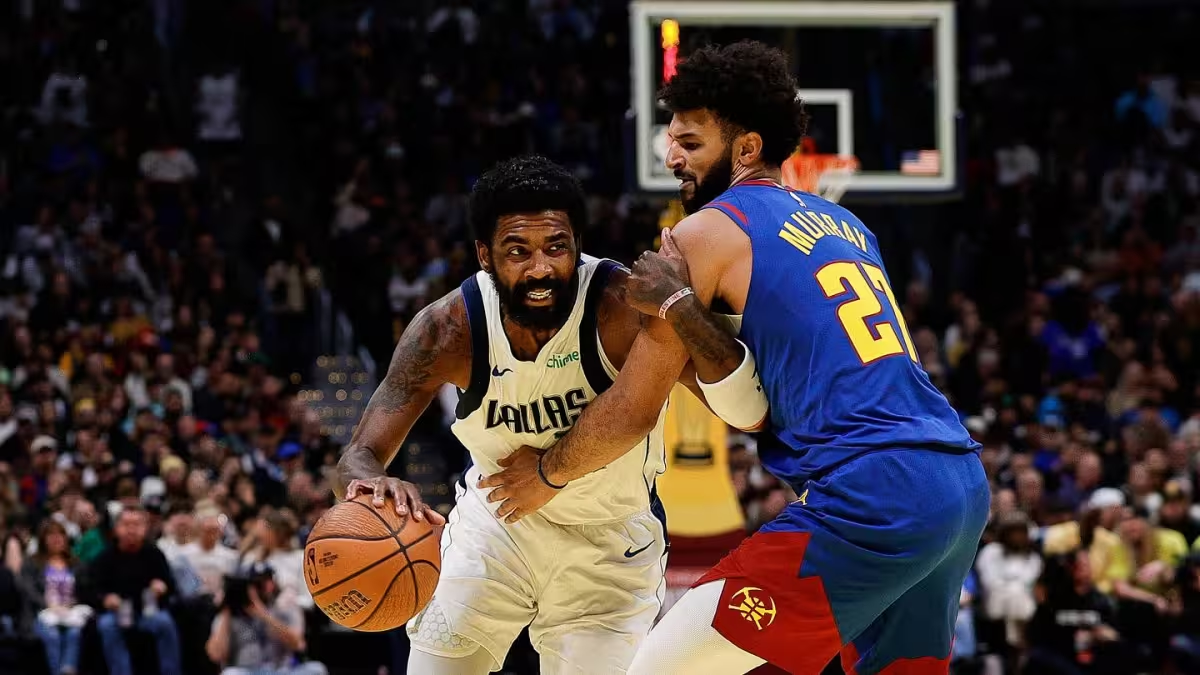
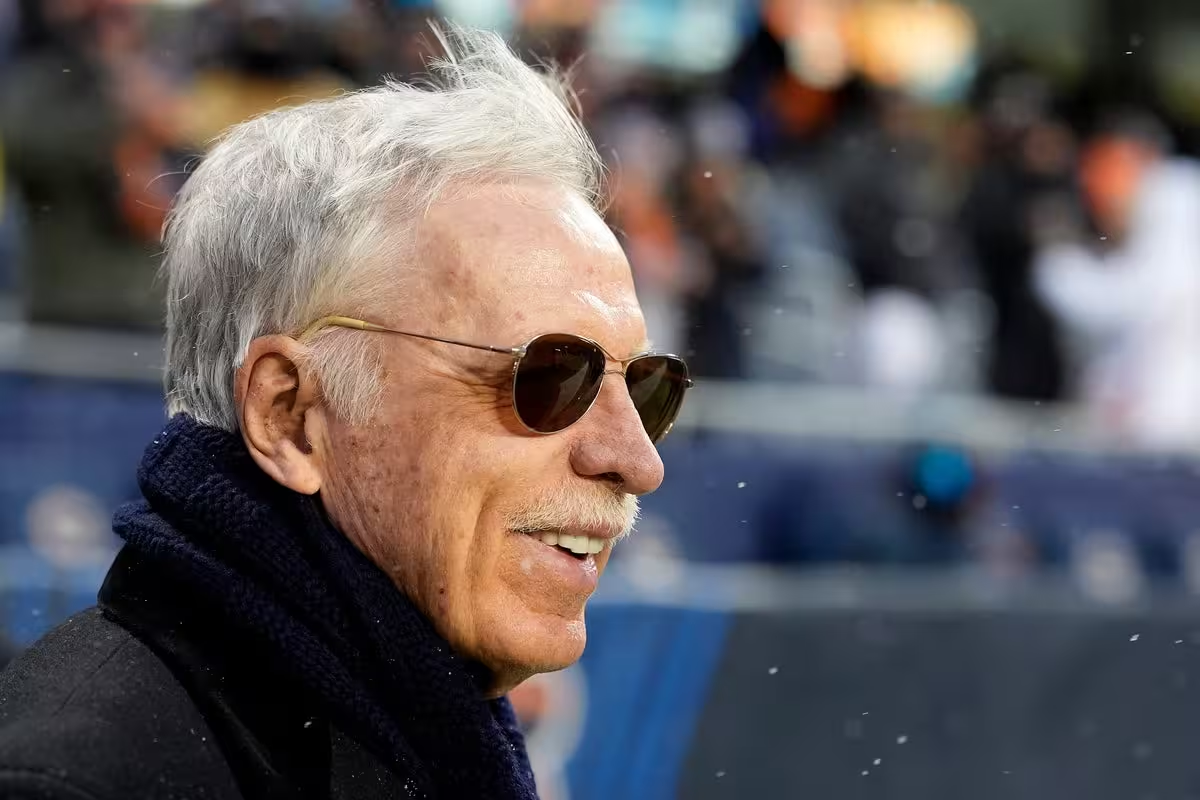
The stakes behind that language are both competitive and financial. The Nuggets, viewed during 2025-26 as one of the league’s most injured teams, exited the playoffs in the first round. Keeping the core — most commonly defined as Nikola Jokic, Jamal Murray and Aaron Gordon by Durando and other observers — could preserve championship continuity, but it also risks deep luxury-tax exposure. The club already projects to operate well into tax territory even without a new deal for Peyton Watson; avoiding a second straight year in the tax in 2026/27 would reset the repeater clock and limit punitive penalties.
That tension — between the competitive logic of continuity and the financial logic of trimming payroll — is why outside voices are weighing in. Paul Pierce, speaking about Denver’s options, said: "If I’m the general manager of the Denver Nuggets, I think I would evaluate them when the season comes because they missed some key pieces." He added that "Aaron Gordon was dealing with injuries. Peyton Watson didn’t play.... So I’ll play it out again. Run it back. I have the best player in the world. I have great role players.... But I would not make any moves if I was Denver."
And yet league whispers about trading a starter persist. If Denver moves a rotation piece such as Johnson or Braun — or if it invests to keep Watson and therefore increases payroll — the roster the Nuggets "run back" could look materially different from the one that finished 54-28 this spring. Kroenke himself acknowledged that reality: "When I say running it back, you’re talking about a lot of different variations," he said, and insisted the organization will choose the route it believes gives the team the best chance to win.
The single question now shaping Denver’s summer is clear: will the front office preserve the Jokic-Murray-Gordon core and accept the tax consequences, or will it alter that core by trading a starter (with names like Cameron Johnson or Christian Braun floated) — a decision that will be sharpened by what the team decides to do with Peyton Watson?
Kroenke returned to a note of guarded optimism as he closed his session: "I really do believe in the group... Very much, but onward we go."