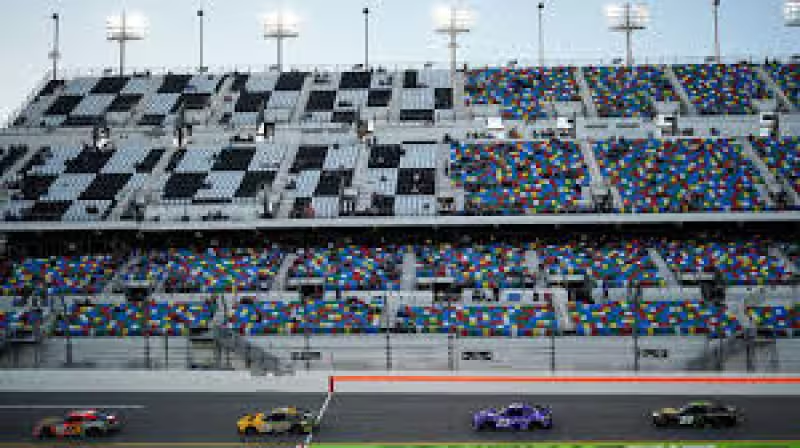
Daytona International Speedway announced it will install an advanced LED lighting system across its 2 1/2-mile track, a project Ben Kennedy says underscores NASCAR’s push to reinvest in its facilities and sharpen the experience for fans and viewers.
The comprehensive upgrade, delivered in partnership with Musco, will light mast poles around the oval and road course and extend into the infield and pit road. Emergency lights will also be converted to LED and equipped with accent lighting that will synchronize with caution lights, creating dynamic, visually engaging moments during events.
Organizers say the system will provide brighter, more consistent illumination to improve visibility for competitors and race teams, enhance the in-person fan experience and elevate television broadcast quality. The initiative is expected to reduce energy consumption by approximately 50 percent, a measurable cut in operating use as NASCAR pursues broader environmental goals.
Completion of the project is anticipated by January 2027, putting the work in place well before marquee events return to the speedway. Kennedy described the upgrade as part of a broader reinvestment strategy, saying it will improve the overall experience for fans attending events at Daytona as well as those watching around the world.
Daytona’s new lighting is being billed as the track’s first major renovation since NASCAR’s $400 million Daytona Rising overhaul. That contrast — a targeted, technically focused project following a sweeping, multi-year redevelopment — frames the upgrade as both pragmatic and symbolic: pragmatic in reducing energy use and improving sightlines; symbolic in signaling continued capital attention to one of stock car racing’s most iconic venues.
The timing of the project adds another layer of consequence. NASCAR has set a target of achieving net zero operating emissions by 2035. A roughly 50 percent reduction in energy consumption from lighting is a concrete, near-term step toward that aspiration, though the scope of the work is limited to illumination and related systems rather than the broader operations that will also need change to meet the 2035 goal.
Musco’s involvement will cover the technical and installation elements, ensuring mast poles, infield areas and pit road receive consistent coverage. The synchronized accent lighting tied to caution lights is designed to create clearer visual cues during on-track incidents and to produce more dramatic imagery for broadcast, a point organizers emphasize as they aim to lift television presentation as well as the live-seat atmosphere.
For drivers and teams, the promise of steadier, brighter lighting is practical: improved visibility on pit road and through shadowed sections of the road course can reduce risks and make night racing conditions more consistent. For fans, stadium-style LED systems can sharpen sightlines and make evening segments more vivid; for viewers at home, the improved broadcast feed should present crisper images and more color depth.
The upgrade is modest in scale compared with Daytona Rising but significant in focus and purpose. If installed as planned by January 2027, the new lighting will be in place for future high-profile events and will be one of the tangible changes aligning the speedway with NASCAR’s environmental and presentation goals.
This project is a practical, measurable step: brighter light, lower energy use and better television — a focused investment that brings the speedway into the next decade while inching the sport toward its 2035 sustainability target.