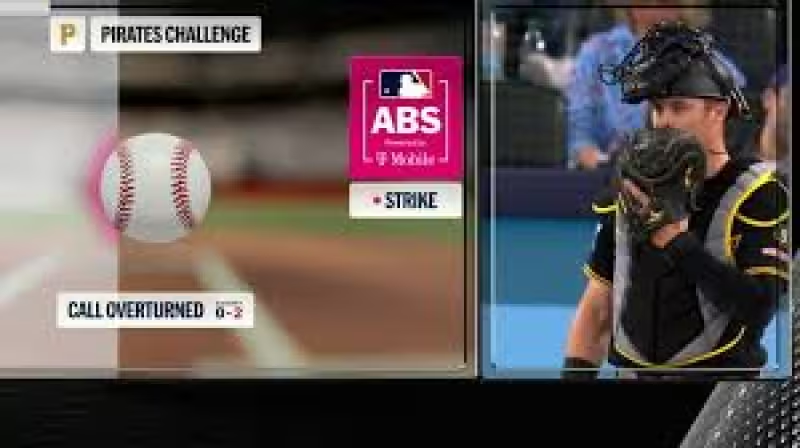
Don Kelly, the Pittsburgh Pirates' manager, was ejected in the sixth inning of the team’s game against the Toronto Blue Jays after arguing with the home plate umpire from his own dugout.
The on-field removal came midway through the contest and overshadowed what the club described afterward as a tough loss to Toronto; the supplementary account of the game notes that the Pirates lost. The incident unfolded in the sixth inning and ended with Kelly leaving the bench while the game continued.
The moment carried weight not because it was theatrical — managers are ejected from time to time — but because it removed the club’s in-game leader at a delicate stretch of play. An ejection from the dugout interrupts the flow of decisions on pitching changes, defensive alignments and bench use in the innings that follow, and it forces an immediate handoff to the coaches left on the field.
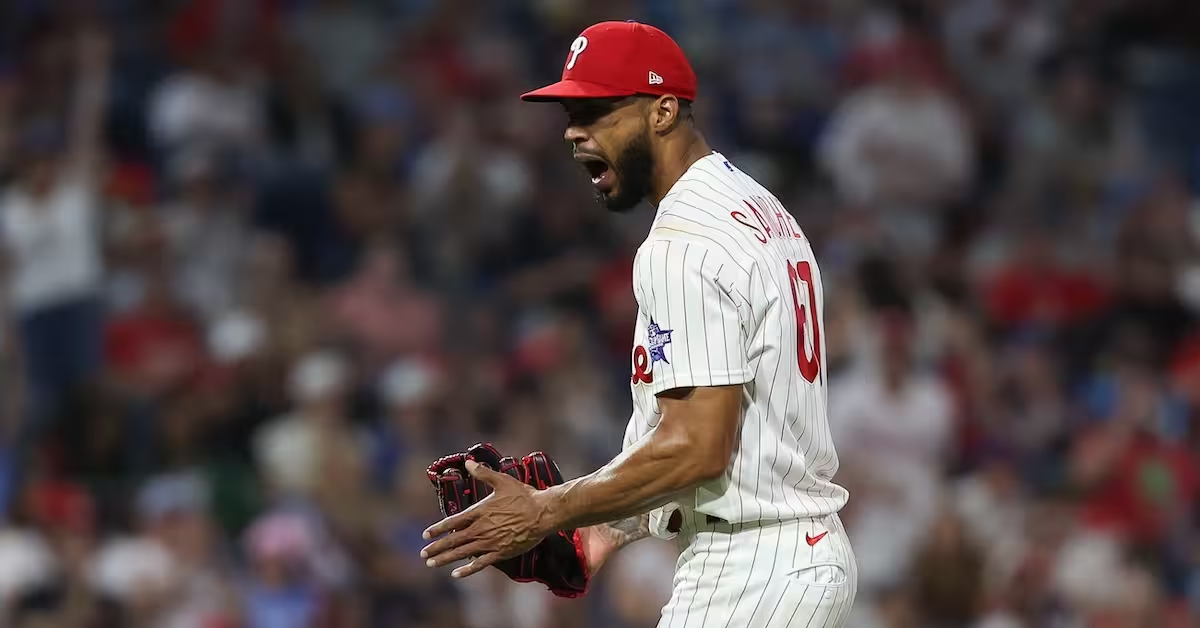
Paul Skenes, the club’s pitcher, talked about his performance in the Pirates' loss later in 2026. Skenes’ comments, delivered in the aftermath of a defeat that included his appearance on the mound, became part of the postgame conversation even as attention lingered on Kelly’s dismissal. The juxtaposition of a manager removed midgame and a young starter evaluating his own outing sharpened the night’s story line.

Context: the loss to the Blue Jays is the clear backdrop here. The result matters because losses are the currency of a season, and managerial ejections add a layer of turbulence to already narrow margins. For a team navigating a schedule with consecutive series and limited off days, an in-game upheaval can have ripple effects through pitching rotations and bullpen usage in the immediate slate of games.
The tension in this episode is plain. Kelly’s argument with the home plate umpire was decisive enough to earn a ejection while the team still had innings to play. Yet the narrative did not stop at the dugout: Skenes’ postgame assessment of his own outing pointed to a different pressure point, one internal and performance-based. That gap — between volatile leadership choices in the moment and measured self-evaluation afterward — leaves the club with two problems at once: managing the fallout of a public confrontation and addressing on-field performances that produced a loss.
Coaches and players will have to reconcile those priorities quickly. The immediate practical consequence is logistical: who is making the calls in late innings, how the staff will rearrange roles for upcoming games, and whether the ejection forces any short-term shifts in bullpen or lineup usage. The broader consequence is cultural — whether the team treats the episode as a galvanizing stand or an avoidable distraction.
Looking ahead, the clearest, most consequential question is how the next stretch of the pirates schedule will reflect the response. If the roster and coaching staff absorb the disruption and produce improved results, the ejection will be little more than a headline. If the team stumbles in the games directly after this incident, the moment will be remembered as the beginning of a tougher run. Either way, the combination of a dugout ejection and a starter publicly parsing his outing frames the immediate storyline for Pittsburgh: steady the clubhouse and execute on the field, or let a single night’s volatility ripple through the days that follow.