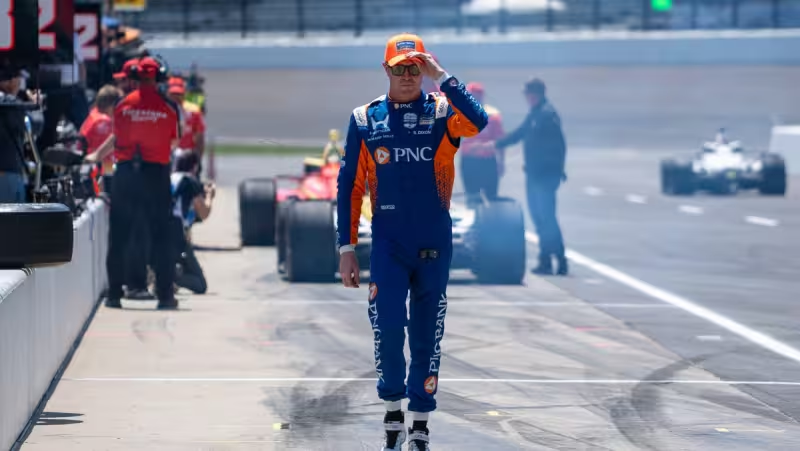
Scott Dixon will begin the 110th Indianapolis 500 from the inside of Row 4 after posting a 4-lap qualifying average of 230.347 mph around the 2.5-mile Indianapolis Motor Speedway oval.
The 45-year-old veteran recorded the time that slots him into the 10th starting position for Sunday’s 200-lap race, which is scheduled to take the green flag at 12:45 p.m. ET. It is Dixon’s 24th Indy start; he arrives in Indianapolis with one 500 victory on his résumé, the 2008 win that still defines his relationship to this race.
Dixon’s numbers underline why his start matters: he has 14 career top-10 finishes at the Indianapolis 500, five career starts from the pole position and a string of near-misses — finishing second three times and third twice. Those results make him one of the most consistently present threats in the field even when he isn’t on the front row.
Context sharpens the picture. The 110th running of the Indianapolis 500 is part of motor racing’s triple crown, and this year’s grid includes three New Zealanders — Sir Scott Dixon, Marcus Armstrong and Scott McLaughlin — a reminder of Dixon’s standing in a small but powerful group of compatriots. For a driver with Dixon’s history of fast qualifying runs and deep finishes, starting 10th is neither a death sentence nor a guarantee: it is a position that demands careful passing and patient timing over 200 laps.
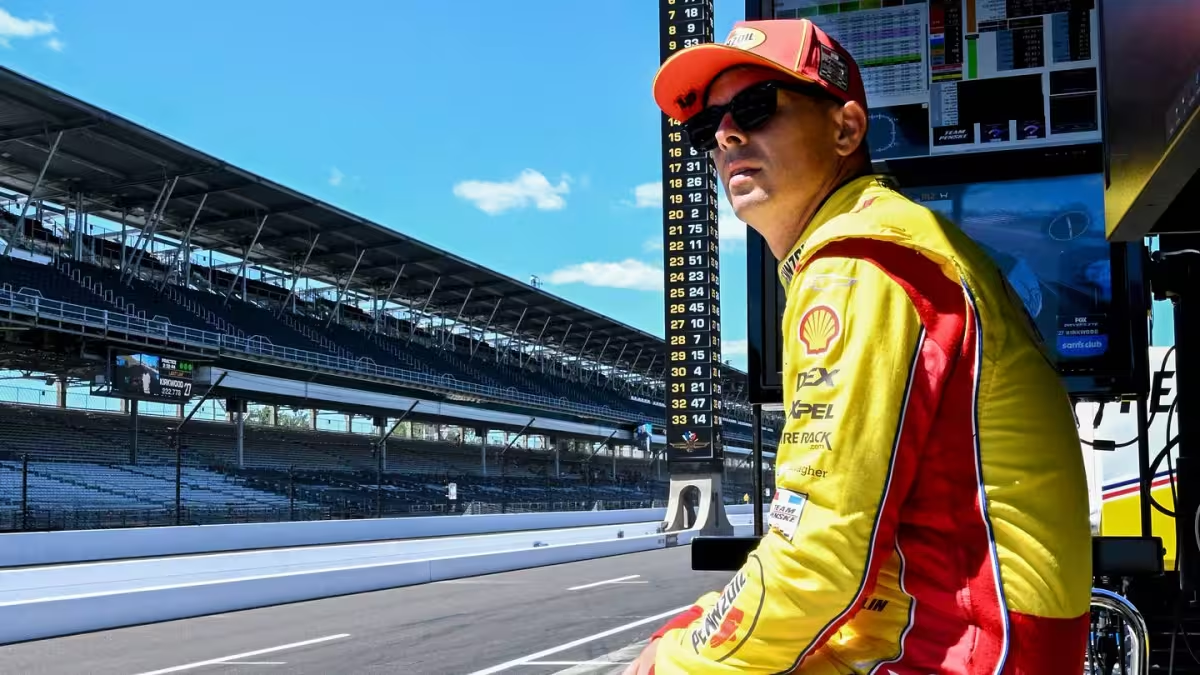
There is clear friction between Dixon’s track record and the way modern 500s unfold. He has said plainly, “It’s different every year, you know, the competition is different every year,” and added, “It’s been a bit frustrating getting so close [to winning another Indy 500] in the past, but you can’t dwell on past results.” Those lines capture the career-long tension — a driver who has been there and nearly won again, now confronting a race where old formulas do not always apply.
That last point explains why starting position matters less than it once did. As Dixon put it, “These days you won’t see a driver leading by a few laps towards the end of the race.” Races increasingly hinge on pit strategy, traffic management and timing. For Dixon, who has five poles to his name and an unmatched feel for Indianapolis, the challenge will be converting experience into forward progress from Row 4 without getting mired in mid-pack strategy battles.
The immediate next act is simple and decisive: 200 laps beginning at 12:45 p.m. ET on Sunday, May 24, 2026. Dixon’s record — 14 top-10s, a 2008 victory, and multiple near-wins — makes him a contender in any scenario where attrition or strategy reshuffles the order. But starting 10th shifts the calculus. If the race plays out as he predicted — with no long, uncontested leads — his ability to navigate traffic and pick his moments will decide whether another trip to Victory Lane is realistic.
In the end, the story of this Indianapolis 500 may come down to a familiar contrast: Dixon’s accumulated experience and close calls versus the modern unpredictability he has warned about. He arrives in the middle of the third row, not on the pole, and that is precisely the place where a 24th Indy start and a veteran’s instincts either payoff or fall short.