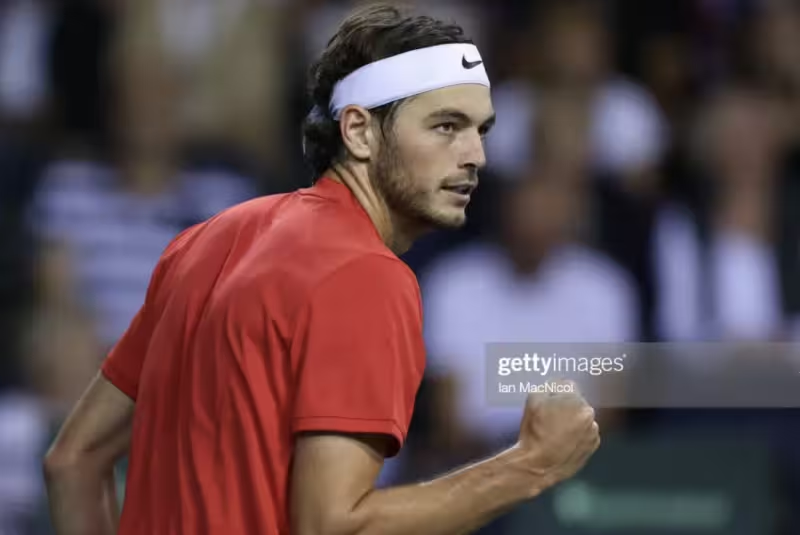
On Sunday, May 23, 2026, Nishesh Basavareddy will open his Roland Garros campaign against No. 7 seed Taylor Fritz, a matchup that pairs a rising American wild card with one of the tour’s most powerful servers.
Basavareddy earned his place in the main draw through the USTA’s Roland Garros Wild Card Challenge after a run that has taken him from outside the top 400 to 156th in the world over the past two years. The former Stanford standout arrives in Paris with momentum and little to lose against a top-10 opponent.
Fritz enters the match as the higher-profile name. He is the No. 7 seed and leads the tour in ace rate in 2026 at 18.6 percent, a weapon that has carried him deep at hard-court events. But the numbers on Fritz’s preparation are less flattering: after Miami this year he was sidelined by chronic tendinitis in his knee, a problem that kept him off the clay swing through Monte‑Carlo, Munich, Madrid and Rome. He returned to competition last week in Geneva and lost his first match back to Alexei Popyrin, 6-4, 6-4.
The contrast is the reason this pairing matters today. Basavareddy’s progress — rewarded with a USTA wild card rather than direct entry — is a clear underdog story. Fritz, despite seed and serve numbers, has had a compressed clay buildup and a recent straight‑sets defeat. Those facts make the match not just a seeded player’s first-round routine but a genuine toss-up for betting lines and bracket watchers.
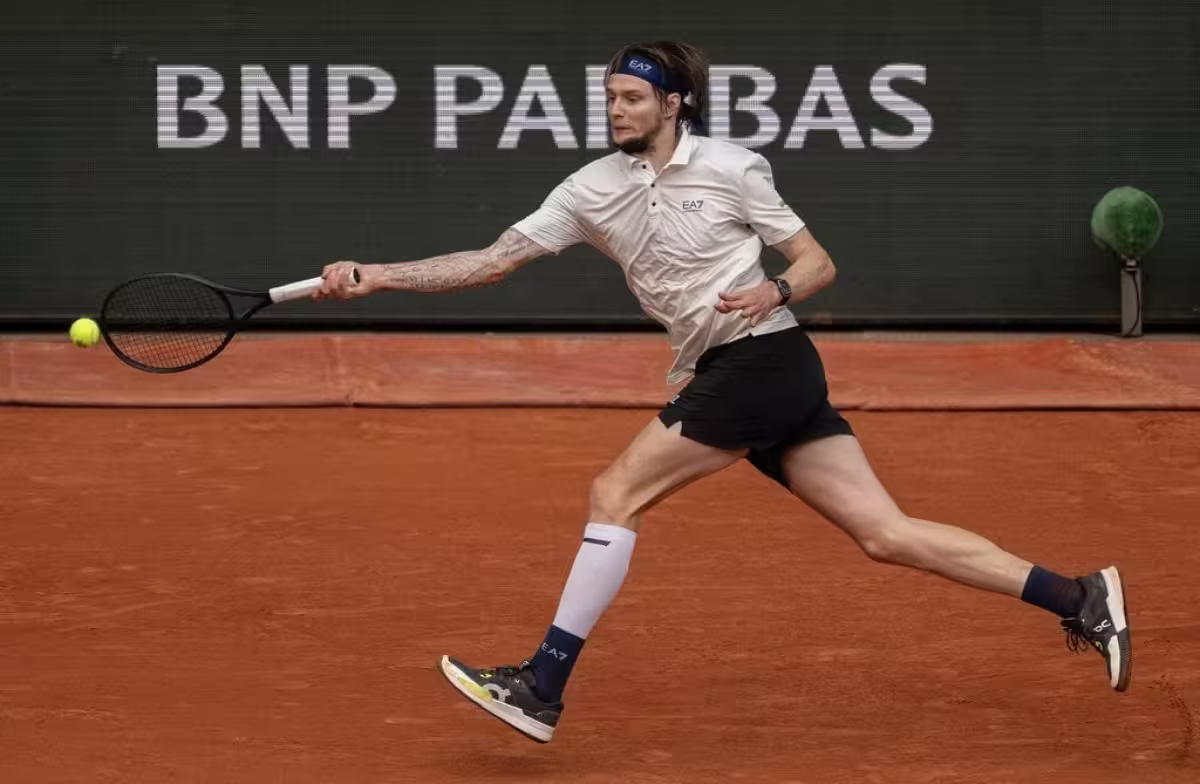
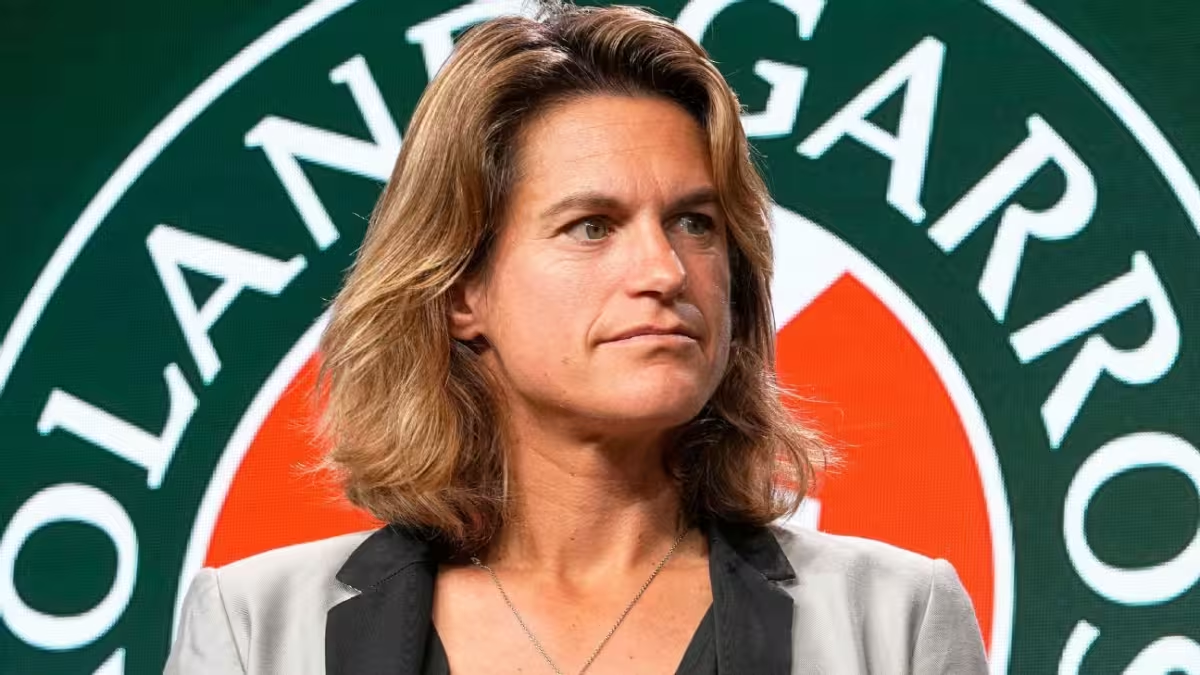
“Look for the seventh seed to advance, but not comfortably,” Cheryl Murray said, framing the simple arithmetic: Fritz should win, yet not without risk. Others are more concise in their reading; Ricky Dimon predicted, simply, “Fritz in 3.”
Context sharpens why this single match feels larger than a first-round pairing. Fritz has played Roland Garros nine times and has never advanced past the fourth round, an odd ceiling for a top player on paper. His lack of match miles on clay this spring — inserted between recovery and one loss in Geneva — leaves questions about movement and the kind of long, grinding rallies Roland Garros often requires.
That is the tension. Basavareddy’s trajectory over two years shows rapid improvement and adaptation; he has climbed from outside the top 400 to a career‑best 156th. He arrives as a wild card, not a seeded challenger, but as a player whose recent form and lack of expectations can be a dangerous combination against an opponent managing a chronic knee issue. Fritz’s ace rate gives him a built‑in shortcut to quick points, but clay reduces the margin that speed alone can buy.
The match outcome will signal more than who advances to round two. A comfortable win for Fritz would suggest his knee and abbreviated clay schedule are manageable and that his seed still reflects his status. A Basavareddy upset would be confirmation that the USTA’s Wild Card Challenge is producing players ready to move past the qualifiers and that Fritz’s Roland Garros ceiling remains vulnerable.
Either way, the closing fact is stark: Fritz’s recent return produced a straight‑sets loss, and Basavareddy’s rise has been real and rapid. The clean judgment the day supports is this — on paper, Fritz should win; on the court, Basavareddy is well placed to make it painful, and possibly decisive, for the seventh seed.