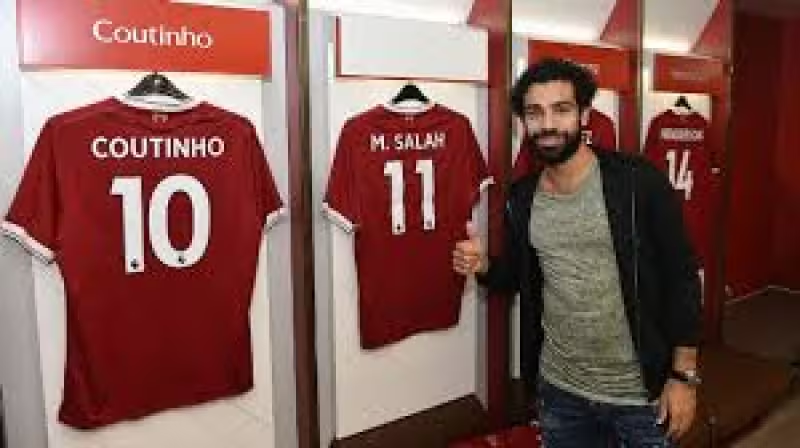
Mohamed Salah is preparing to say his goodbyes on Sunday, closing a chapter at Liverpool that began when the club paid £34m to sign him from Roma in 2017.
Few signings have reshaped a club so completely. Salah scored 257 goals for Liverpool and provided 119 assists, producing 376 goal involvements across 35,326 minutes — a goal or assist every 94 minutes on average.
His impact was instantaneous. In his debut season he scored 44 goals and supplied 16 assists in all competitions and was named the Professional Footballers' Association's player of the year.
There were high and low peaks. He left the 2018 Champions League final in the 30th minute after a challenge from Sergio Ramos and Liverpool went on to lose 3-1 to Real Madrid. He returned to be decisive in the 2018-19 run-in, heading the ball back into the danger area in the 90th minute against Tottenham on 31 March, a move that led to Toby Alderweireld turning the ball into his own net and helping secure a crucial victory.
Managers and former players have tried to sum up what he changed at Liverpool. Jürgen Klopp has said Salah raised new standards for professionalism — how hard he worked and how he invested in recovery. Ian Rush, who sits above Salah in Liverpool's all-time goals list, argued that Salah knew what it would take to become a club legend and pushed himself to reach it; Rush recalled how Salah even joked about goals in training, asking whether Rush had counted his own tallies in practice.
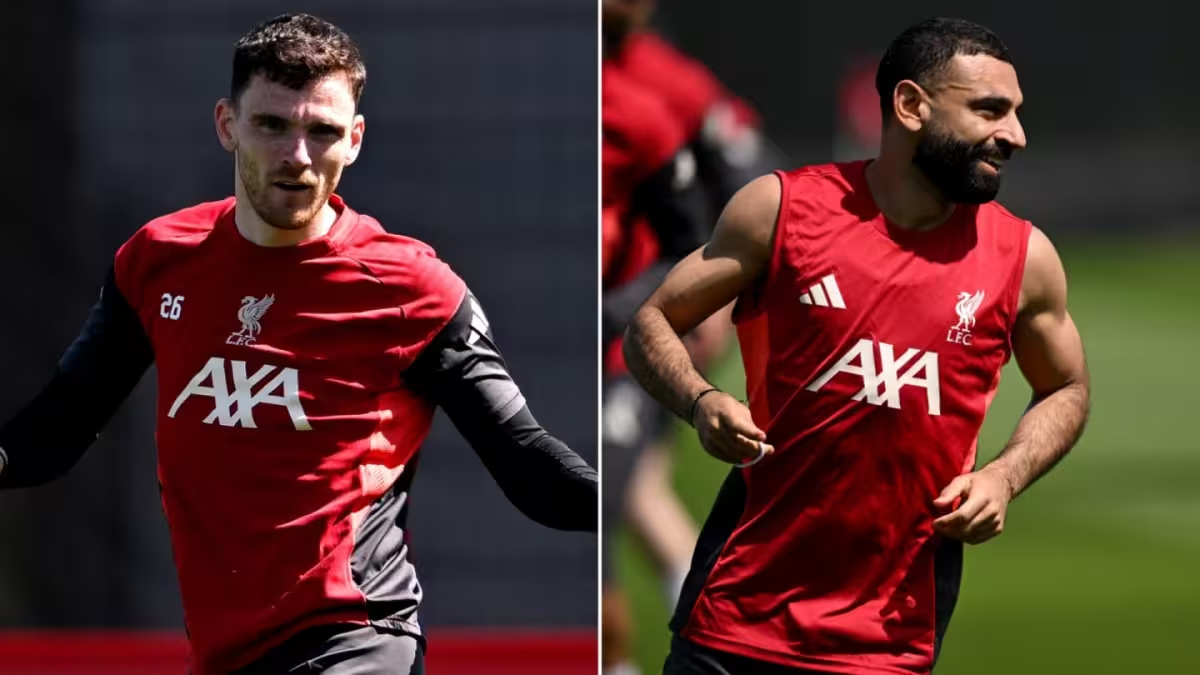
Those numbers and moments explain why last year supporters watched him sit on a throne inside Anfield when he committed to extending his reign. The memory of that celebration now sits against the fact that it is not clear which club or country Mohamed Salah will play for next season.
The broader picture — and why Sunday matters — is how one player shaped a club across trophies, records and daily standards. Observers have noted the arc: Liverpool paid a fee in 2017 and, in the years that followed, Salah rewrote scoring charts, helped drag the team through pain and triumph, and became the measure against which others at the club are judged.
There is an awkwardness at the centre of the farewell. A player who set “completely new standards” for fitness and output leaves while his next destination remains unknown. The celebration of his contribution sits beside a practical question for Liverpool fans and management: who replaces 257 goals, 119 assists and a player who was involved in a goal roughly every 94 minutes of play?
Salah’s story began in Nagrig, a village in rural Egypt, and it has been threaded through the biggest nights at Liverpool and the hardest. The 2018 final in Kyiv remains the single worst moment of his Liverpool career in the telling of the club’s recent history, yet it also fed a redemption arc that followed — a return to influence, goals and decisive interventions.
What happens next is the central unanswered question of the immediate week: where will he play after Sunday? The club and the player have left that blank. For Liverpool, the task is both sporting and symbolic — to move on from a forward who delivered at an unprecedented rate and who, by the numbers, belongs among the club’s greatest scorers, behind only Ian Rush and Roger Hunt.
On Sunday the stadium will mark the end of a chapter. The man who left a Nile delta village and arrived at Anfield as a £34m signing will walk through the tunnel with a record few can match: 257 goals, 119 assists, 376 goal involvements from 35,326 minutes. The most consequential question now is simple and concrete: which shirt will Mohamed Salah wear next season?