Aruba was voted the safest destination in the Caribbean this week after recent traveler feedback gave the island a Safety Index score of 98 out of 100 based on 260 votes, a ranking that repeat visitors say they feel in the streets and on the sand.
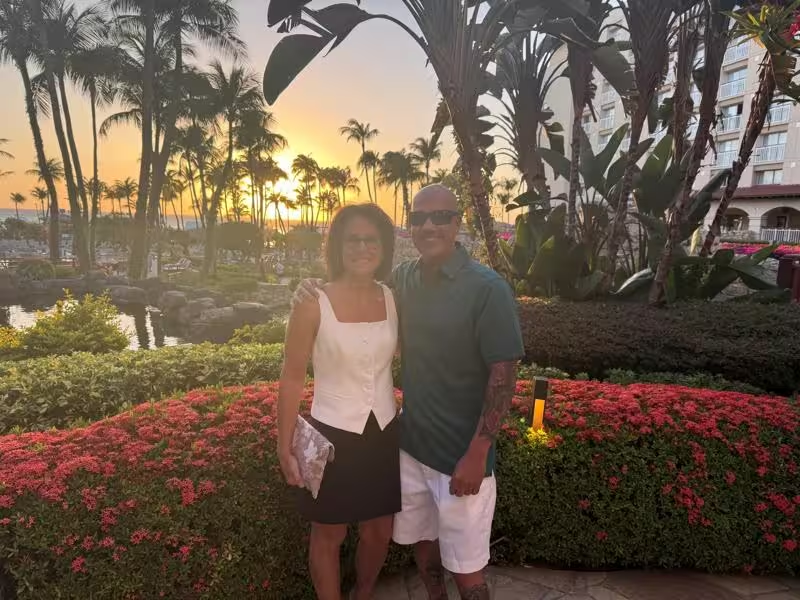
Philip, a longtime visitor who returned last week, says the score matches his experience. He first came to Aruba in 1988 with two buddies and remembers dancing at Club Visage; he married in 1999 and has kept coming back ever since. On his latest trip he took a UTV tour run by De Palm Tours, stopping at natural bridges and the California Lighthouse, switching drivers at designated pullouts, and ending the ride at Tres Trapi beach — all without incident. He told Aruba.com that the island revives him and that he hopes to retire there someday among its welcoming people.
The raw numbers underline the headline: 260 recent traveler votes produced a nearly perfect 98/100 score. The island itself is small — about 20 miles long and 6 miles wide — and its compact geography is part of the story, allowing visitors to move quickly from resort beaches to painted streets and arid interior in a single day.
That interior is not the picture-postcard palm-fringed resort many expect. The north side of Aruba is flat, arid and rugged and even includes a desert; UTV routes used by visitors deliberately cross into that terrain to reach natural features. In San Nicolas, well over 40 murals cover buildings and a local arts scene organized by figures such as Tito Bolivar — who founded the Aruba Art Fair in 2016 after a visit to Bogota inspired him — has reshaped parts of the island into public galleries.



Personal anecdotes reinforce the survey result. A travel piece cited on Travel Off Path says the author walked back to their hotel at 1 a.m. after a few drinks and felt completely fine — an experience that many repeat visitors, including Philip, point to when explaining why they leave resort strips to explore neighborhoods, beaches and late-night venues.
Context matters: Aruba.com presents the island as a compact, multicultural community where nearly 100 nationalities live together, a framing repeated in many travelers’ accounts and in the island’s own promotion. That mix of tight geography, visible art, and easily accessible natural sights helps explain why so many voters on the Safety Index rated their stays highly.
There is friction beneath the rosy headline. The Safety Index score rests on 260 recent traveler votes — a small sample that reflects the views of visitors who chose to respond, not a comprehensive audit of crime rates or public safety infrastructure. The anecdotal reports of safe late-night walks are persuasive but limited; they do not by themselves show whether risks are uniform across neighborhoods or seasons. Meanwhile, the very features that draw adventurous visitors — the arid north, UTV tracks and isolated natural bridges — are environments where visitor safety depends on preparation and local guidance.
What matters next is whether the safety reputation translates into sustained, broader access for visitors who want to go beyond beachfront resorts. The island’s compact size and its blend of art and landscape make that possible: a day can take you from murals in San Nicolas to the desert flats on the north side. But the Safety Index’s narrow voter base means Aruba’s ranking could be as fragile as it is flattering.
For Philip, the numbers are already decisive. He describes Aruba as a place where his spirit comes alive and says the new ranking only strengthens his plan to return. If the island can keep delivering the mix of safe streets, open nights and dramatic day trips that drew his first visit in 1988, its tourism pitch will be simple and effective: this small, heavily visited island feels safe enough to roam after dark and varied enough to keep bringing people back.