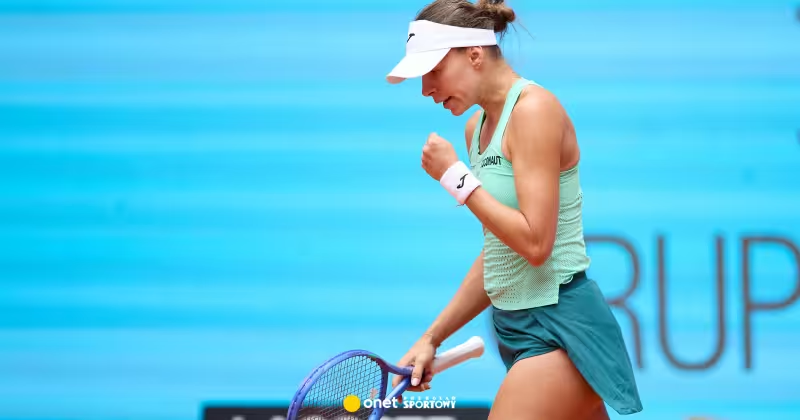
Magda Linette began competing at Roland Garros 2026 on Sunday afternoon, drawing 19‑year‑old Tereza Valentova in the first round in what the live report called a match against a favored opponent.
Valentova, a junior champion at Roland Garros in 2024 who won five ITF tournaments that year and reached a WTA main‑tour final in Osaka as a qualifier in 2025, overturned an early 1:4 deficit and turned around the opening set. Linette was broken after a backhand error; Valentova then moved to serve for the set, seizing the immediate momentum in the match.
The scale of the moment was underscored by numbers: Valentova is 19, she won both the junior singles and doubles titles at Roland Garros in 2024, and she has already added a run to a WTA final and five ITF trophies to her resume. The supplementary article noted Linette was scheduled as the second match from 11:00 and that six Polish representatives entered the first round of Roland Garros.
Linette arrived at Court on the back of dissatisfaction with her recent results, according to the live report, and the early pattern of the match put that malaise into stark relief. Valentova’s recovery from 1:4 and the break that followed a Linette backhand error turned the first set into a test of form as much as of tactics.
Context deepens the significance. Valentova has been portrayed by observers as a major Czech prospect, a player fans have nicknamed “Talentovą” and whom WTA social channels have highlighted; she has also overcome serious hip problems that once threatened to end her career. Her rapid rise — junior titles in 2024, a run of ITF wins, and a 2025 WTA final in Osaka — explains why she was described as a favored opponent despite her youth.
There is a contradiction inside the match that matters: Linette is a seasoned tour presence who entered the meeting unhappy with recent performances, yet the live action showed the youngster dictating momentum after Linette’s error. Valentova herself has framed her comeback from health doubts in stark terms, saying she did not know if she would play tennis again and that matches like this have shown her she can meet top opponents, even when she feels she is not playing at her best.
For Linette, the immediate question is practical and unforgiving: can she snap out of a run of disappointing results before a major becomes a measuring stick for a season? The court-time scheduling — listed as the second match from 11:00 — and the presence of six Poles in the first round add national pressure and attention, but they do not change the fact that Linette must find answers on court against an opponent with momentum and recent hard‑court pedigree.
The single most consequential unanswered question now is whether Linette can convert the knowledge of her own dissatisfaction into a tactical reset during the tournament. If she cannot, a first‑round stumble against a resurging young rival will be read less as an isolated loss and more as evidence that her recent form problems are deeper than the live report suggested.