
Rohit Sharma used Mumbai Indians’ ESA Day to set a clear target: he wants India to be the powerhouse of world cricket and to be the best, with cricket a national priority.
Sharma did not couch the claim in abstraction. "What we have done in the last three years has been superb to watch," he said, and listed the run of global events that have framed that progress: "From the 2024 World Cup, Women’s World Cup, U19 World Cup, ICC Champions Trophy and another T20 World Cup. I hope we continue our winning streak."
That inventory is the weight of his argument: multiple major tournaments across formats in a short span. By naming each event, he tied a simple metric—the last three years—to a larger national ambition. For Sharma, recent performance is not an end in itself but the evidence that India can aim higher.
Context matters here. Sharma framed his push for dominance against a changing game. He pointed to how innings that once felt competitive no longer do: "When we started 130-140 was a good score but currently it is difficult. Now, any score one gets does not seem to be very convincing. That is the story which tells you how the game has gone about through the years." The observation underscores why India’s recent form, across formats and age groups, has become central to discussions about long-term strength.
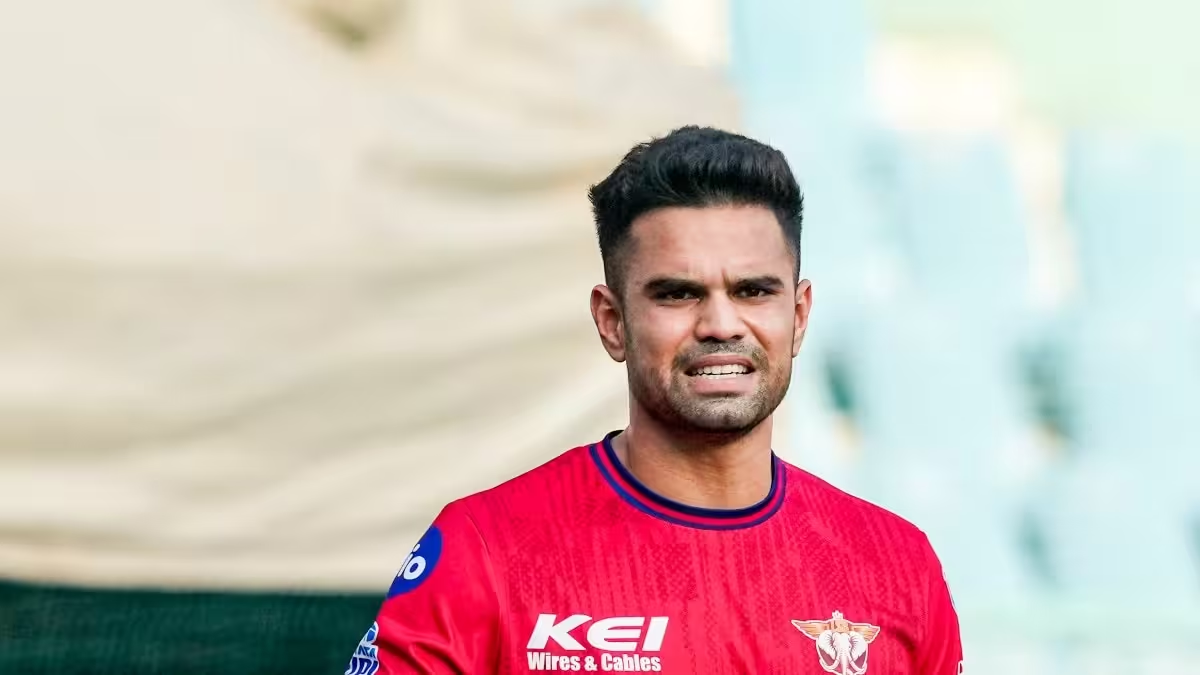
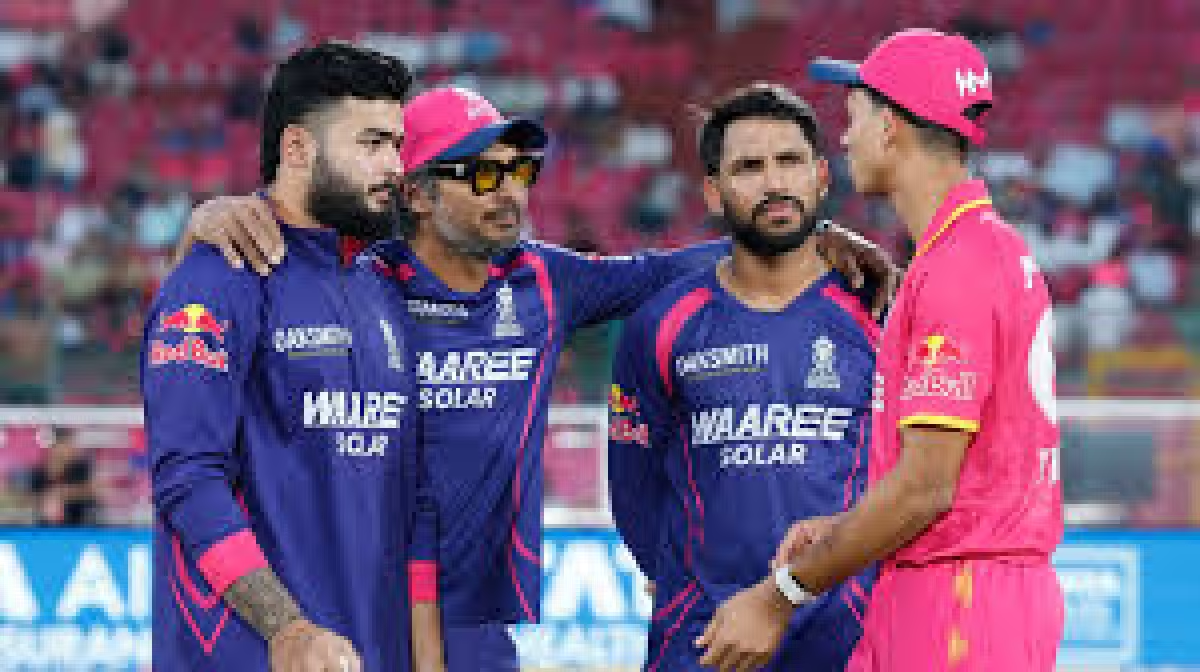
Sharma went on to describe what he sees as the engine of that change: a new generation of players. "People have become more fearless, open minded on how they should go about doing things, which is a good sign for the sport, game and league. The players are not afraid to take a step forward rather than being conservative. In the coming years too, that is how it will keep going, it will reach greater heights," he said, pointing at attitude as much as technique.
That read of the game creates a tension that Sharma acknowledged himself. On one hand he wants an aggressive, dominant national side; on the other he warned against pushing the next generation too hard. Advising caution about early pressure, he said, "It depends from age to age. I know there are kids ranging from six years to 18 years. You do not want to put too much pressure on the kid so early on in their life. They should just be enjoying the sport, watching and playing with their friends. That is how it all started for me. The situation will tell you what is important at this point of time. Enjoy the sport that you want to play. No one can force you to do something."
The tension is practical: sustaining international dominance requires a deep pipeline of talent prepared for the spotlight, yet Sharma is explicit that preparation must not crush enjoyment or curiosity. He framed setbacks as part of that process — a reminder that development is uneven. "From my debut till now, there have been so many instances where I got to learn if I have to come up from here then what needs to be done. In sport, there is no smooth ride, along with upwards, there is also a downhill," he said.
Sharma’s message was simple and consequential. He tied recent results to a national project and urged a pathway that protects youth while encouraging boldness on the field. If India is to become the powerhouse he envisages, the test will be whether selectors, coaches and leagues can convert the last three years of momentum into a sustainable system that nurtures fearless players without burning them out.