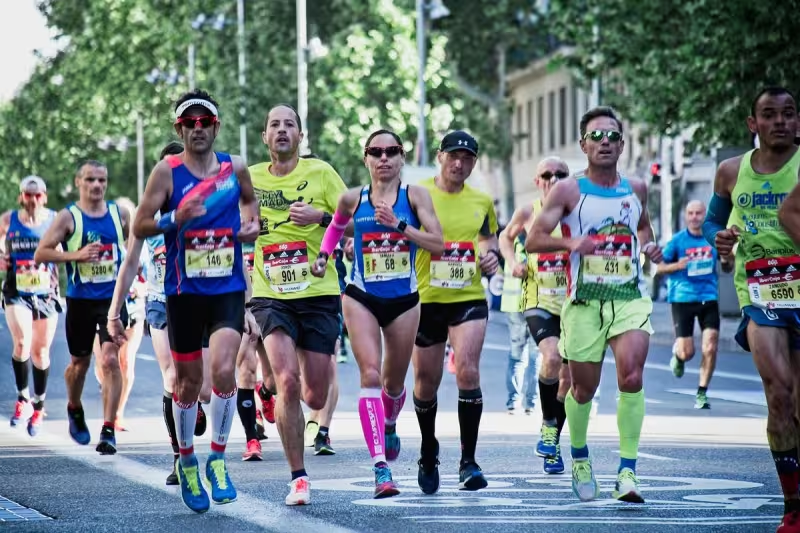
The annual Buffalo Marathon takes place Sunday, May 24, and some road closures for the race will begin as early as 4 a.m., affecting stretches of Delaware, Hertel, Elmwood Avenue, Franklin, Pearl, Niagara and Washington streets.
Thousands are expected to be in town for the race, which threads through the city and along the waterfront and offers a view of Lake Erie for part of the route. Organizers say most of the affected roads are expected to be fully operational again by the afternoon.
The scale of the event is plain in the map of closures: major arteries across the city will see restricted access and some smaller side streets along the route will also be closed. Those closures start early to clear the course and stage aid stations, but the timeline in place aims to restore normal traffic patterns by later in the day.
Runners are drawn to the buffalo marathon because the course is mostly flat and scenic, and because it serves as a big qualifier for the Boston Marathon. Historically, about 10% to 11% of the full marathon field successfully hits a Boston qualifying time, a rate that keeps competitive runners returning year after year.
The course combines city streets and waterfront stretches, giving participants both urban blocks and lakeside running. The view of Lake Erie on part of the run is often highlighted in pre-race materials and among participants as one of the race’s signature features.
For residents and visitors, the early start to closures means planning will be necessary for morning travel. With closures beginning as early as 4 a.m., people who normally use the affected streets in the morning should expect detours or altered routes until sections reopen. By the afternoon, most of those streets are expected to be back in service.
Event timing also compresses the window for when the city will feel the impact: the race is concentrated on a single day, and the expectation that most roads will be fully operational by the afternoon limits disruptions largely to the morning and early afternoon hours. That containment makes the race a major one-day disruption rather than a prolonged series of restrictions.
Thousands in town for the race will create added demand on transit, parking and waterfront access as the event unfolds, and the mix of local runners seeking personal bests and out-of-town competitors chasing Boston-qualifying times reinforces the event’s dual role as both community race and competitive qualifier.
As the city prepares for Sunday, the practical takeaway is straightforward: the Buffalo Marathon will require early-morning road closures beginning as early as 4 a.m., but most of the affected streets should be fully operational again by the afternoon, allowing the race to pass through the city and waterfront and thousands of participants and spectators to complete the day’s program with a view of Lake Erie along the way.