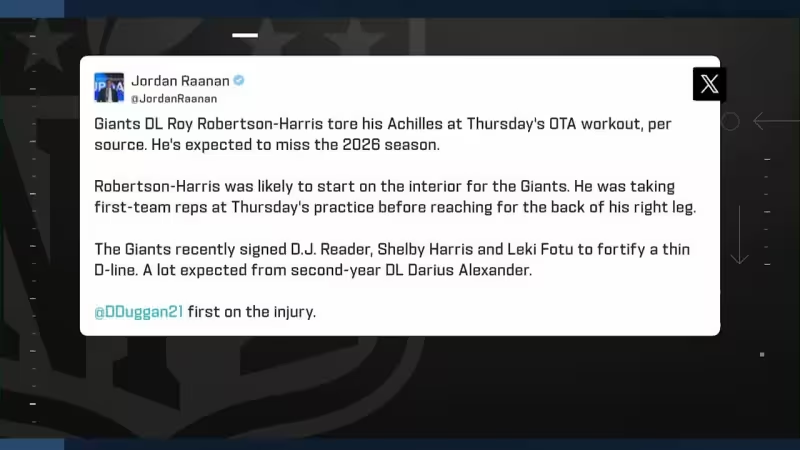
Roy Robertson-Harris, a defensive lineman for the New York Giants, will miss the 2026 NFL season after suffering an injury during an organized team activity, the team’s offseason practice period.
NFL Network Insider Tom Pelissero reported the injury and the season-ending diagnosis, saying Robertson-Harris' setback occurred in an OTA workout and that he will not play in 2026. The report places the veteran on the sidelines for the coming season.
That the injury happened in an OTA — a voluntary, on-field part of the offseason schedule — is the detail Pelissero cited as the moment of the mishap. The timing matters because OTAs are meant to tune technique and install schemes; an injury during that window removes a player before training camp and the regular-season preparation cycle.
The immediate weight of the report is simple and stark: the Giants lose a defensive lineman who had been part of their rotation. Pelissero’s report is the public account tying the OTA workout to a season-long absence, and it sets the roster reality for New York heading into summer preparations.
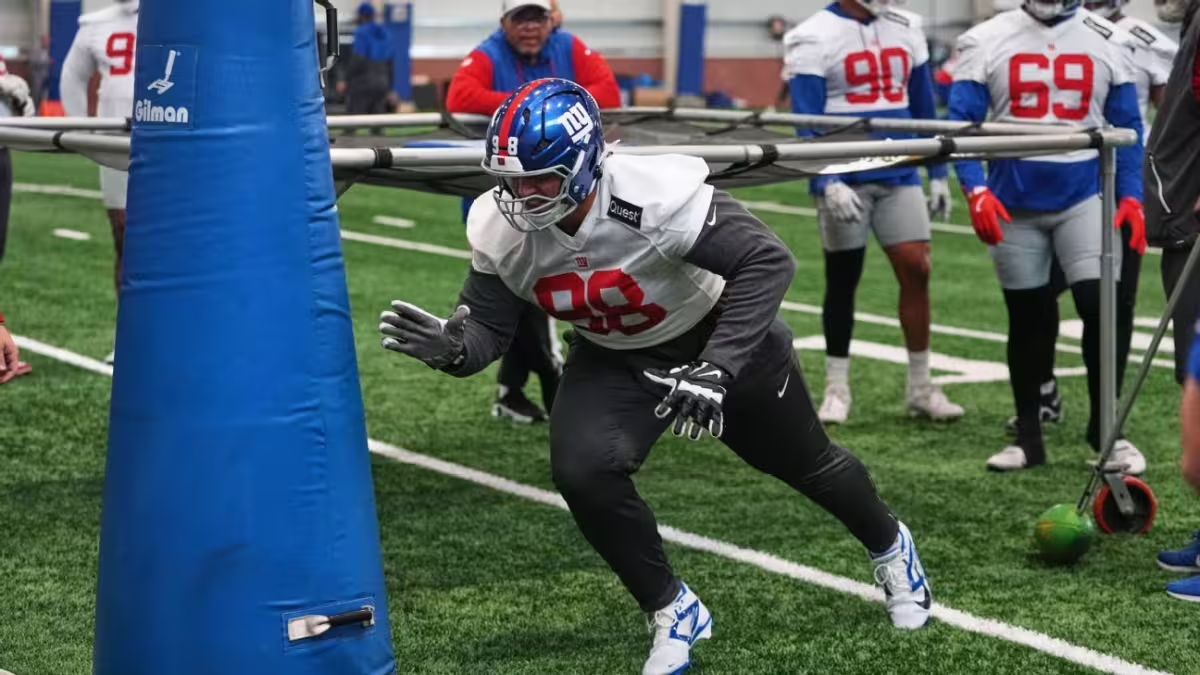
Context is limited to the reporting chain: Pelissero, identified as an NFL Network insider, linked the OTA incident to Robertson-Harris’ absence for the entire 2026 season. Beyond that attribution, the public record available to reporters at the time of publication is Pelissero’s report that the injury in the OTA led to the season-ending outcome.
The tension in this moment is immediate. Offseason workouts are designed to be low-stakes compared with preseason games and the regular season; a single workout producing a player’s lost year exposes the thin margin teams accept when veterans work back into form. It also forces the Giants to rebalance depth and snaps along the defensive front long before pads come on.
For readers tracking roster construction and the balance of the Giants’ defensive line, the next step is clear: the team must address a sudden vacancy in its rotation. How the organization responds — whether by internal elevation, free-agent additions, or other moves — will shape New York’s front-seven plans for 2026.
This development is most consequential because it removes a known quantity from the Giants’ offseason equation at a moment when rosters are still settling; the loss of Robertson-Harris for the year will reverberate through the defensive depth chart and the team’s short-term personnel decisions.
Pelissero’s report supplies the core facts: an OTA injury and a season-ending prognosis for Robertson-Harris. What remains to be answered is how the Giants will reconstruct the defensive line without him — and whether the absence changes the team’s strategy entering training camp and the 2026 season.