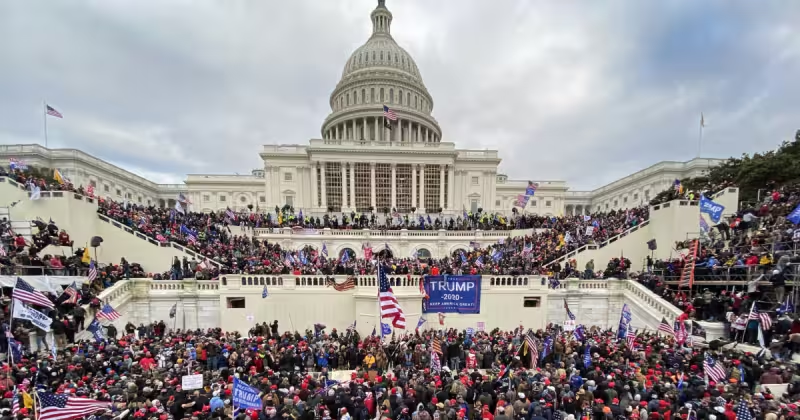
The Justice Department removed news releases about criminal cases tied to the 6 January 2021 Capitol attack from its website and acknowledged the deletions on Friday, a step its rapid response account described as stripping the site of "partisan propaganda." Donald Trump, who pardoned, commuted or vowed to dismiss the cases of more than 1,500 people charged over the assault in January 2025, has pressed for the administration to unwind the prosecutions.
The purge followed a flurry of legal moves: last month the Justice Department asked a federal appeals court to vacate seditious conspiracy convictions in cases against members of the Proud Boys and the Oath Keepers; on Thursday that court granted the request; and on Friday the department moved to dismiss those cases. The removed releases, the department acknowledged, documented criminal charges, convictions and sentencings. NBC News reported that the vast majority of press releases pertaining to Jan. 6 defendants had been removed from the DOJ website as of Friday evening.
The department’s rapid response account framed the deletions as corrective and public-facing. "nothing ‘quiet’ about it," the account said, adding, "This includes stripping [the justice department’s] website of partisan propaganda." It also declared: "We are proud to reverse the [justice department’s] weaponization under the Biden administration. We will do everything in our power to make whole those who were persecuted for political purposes." On Monday the department announced a $1.776bn fund meant to compensate Trump allies who say they were unjustly investigated and prosecuted.



Context matters: the removals come amid a broader effort by the current administration to revise the federal record on the January 6 Capitol attack. The deleted materials included public statements tied to arrests, indictments, trials, convictions and sentences — the very paper trail prosecutors and the public used to track the sprawling post-attack prosecutions. The purge affected high-profile cases involving far-right groups, including the Proud Boys and the Oath Keepers.
The friction is obvious. The Justice Department says it is erasing material that it calls partisan propaganda, yet the releases it deleted were official documentation of charges, convictions and sentencings. Those records had been the basis for months — and years — of court filings, appeals and public scrutiny. Removing them from the department’s site does not change the existence of court records, but it does remove a centralized, government-published narrative of who was charged and why.
There is a practical sequence to what happened this week: the department sought vacatur of seditious-conspiracy convictions, the appeals court granted that request, and the department moved to dismiss the cases; the web removals and the $1.776bn compensation fund followed. Taken together, these moves amount to a coordinated rollback of the public, prosecutorial record and a program to reimburse or otherwise rescue those who were prosecuted.
The clearest answer to the question the headline poses is this: the Justice Department is deliberately scrubbing its public record as part of a policy to unwind January 6 prosecutions. The removals, the court’s vacatur and the dismissal motions — coupled with the new fund and the January 2025 pardons and commutations — show a concerted effort to erase and then reconstruct how the federal government represents the assault on the US Capitol. For Donald Trump and his allies, the week’s actions turned an administrative deletion into an operational reset of the post‑Jan. 6 legal landscape.