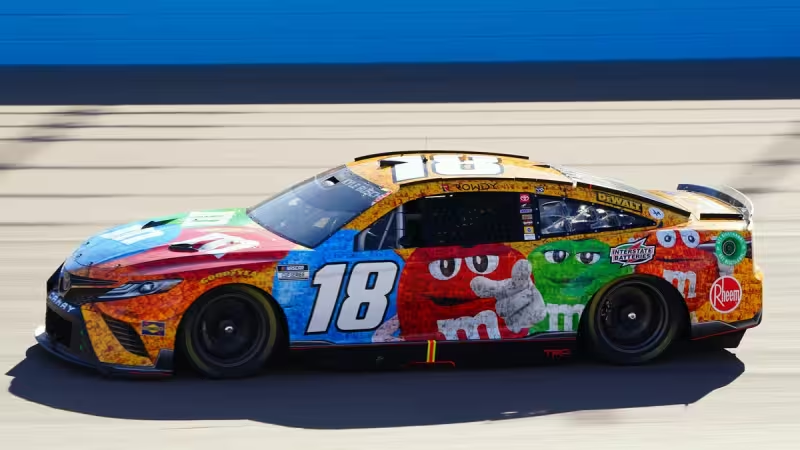
Dale Coyne Racing will run its No. 18 car in the 110th Indianapolis 500 using the same number font Kyle Busch wore at Joe Gibbs Racing, a deliberate tribute after Busch died Thursday at 41 when pneumonia complications progressed into sepsis.
The gesture, proposed by Fox Sports broadcaster and veteran IndyCar driver Townsend Bell, was put together with help from Fox Sports and Joe Gibbs Racing and will be one of several memorials across Memorial Day weekend. Indianapolis Motor Speedway will also light the pylon on lap 18 on Sunday, a nod to the No. 18 that defined a large portion of Busch’s career.
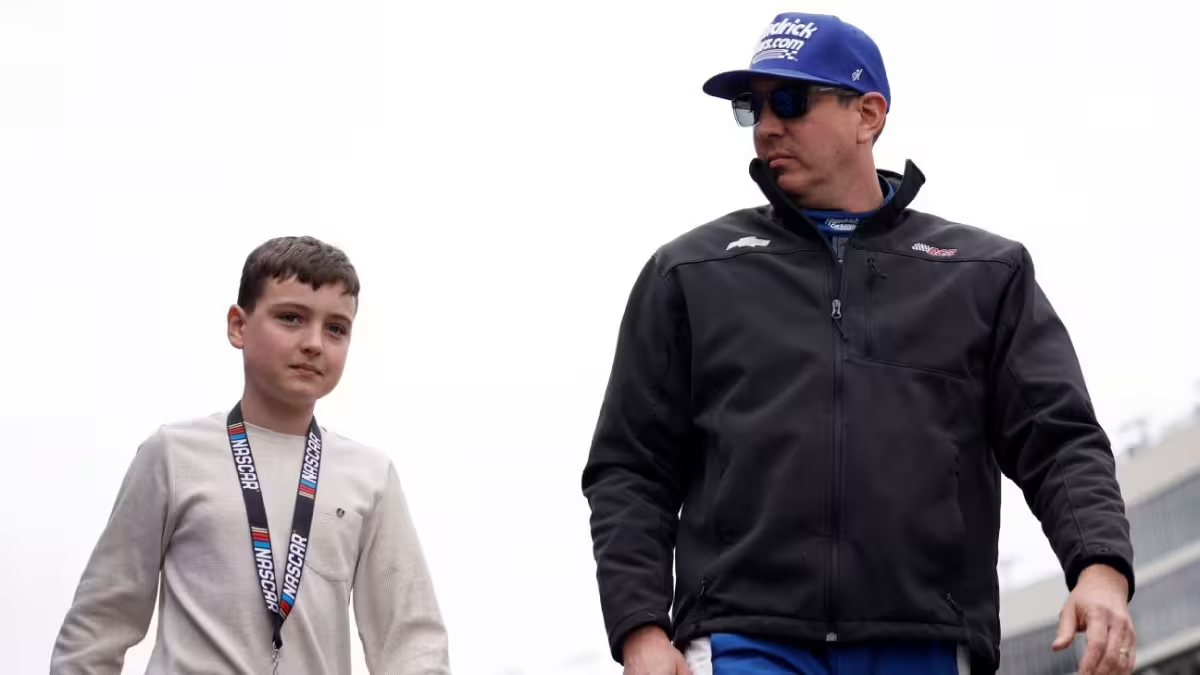
Numbers underline the scale: Busch wore No. 18 for 15 years at Joe Gibbs Racing and won his first Cup Series championship in 2015. He later moved to Richard Childress Racing and drove the No. 8 until his death. In Charlotte, Richard Childress Racing has suspended the use of the No. 8 for its Memorial Day weekend race, will run the No. 33 instead, and has painted the No. 8 on the infield grass entering turn 1. The team said it will reserve the No. 8 until Busch’s 11-year-old son, Brexton, is ready to go NASCAR racing.
Those concrete acts — a car on the Indy grid, a pylon lit on lap 18, a number parked at Charlotte — follow a public history of Busch’s attachment to the Indianapolis 500 that never turned into a start. Busch never raced in the Indy 500 or in the IndyCar Series, and he told listeners on the "Actions Detrimental" podcast with Denny Hamlin that he had deals in place on two separate occasions to try to race in Indianapolis, only to see both fall through. The Indy 500 remained one of the few things in racing he never got to check off.
The choice to display Busch’s No. 18 in Indianapolis highlights a tension: the memorial unfolds inside a series he never joined. IndyCar teams are adopting the visual identity of a driver whose career was rooted in NASCAR, even as his family’s primary NASCAR number — the No. 8 he drove with Richard Childress Racing — is being set aside out of respect. That contrast is exact and intentional: a NASCAR icon’s mark will appear on the Brickyard while his own car never did.
How this sits with fans and within the paddock is already part of the story. For some, the font and the lap-18 pylon will be a visible recognition of what Busch meant to motorsport broadly. For others, the fact that he never climbed into an IndyCar cockpit keeps the tribute symbolic rather than literal. Either way, the appearance of Busch’s No. 18 at Indianapolis on Sunday will make the 110th running of the race a focal point for cross-series mourning and remembrance.
What happens next is also clear and striking: tributes that span series. Dale Coyne Racing’s decision puts Busch’s Joe Gibbs Racing-era identity on the Flagstand at a race he long wanted to contest. Richard Childress Racing’s retirement of the No. 8 for now and its promise to hold that number until Brexton is ready signals a longer-term plan to protect his father’s legacy within NASCAR. Together, those moves bind a short, sharp weekend of remembrance to an enduring question about how teams and tracks steward the memory of a high-profile driver.
At its most human, the tribute will be remembered not for a lap time or a finish but for the visual shorthand of a number on a car and a lit pylon on lap 18 — symbols that will place part of Kyle Busch’s identity on the very stage he wanted but never got to race. The 110th Indianapolis 500 will carry that mark, and Memorial Day weekend will show whether those symbols settle into memory or prompt a deeper rethinking of how the sport honors drivers across series lines.