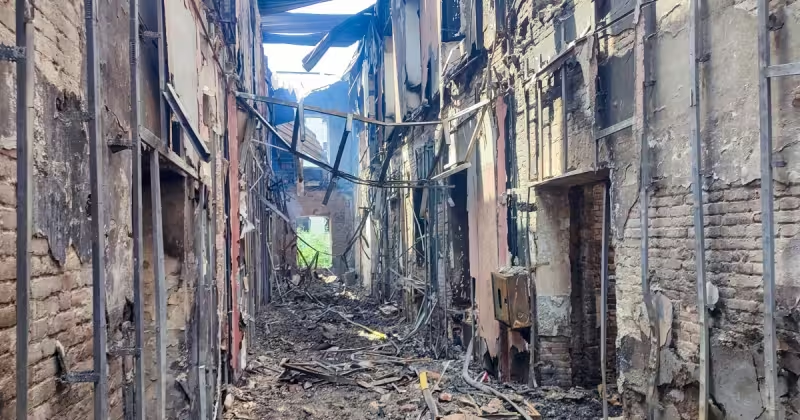
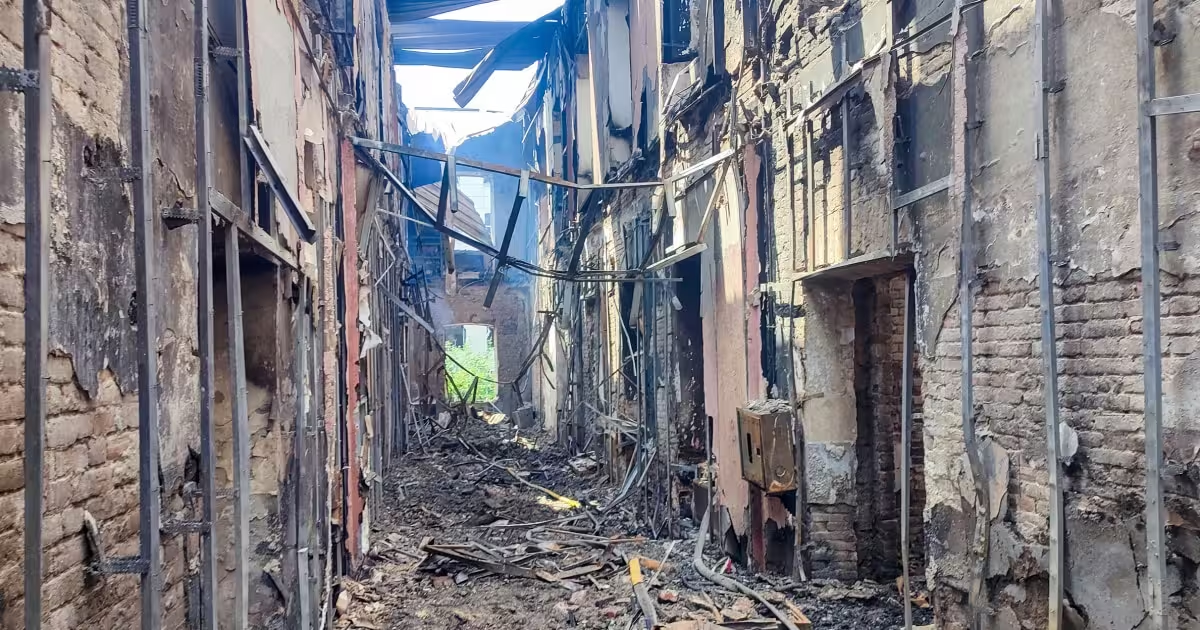
Russian officials accused Ukraine of a drone attack on a college dormitory in Starobilsk, saying the strike killed civilians; President Vladimir Putin called the episode a "terrorist strike" and on Friday ordered Russia’s defence ministry to propose a response.
Moscow’s initial casualty figures were contested and rising: Russian authorities said the attack killed six people, wounded dozens and left 15 people unaccounted for; a Russian-installed administration later published a preliminary list with details of 11 victims, and by Saturday foreign reporting said the death toll had risen to 16. Officials in the region said most of the victims were young women, and one Russian emergency ministry figure cited by RIA said five people had at one point remained trapped under the rubble. Authorities eventually put the number of wounded at 42, and late on Saturday emergency teams announced they had completed the search and rescue operation.
The timing and target are at the heart of the dispute. The General Staff of Ukraine’s Armed Forces said it carried out an attack near Starobilsk on the night of 21-22 May and that it struck a Russian military unit. Ukraine’s military denied responsibility for an attack on a dormitory and said its operations on Friday "exclusively targeted the Russian war machine," adding that it had struck an elite drone command unit in the area.
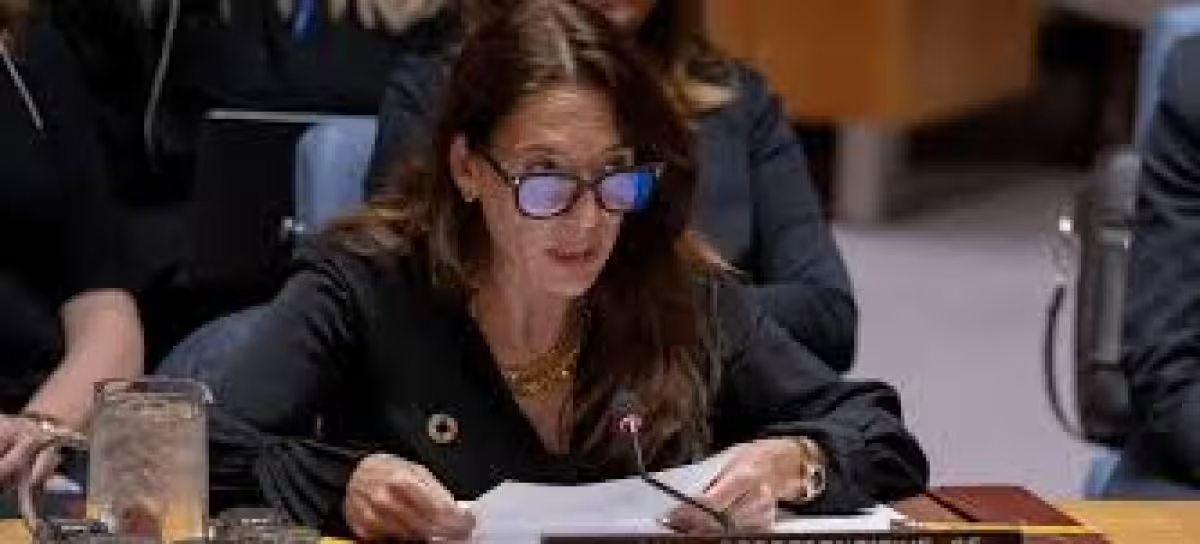
Russia, accusing Kyiv of a deliberate civilian strike, requested an emergency session of the United Nations Security Council and used the council to press its case. At the UN, Russia accused Ukraine of war crimes; Russian delegates argued the attack violated laws of armed conflict. Vasily Nebenyza told the council, "Under international humanitarian law, this constitutes a war crime," while Kyiv's envoy dismissed much of the Russian presentation as staged. Andrii Melnyk called the session a "pure propaganda show" and reiterated that Ukrainian strikes were "exclusively targeted the Russian war machine."
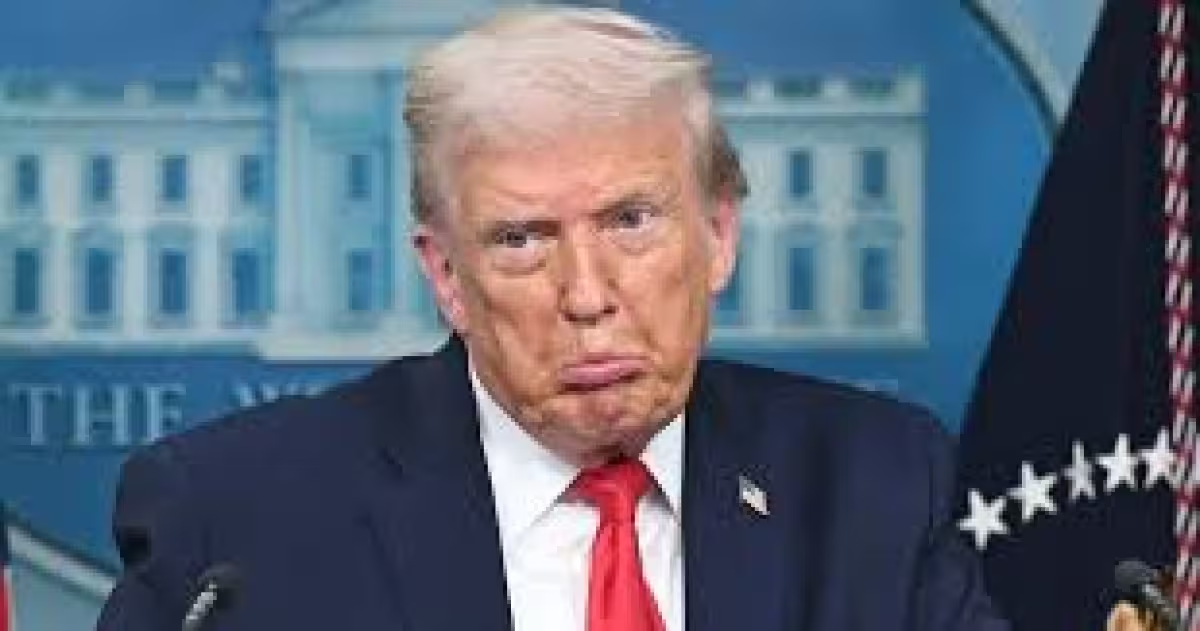
The competing narratives sharpen a central contradiction. Putin insisted there had been "no military facilities, intelligence service facilities or related services in the vicinity," a characterization that directly conflicts with Ukrainian statements that they struck military command elements. That gap — between an assertion that civilians were targeted and Kyiv’s assertion that the strike hit a legitimate military objective — is the source of the quickest-moving diplomatic and military tension.
Moscow’s decision to seek an emergency Security Council meeting and Putin’s instruction that the defence ministry propose a response on Friday make clear the Kremlin intends to turn the incident into a policy moment. Russia framed the attack as evidence of Ukrainian disregard for civilian life; Kyiv framed Russia’s public diplomacy as aimed at diverting attention from the presence of military infrastructure in occupied areas. Outside the chamber, the episode has fed international debate and circulated across social platforms, including references to x.com as commentators and officials exchanged statements.
The immediate, concrete consequence is that a senior Kremlin demand for proposed retaliatory measures now sits on a Russian defence ministry desk. With emergency crews having completed searches and casualty figures still under revision, the most consequential question is not how many died but how Moscow will translate its political framing into military action: whether the Kremlin’s response will be limited, targeted, or an escalation that redraws the tactical lines around Russian-occupied Luhansk.