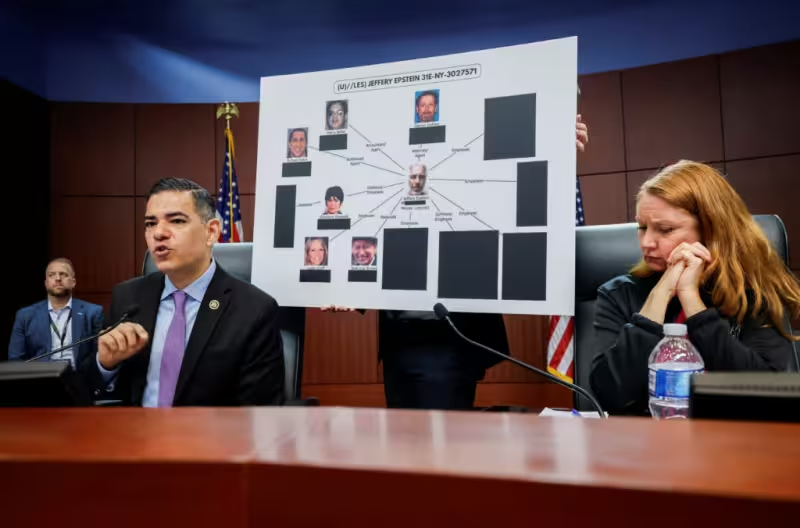
Sarah Kellen testified Thursday in a closed-door deposition before the House Oversight Committee about her yearslong connection to Jeffrey Epstein, putting one of the figures tied to his orbit at the center of a fresh congressional inquiry.
In an opening statement to lawmakers, Kellen said Epstein sexually and psychologically abused her for more than a decade. She wrote that therapy helped her see herself as a survivor as well, adding, “I was trapped inside Jeffrey Epstein's world,” and, “He groomed me, sexually and psychologically abused me, controlled me, manipulated me, dominated me, and gaslit me until I could no longer tell which thoughts were mine and which were his.”
Kellen also said she was a target of Epstein’s abuse while she managed logistics for his relations with girls and young women. Her name appears in Department of Justice files, in Miami Herald journalist Julie K. Brown’s investigative series and in civil lawsuits pursued by Jane Doe plaintiffs who survived Epstein’s abuse. She was identified as one of four potential co-conspirators named in Epstein’s 2007 non-prosecution agreement, though she and the three other women cited in that deal have not been charged with crimes associated with him.

That testimony lands as the committee examines how the federal government handled cases involving Epstein and Ghislaine Maxwell, a review that has kept attention on the way investigators and prosecutors described the people around him years ago. Kellen worked as Epstein’s personal assistant, helped maintain the schedule of young women and girls who came to his residences, and was tasked with recruiting girls and handling travel arrangements because they were often too young to drive themselves to and from the mansion.
Her lawyers told MS NOW that she continues to endure harassment and threats since the non-prosecution agreement became public with her name visible, a reminder that the fallout from the case has not stayed in the past. Kellen has denied wrongdoing, even as legal documents describe her as a key figure in Epstein’s sex-trafficking network.
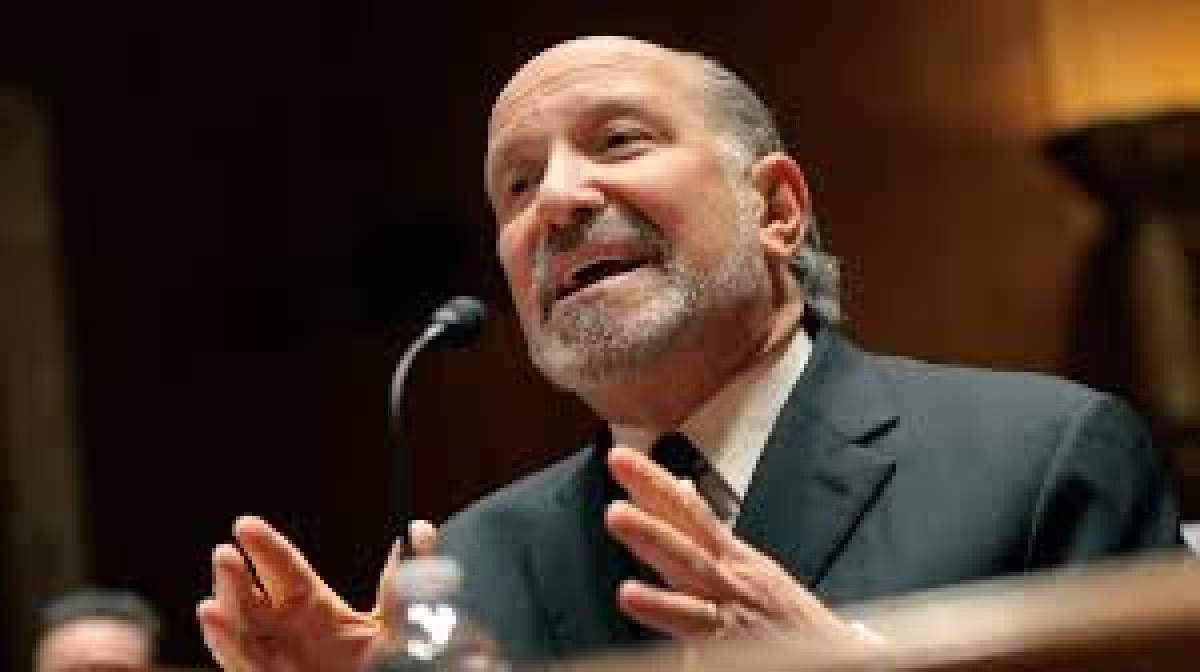
The closed-door interview also underscores a larger issue now facing investigators: how much the government knew, who was protected by earlier deals, and why names that surfaced in old files are still carrying consequences today. A recent report also noted that Howard Lutnick told investigators he and his wife avoided Jeffrey Epstein, adding another thread to a widening congressional look at the financier’s circle.
For Kellen, Thursday’s appearance put her at once in the role of witness, accuser and accused, and it showed that Epstein’s case is still forcing lawmakers to confront the people who moved inside it and the damage it left behind.