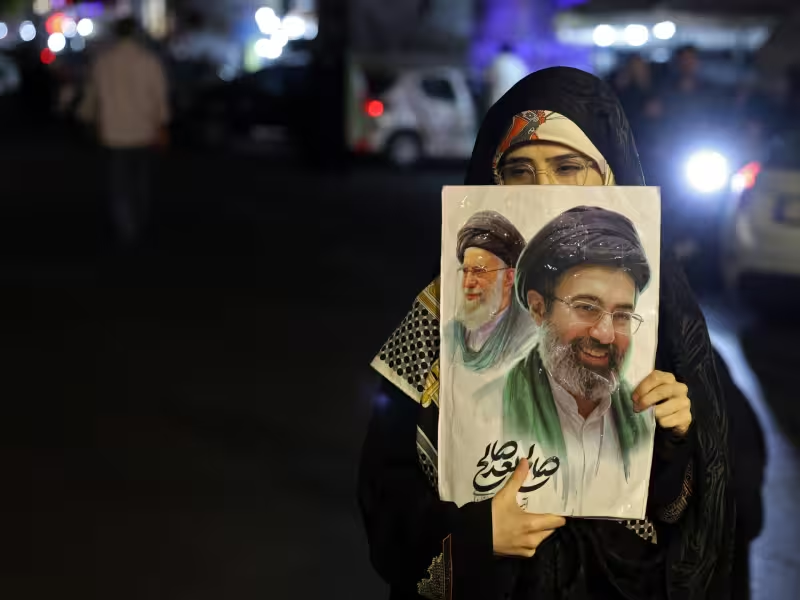
Iran’s supreme leader has issued a directive that roughly 440kg of uranium enriched to 60 percent should not be sent abroad, reported on Thursday — a declaration that collided with President Donald Trump’s public vow that the United States will take the material.
The figure at the center of the dispute is about 440kg (970lb) of uranium enriched to 60 percent. Speaking to reporters at the White House on Thursday, Trump said, "We will get it. We don’t need it, we don’t want it. We’ll probably destroy it after we get it, but we’re not going to let them have it." also reported that Trump had assured Israel the stockpile would be sent out of Iran and that any peace deal would include a clause on this.
The immediate weight of the moment is the size and concentration of the stockpile: uranium at 60 percent is well above the 3.67 percent cap set by the 2015 nuclear deal Iran signed with the United States and other powers, and it shortens the time needed to reach weapons-grade material if enrichment continues. The International Atomic Energy Agency chief Rafael Grossi told Al Jazeera in early March that, in theory, Iran’s 60 percent stockpile could produce more than 10 nuclear warheads if enriched to 90 percent.
Context sharpens why both sides are pressing. Iran agreed in 2015 to limit its nuclear programme in exchange for sanctions relief; the United States withdrew from that deal in 2018 and restored sanctions. Iran’s decision to raise enrichment from the 3.67 percent ceiling to almost 60 percent followed the 2018 withdrawal and an attack on its Natanz nuclear facility in 2021, which Tehran blamed on Israel. The stockpile has since become a chief sticking point in any talks aimed at broader peace or a return to limits on Tehran’s nuclear activities.
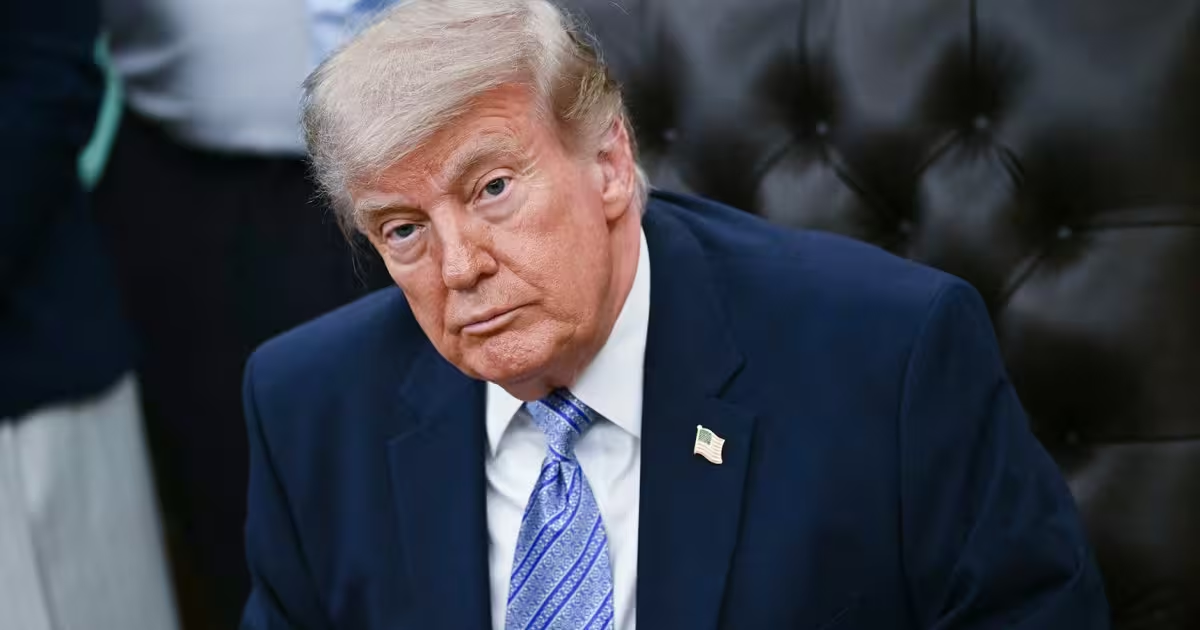


The friction is immediate and stark. quoted the domestic directive in blunt terms: "The Supreme Leader’s directive, and the consensus within the establishment, is that the stockpile of enriched uranium should not leave the country." That position was echoed by one Iranian source who told the material should not leave Iran. Those statements sit uneasily beside Trump’s promise to physically remove the stockpile and his assurance to Israeli leaders that it will be sent abroad as part of any deal.
The contradiction leaves negotiators with a narrow set of paths forward: Iran could revise its public directive and accept the removal, the United States could accept a different verification or containment arrangement short of taking custody, or the dispute could be deferred — a choice that risks further escalation. Trump’s remark that the United States would "probably destroy it after we get it" signals Washington’s readiness to assert control rather than leave the material in Iranian hands.
Whatever technical options exist for placing limits around the material, the political impasse is the immediate barrier. The iran uranium stockpile is not merely a technical puzzle; it is a bargaining chip tied to national dignity, security perceptions and the broader rupture that followed the 2018 U.S. withdrawal from the 2015 deal. With Tehran publicly barring export and Washington publicly promising seizure, the stockpile has become the single most consequential obstacle to reviving any negotiated settlement.
The likely outcome, given the public positions now on record, is that the dispute will harden unless one side retreats. If Iran does not revoke the supreme leader’s directive, Washington’s vow to seize the material cannot be implemented without Iranian consent — or without measures that would dramatically widen the confrontation. That makes removal of the 440kg stockpile unlikely in the near term and positions the uranium as the dealbreaker any negotiator will have to resolve first.