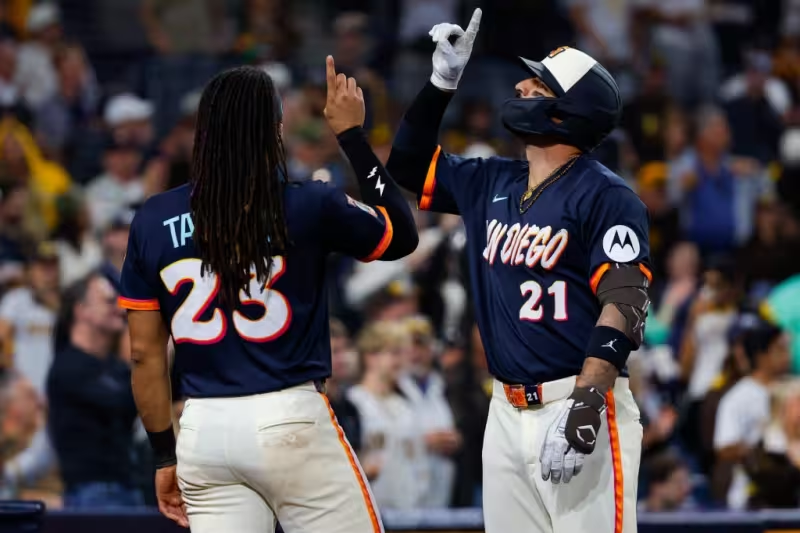
Manny Machado hit a game-tying two-run homer in the first inning and the Padres beat the Athletics 7-3 on Friday, moving the club to 30-20.
The scoreline matters because it points to the same paradox that has defined this season: through the first 50 games the Padres sit with the major leagues’ lowest batting average while owning the fifth-best record. The win against the Athletics included key long balls — Nick Castellanos hit a game-tying solo homer in the fifth and Ramón Laureano launched a go-ahead solo homer in the seventh — and an eighth-inning rally of three runs built on four singles and a sacrifice fly that finally punctured Oakland’s resistance.
Numbers underline how the Padres have been winning. The club was 8-4 over its previous 12 games and 30-20 after Friday’s victory. Yet over those 12 games they were batting just better than.203, and 24 of the team’s 44 runs in that stretch had been driven in by home runs. Before the eighth inning on Friday the Padres had scored nine consecutive runs via homers; earlier in the week all five of their runs in the series against the Dodgers had come on homers.
The context is blunt: San Diego’s record is real and it has been bought largely with power. Walker Buehler started for the Padres on Friday, and the club’s ability to pile up decisive runs with the long ball has masked a broader inability to string hits together consistently. That has kept the team winning enough to sit where it does in the standings even as the underlying hitting numbers look shaky.

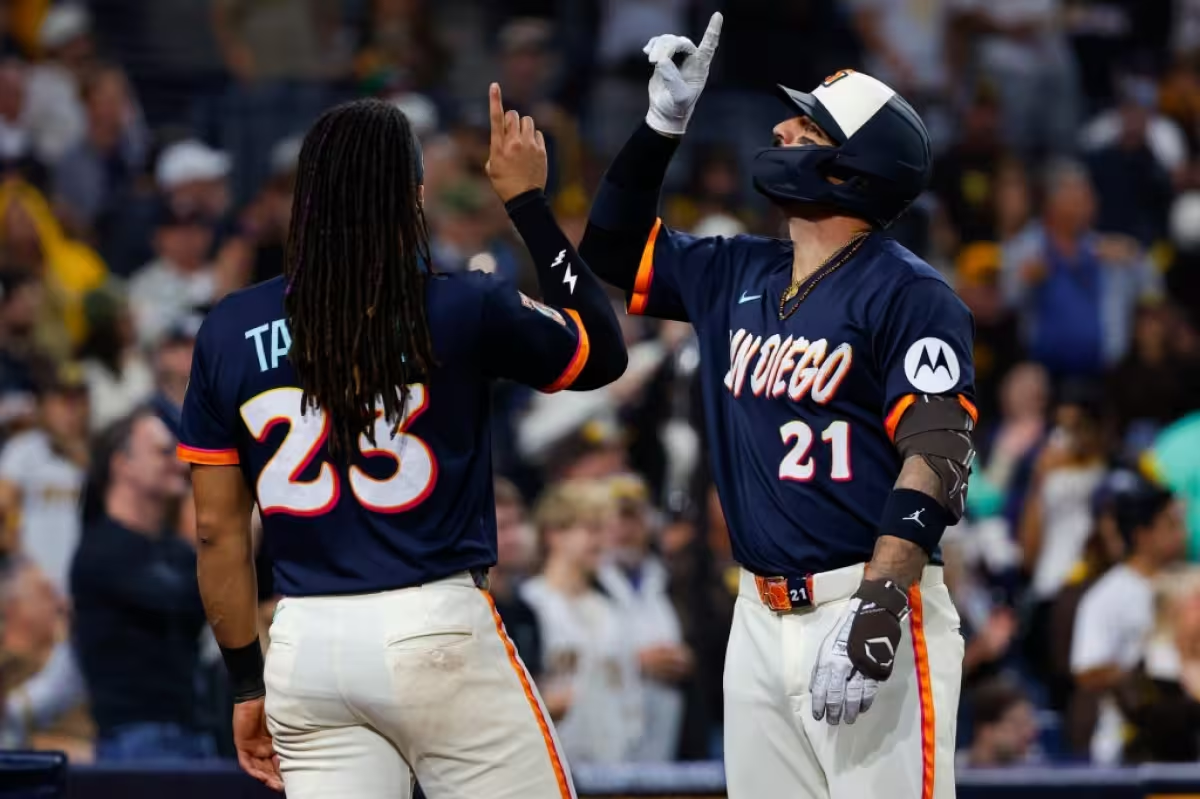
There is tension in the results. On Wednesday the Padres fell 4-0 to the Dodgers after Shohei Ohtani led off with a home run — the Padres trailed for good one pitch into that game — a reminder that relying on the long ball can leave the club exposed when the opponents get the first blow. Against Oakland, Jeffrey Springs retired 10 of the 11 batters he faced for the Athletics, and yet the Padres still found answers over the middle innings; Laureano’s seventh-inning homer did the heavy lifting before the eighth-inning small-ball push.
Laureano put the dynamic plainly after the game. "It feels like when we’re scoring, we cannot get many hits, I guess," he said. "And we just either, you know, clutch hits or homers." His words capture the duality: clutch situational hitting plus power have carried the team, but neither alone offers a comfortable margin for error if the long balls slow.
There are consequences that follow from that duality. The club’s 30-20 mark will hold up only so long as the homers keep coming at a rate that compensates for a low contact profile. Friday’s three-run eighth — built from four singles and a sacrifice fly rather than a blast — supplied a more conventional template for sustaining offense, but such innings have been the exception rather than the rule in recent weeks.
What matters next is whether the Padres can turn the occasional string of singles into a steady supplement to their power production. The team’s record says it is winning today; the facts suggest that unless hitting beyond the long ball improves, that record is vulnerable. For now the Padres sit 30-20, their standing propped up by homers and occasional clutch hits; if those elements ebb, the club’s position will be tested in plain numbers rather than highlight reels.