At an Emmys For Your Consideration panel in Los Angeles on Thursday, May 21, David Harbour told a roomful of colleagues and fans that the child actors on Stranger Things were so relaxed on set that "even during takes, they would fart."
Harbour, 51, one of the show's most recognizable faces, was speaking alongside creators Matt Duffer and Ross Duffer, executive producer Shawn Levy and cast members Noah Schnapp, Natalia Dyer and Jamie Campbell Bower when he delivered the anecdote. He paused, smiled, and then said plainly, "These kids were just enjoyable as hell."
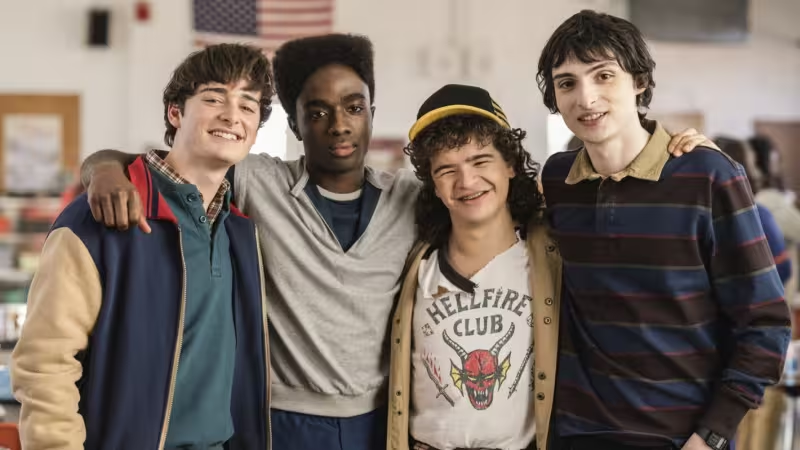
The anecdote landed not as a crude aside but as a shorthand for how Harbour remembers the early seasons. "A lot of kid actors that you work with are very actor-y, and part of the strength of the actors that they formed were that, at their essence, they were just kids," he said, adding that their ease allowed them to behave like children even during takes. "So, even during takes, they would fart and do things that you just couldn't believe that you had the relaxation to do that in front of a camera. I was like, I would dream of being able to do that and not being self-conscious in that way!"
Harbour, who played Chief Jim Hopper on the series, used the memory to make a broader point about the chemistry that grounded the show. "These were real, beautiful human beings, and they were such a joy to work with; I had a blast," he said, and called the first season "a miraculous time" in his life. The remark about the children came during an Emmys push that doubled as a reunion and a chance for the cast and creators to rehearse the story they have told for years on panels and publicity rounds.

Context matters: Stranger Things — which starred Finn Wolfhard, Noah Schnapp, Gaten Matarazzo, Caleb McLaughlin, Millie Bobby Brown, Sadie Sink and Priah Ferguson, among others — concluded with Season 5 in December 2025. The Los Angeles panel was part celebration and part campaign; the gathering was billed as an Emmys For Your Consideration panel discussion and included several of the show's principal cast and creators.
The memory of open, childish behavior on set sits uncomfortably next to Harbour's other public admissions about the show. He has been candid about Hopper's darkness — "Hopper was a very depressed individual, it was really tough to go through the acting of that, but the family that we created and the story that we were telling, I don't know if I've ever felt that enriched by some work that I was doing" — and he has repeatedly said he can be hard on the series. "I'm very close to the show, so I have very strong opinions. And they may not match yours if you're a fan of the show," he said, and added plainly, "I can be very critical of this show." That tension — a set both loose enough for kids to be kids and a central actor digging into draining material — helps explain how the series could feel both intimate and harrowing.
For viewers and industry types, the story does a simple thing: it humanizes a production that became a global franchise. Harbour's recollection is not about cheap laughs; it is a shorthand for an atmosphere in which young performers were allowed ordinary, unguarded behavior on camera, and where a lead actor could both plumb dark emotional depths and remember laughing with his co-stars. It also underlines how much Harbour values the cast he worked with — a point he made elsewhere in his comments when he said, "These were real, beautiful human beings, and they were such a joy to work with; I had a blast."
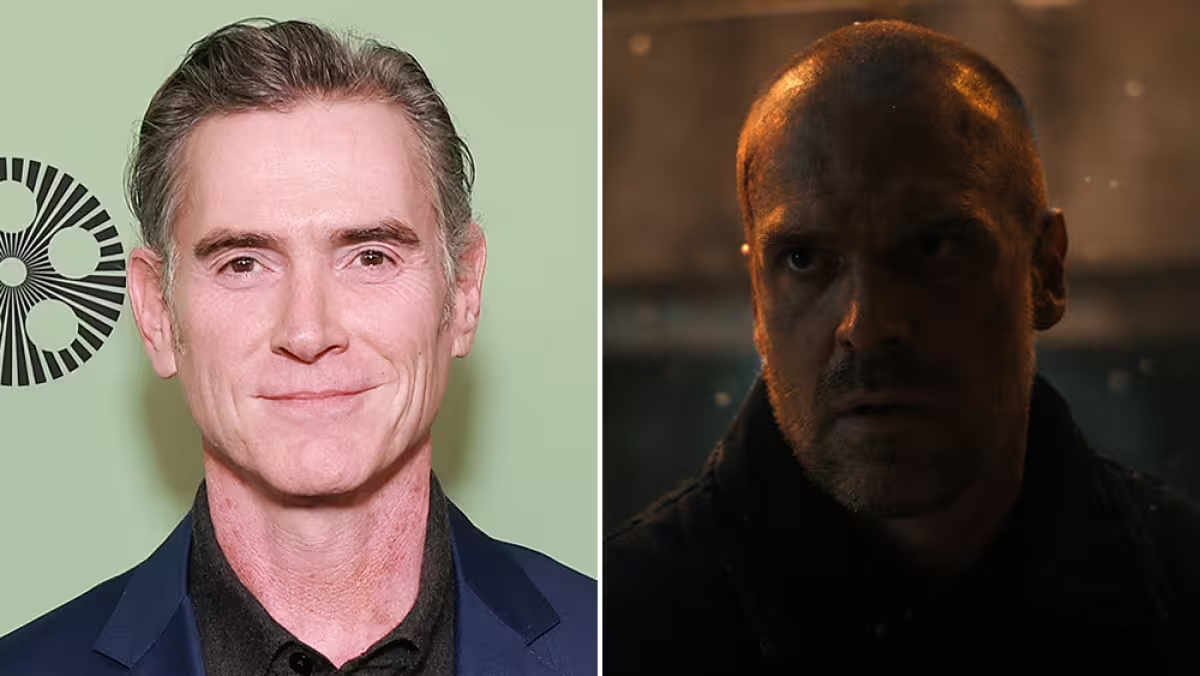
If readers want a longer look at how Harbour landed the Hopper role and how casting shaped his performance, a separate piece at our site recounts that story in detail: Josh Brolin: How David Harbour Landed Stranger Things’ Hopper After Billy Crudup Passed — But the short answer to the question the anecdote raises — did these kids really behave like kids? — is yes: Harbour's memory of gas, goofing and ease on set is the clearest proof he offered that the show's most durable moments grew out of a cast allowed, and encouraged, to be themselves.