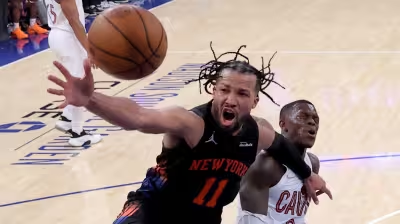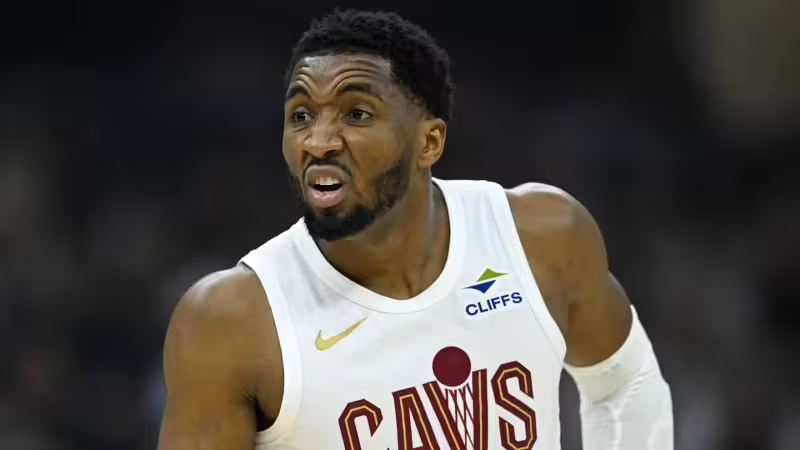
In Game 1 of the Eastern Conference Finals the New York Knicks turned a single matchup into the evening’s defining adjustment: Landry Shamet spent more time guarding Donovan Mitchell than any other Knicks defender.
The result was stark. When Shamet was matched with Mitchell, the Cavaliers’ offense averaged just 0.81 points per possession — a rate that, in a playoff setting, collapses margin and momentum. The Shamet assignment did not occur in isolation: New York also moved Karl-Anthony Towns onto Evan Mobley and shifted OG Anunoby to cover Jarrett Allen, reshaping the Knicks’ defensive structure for the series’ opener.
That combination mattered because it forced Cleveland to confront multiple problems at once. Matching Shamet on Mitchell removed a typical primary defender from another part of the lineup, while Towns on Mobley and Anunoby on Allen changed how screens and rim protection would be handled across the floor. The statistical impact during those Shamet–Mitchell minutes shows the tweak was more than a clever footnote — it was the engine of New York’s defense in Game 1.
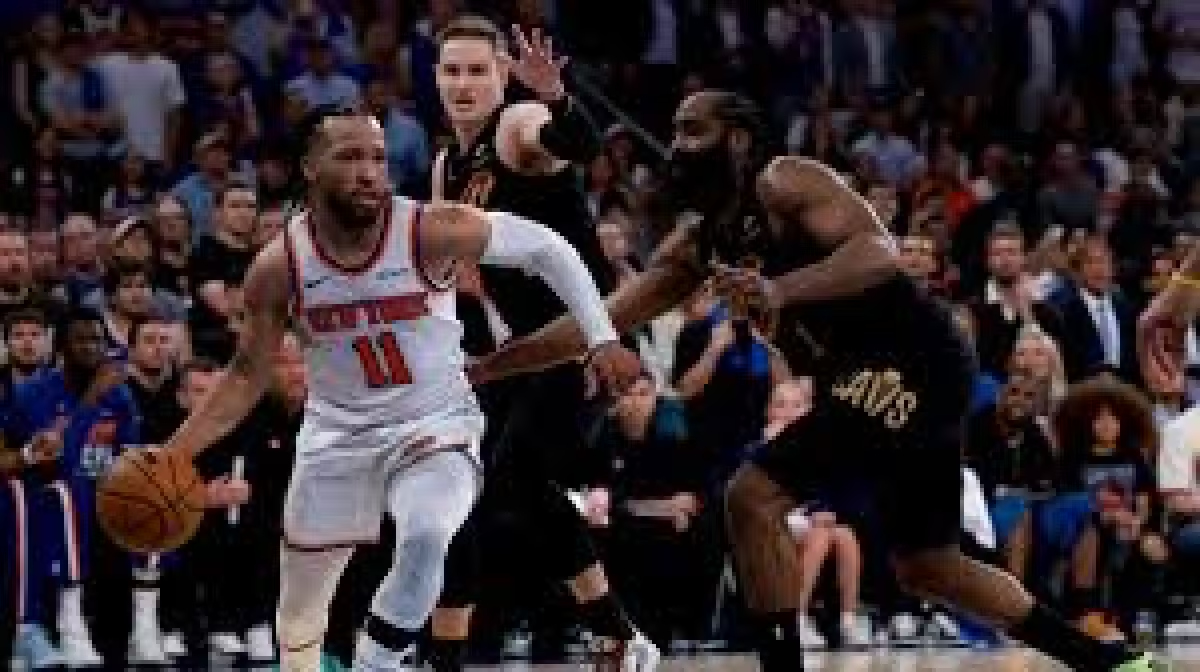
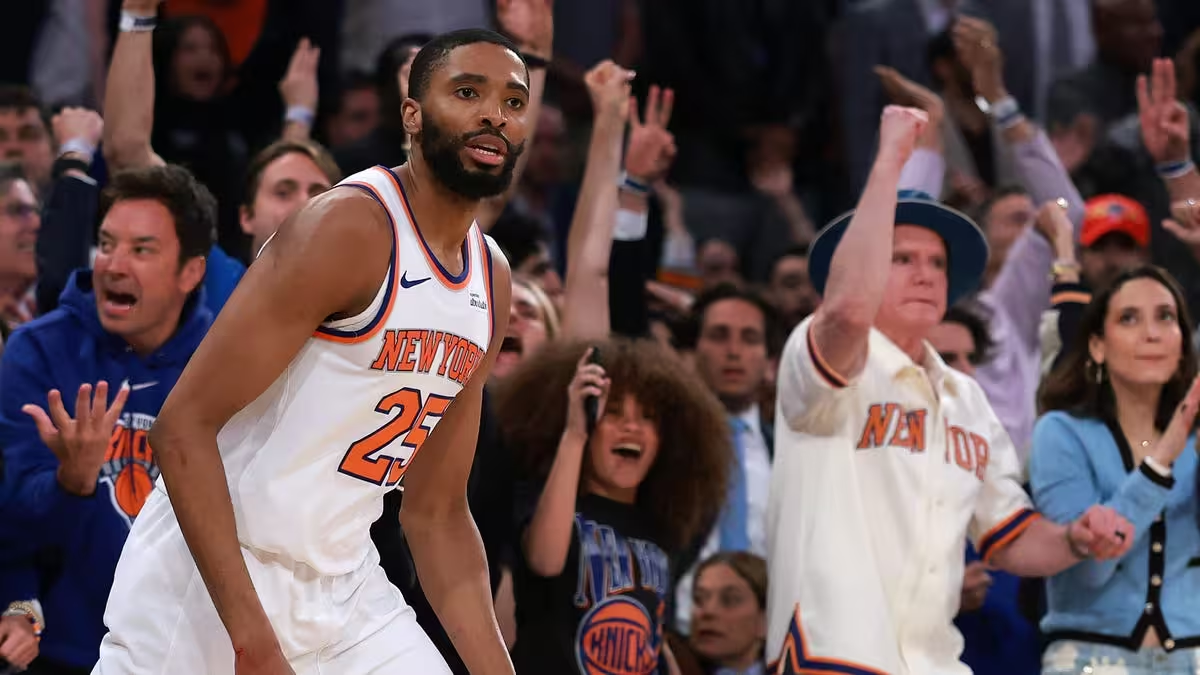
Still, the Cavaliers have possible counters. One adjustment under consideration is to use Evan Mobley as the screener more often instead of Jarrett Allen. Mobley is leaner than Allen, and his picks are generally easier for ball-handlers to fight around. Cleveland may try to manufacture looks that get Mitchell back on to Jalen Brunson by setting off‑ball screens and shuffling coverage away from the Shamet matchup.
The friction is clear: those counters rely on changing the screen creator and the timing of off‑ball movement, but Shamet’s presence complicates Cleveland’s choice. Shamet is described as one of the Knicks’ scrappier screen navigators, and analyses of Game 1 say he should have little trouble handling the off‑ball screens Cleveland could deploy to reverse-match through Mitchell. If Shamet can continue to stay attached and survive the secondary actions, the Cavs’ proposed solutions are diminished.
That leaves the Cavaliers with a narrow set of feasible responses. They can attempt to alter who sets the screens — trading Allen’s brute strength for Mobley’s mobility — or they can force different ball‑screen reads elsewhere to create advantage. Neither option guarantees a neutralization of the Shamet-on-Mitchell wrinkle: the tweak changed more than one matchup, and it forced Cleveland to calibrate personnel and timing across three separate defensive assignments.
In short, New York’s Game 1 gambit was successful both statistically and structurally. By assigning Shamet to Mitchell and reassigning Towns and Anunoby, the Knicks produced a tangible drop in Cleveland’s efficiency and presented a problem the Cavs must now solve. The clearest prediction from Game 1 is this: unless Cleveland finds a way to make screening actions materially harder for Shamet to navigate or to change who meets Mitchell without opening another weakness, the Knicks’ defensive wrinkle will remain a decisive lever for the series.