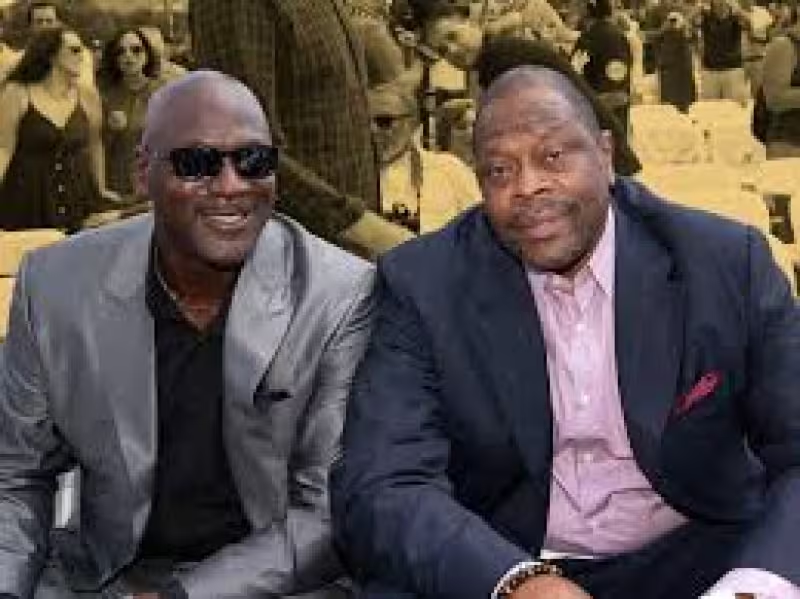
Patrick Ewing said Kareem Abdul-Jabbar should be included in conversations about the greatest basketball player of all time, bluntly pushing back on how often the Hall of Famer is left off the list.
“I mean people talk… When they talk about greatest of all time, they very rarely put him in there and what he did was special. I mean he was 7'2. He developed a shot that was virtually unstoppable,” Ewing said.
The former center’s words land as more than a compliment: they are a challenge to the shorthand the debate has settled into. Ewing named size and an indefensible shot — the twin pillars of Kareem Abdul-Jabbar’s career — as reasons the six-time NBA champion belongs in the GOAT conversation, not on its margins.
That argument carries weight because it comes from someone who played the same position against Abdul-Jabbar-era players and later against the next generations. Ewing’s reference to 7'2 underscores both the physical advantage and the skill he attributed to Abdul-Jabbar, and his characterization of that signature scoring move as "virtually unstoppable" is meant to explain why exclusion from the debate is a puzzling omission.
The comment joins a long-running national conversation about how to rank all-time greats, a debate that swings between era-based comparisons and peak-versus-longevity calculations. Ewing framed his point specifically around how often Abdul-Jabbar's name is left out when lists of the game's greatest are assembled, and he left little room for ambiguity about the reason he believes that omission is wrong.
Even so, the remark surfaces a tension that runs through every GOAT discussion: statistical accumulation versus popular memory. Abdul-Jabbar’s career achievements and distinctive shot have long been part of the record; Ewing’s point is that those facts should force more frequent inclusion in the top-tier debate. The friction is not in Abdul-Jabbar’s résumé — it is in why the résumé sometimes fails to translate into modern consensus.
For readers interested in how sports history is written, Ewing’s words are an invitation to re-examine the criteria used to crown the game's greatest. He did not lay out a new ranking or quantify a formula; he simply pressed a cultural question: why do historians and fans so rarely place a 7'2 scorer who built an almost indefensible weapon among the very top names?
That question is the most consequential one left by Ewing’s comment. If the debate is to be more than a list of familiar headlines, it will need to account for the kinds of advantages and innovations Ewing highlighted — and for why those truths sometimes get lost as the conversation moves from generation to generation. Ewing’s statement demands one clear thing: Abdul-Jabbar’s career should be debated on its own terms, not dismissed for failing to fit an ever-changing popular narrative.