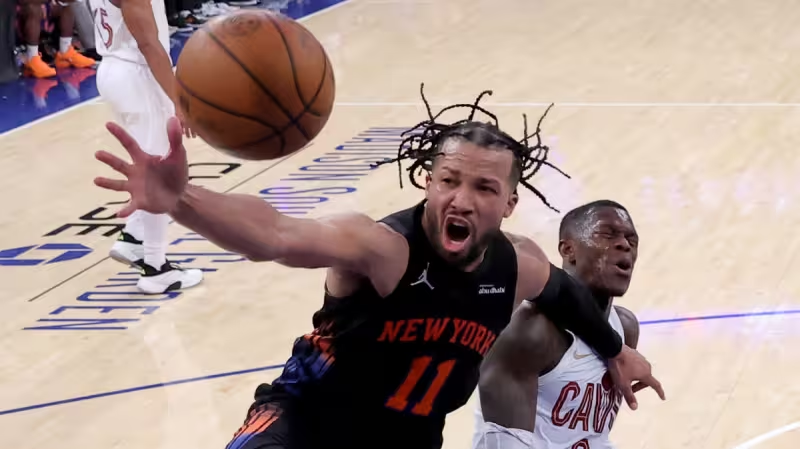
Jalen Brunson finished with 19 points and a playoff career-high 14 assists as the New York Knicks beat the Cleveland Cavaliers 109-93 in Game 2 of the Eastern Conference finals on Thursday, May 21.
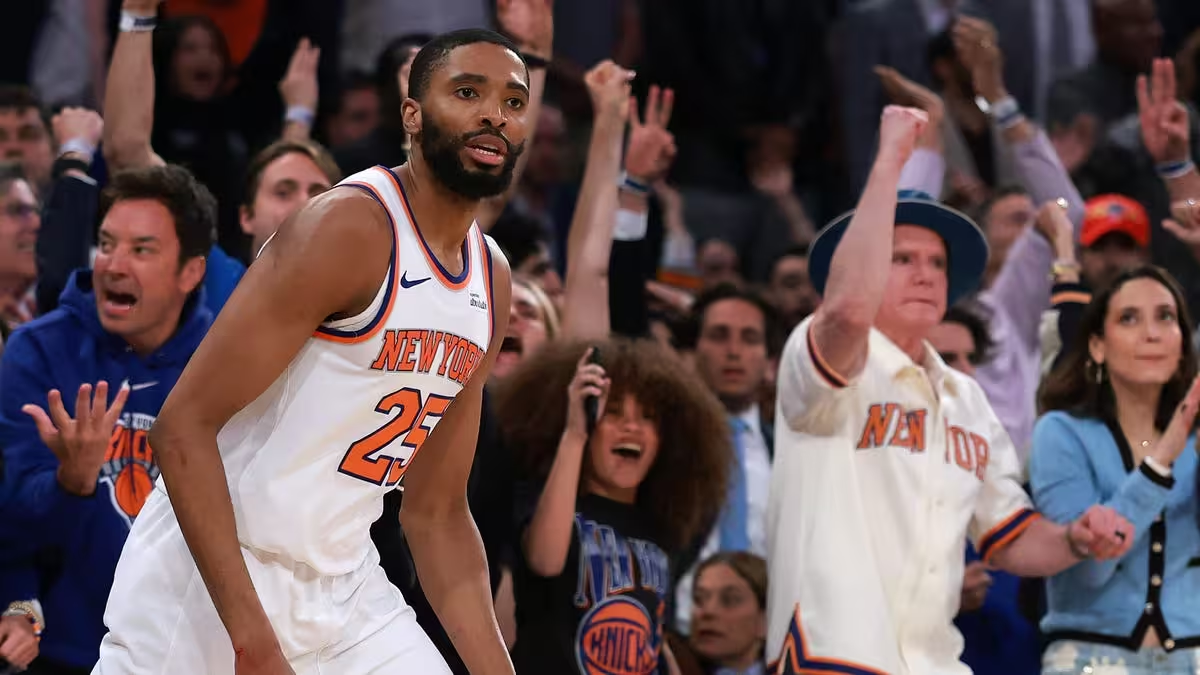
The victory pushed New York to nine consecutive playoff wins and left the Knicks two victories from their first NBA Finals in 27 years. Josh Hart led the team with 26 points, Mikal Bridges added 19 and Karl-Anthony Towns scored 18 as the offense found scoring beyond its star guard.
Brunson’s line was a study in adjustment: he shot 7-of-16 from the field and 1 of 7 from 3-point range, and he missed his next five field-goal attempts after scoring on the first possession. According to, he had 2 points and 5 assists at halftime before turning into a distributor in the second half.
Cleveland’s game plan was clear — double-team Brunson and, later in the second half, face-guard him full court — and it produced results. The Cavaliers’ tactic forced New York to move the ball, and Brunson responded by finding teammates. As coach Kenny Atkinson put it, "That’s what great players do, right?" He added, "They read the game, and the game dictated that. Obviously, we were loaded up more to him, and he found other guys. … Took away some of his scoring options, blitzed him, gave him different looks. He made the right reads, the right plays."
The Knicks got those plays. Hart’s 26 points came on a series of threes and drives that punished the help defense. Mikal Bridges said the sequence sent a message: "A great message." He added, "It just shows that he plays the right way. If you’re not going to send a d" — a line cut short but unmistakably in praise of Brunson’s choices.

Cleveland’s coach Mike Brown defended the approach and warned of its trade-offs. "If you don’t send a second guy at (Brunson), he’s got a pretty good chance at scoring it," Brown said. "If you send the second guy at him, he’s going to make the game easier for his teammates. He’s going to find them. They just have to step up and make shots." Brown summarized the dilemma plainly: "MVP candidate like Jalen is, you gotta make the game easier for everybody else."
Inside the Knicks’ locker room, teammates highlighted Brunson’s priorities. Guard Miles McBride said simply, "He’s about winning." "We knew that from the jump. Obviously, he’s one of the best scorers in the league, but the fact that he’s willing to just be selfless and give up the ball when guys are double-teaming him proves that he just wants to win," McBride added.
Brunson himself framed the game as a lesson in flexibility. "It’s an advantage for us learning how to play differently," he said, and added, "There’s going to be times when one game plan is going to be different than the next." He expanded on that thought after the game: "Being able to adjust and learn on the fly and adjust on the fly is something that we need to continue to get better at, but I think we’ve been doing a great job of it. I think we just need to continue to be open to figure out how we can win the next game."
The arc of Brunson’s development has roots off the court. Before this season, his father Rick Brunson — profiled recently in a FilmoGaz piece about Rick Brunson's influence ( — told him of rival players, "He’s better than you. He works harder." Brunson said that warning "made me want to outwork them," and that his "God-given talent was to just outwork people." It is the same relentlessness that the NBA highlighted on Wednesday when it tweeted that Brunson had scored more fourth-quarter postseason points than any other player over the last four years, with 416 points.
The tension heading into Game 3 is obvious: Cleveland will have to decide whether to continue doubling and face-guarding Brunson and hope New York’s role players cool off, or to risk letting him beat them with shots like the 38 he scored in Game 1. For the Knicks, the clear lesson from Game 2 is that Brunson’s willingness to defer does not weaken New York — it spreads responsibility. If the team keeps turning opponents’ focus on him into balanced attack, the Knicks are in the strongest possible position to close this series.