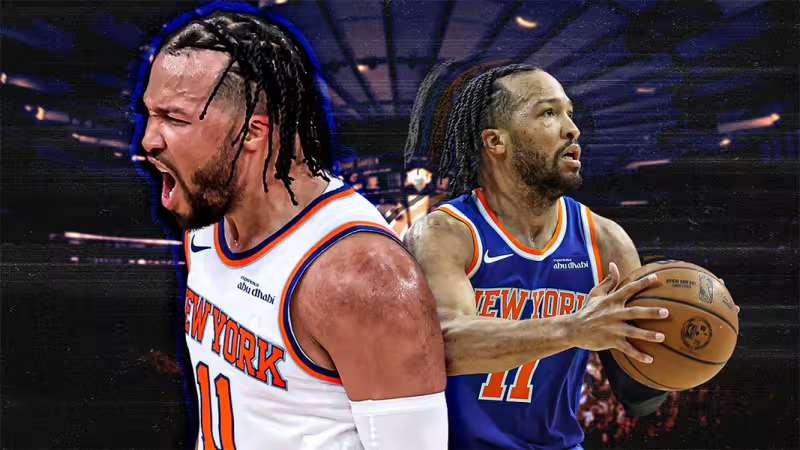
Jalen Brunson has pushed the New York Knicks deeper into the postseason and closer to the NBA Finals, and at the center of that surge is a simple, persistent influence: his father, Rick Brunson.
Across this playoff run, Brunson has been the team's clearest leader on the court, a fact that has recalibrated the Knicks' identity and their odds as the postseason tightens. That leadership has not emerged in a vacuum. Rick Brunson remains front and center in his son's winning mentality, a throughline the reporting identifies as as crucial to how Jalen prepares, focuses and closes out games.
The weight of that dynamic is straightforward: this is not just a hot streak by a scorer or a late-season adjustment by a coach. During the current Knicks playoff run, Jalen Brunson has led the team closer to the NBA Finals, and his approach—tempered by his father's influence—has been a recurring theme in coverage of the team’s progress. The connection matters now because the margin for error in the playoffs is thin, and mental edge often decides late series.
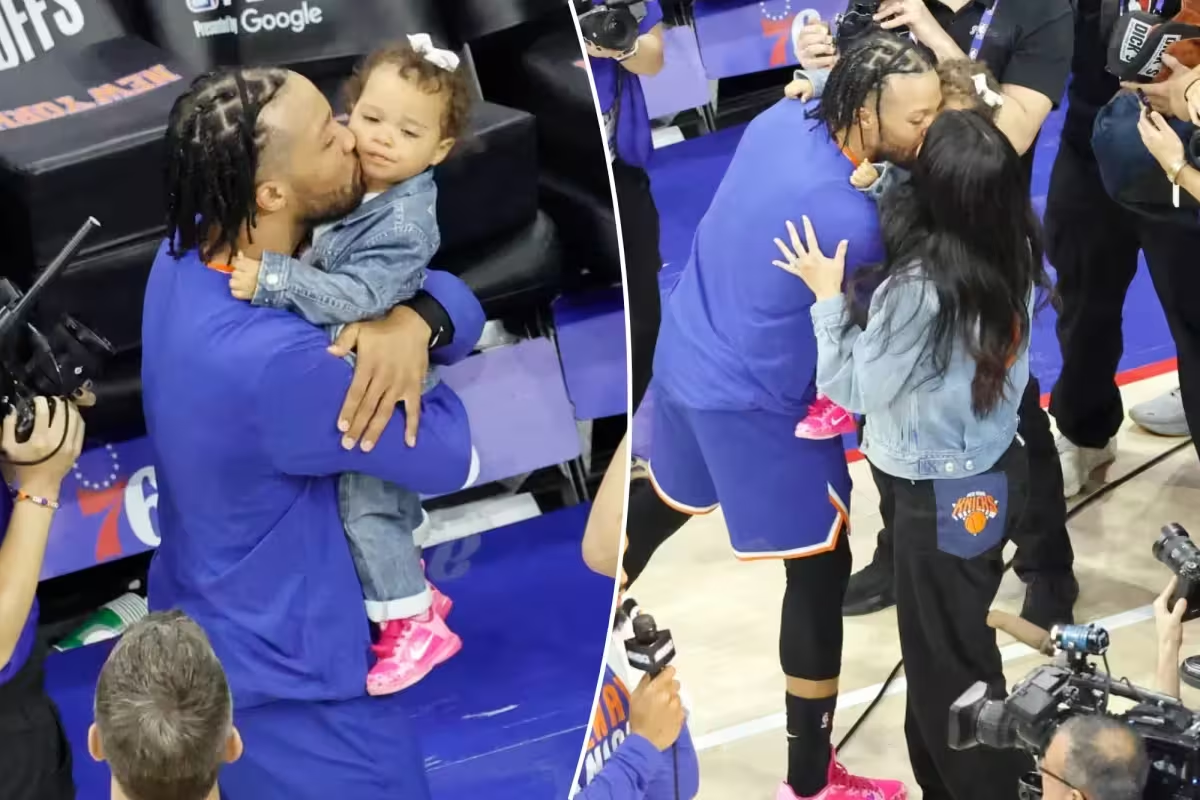
The reporting that framed this run emphasized the family thread. The primary story cast the Knicks’ push as both a team achievement and a family story, centering the relationship between father and son as a lens on why Jalen has been able to sustain high-level play when it matters most. That context explains why conversations about rotations, matchups and shot attempts have been accompanied by the same, quieter question: what is giving Brunson the steadiness to close games?
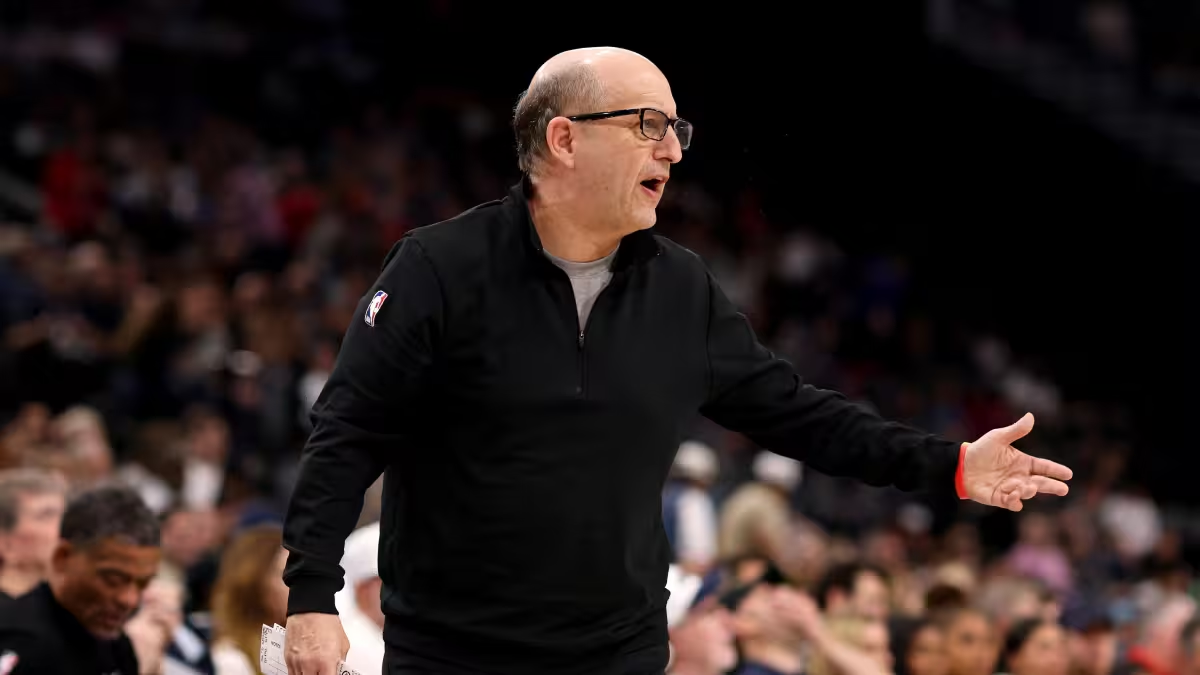

There is tension inside that neat narrative. A separate roundup that touched on Atlantic Division notes mentioned Rick Brunson only briefly while covering a wider set of teams and young players — a reminder that the father-son storyline is one thread among many in a crowded postseason landscape. The contrast is notable: one piece treats the relationship as a defining frame for the Knicks’ run, the other files it as a short note amid wide-ranging observations about the Sixers, Nets rookies and the broader division picture.
That shortfall does not diminish the role Rick Brunson plays in the primary story. Coaches and teammates routinely defer to on-court actions in the playoffs; the reporting suggests Jalen Brunson’s consistency is, at least in part, the product of a mentality honed over years with his father. The narrative matters because it offers an explanation for why one player’s form can lift an entire postseason campaign—and why the Knicks’ trajectory now looks more plausible than it did before this run.
The next act is simple and consequential: the Knicks still must convert a run into a Finals berth. If they do, the account of how they got there will read like more than box scores—a portrait of a player who shouldered a team and of the formative influence behind him. If they falter, the family angle will remain a human portrait rather than the decisive variable it is being cast as now.
Either way, this postseason has already hardened a clear conclusion: Rick Brunson’s imprint on his son’s competitiveness has become one of the defining threads of the Knicks’ run. As Jalen Brunson continues to lead the team closer to the NBA Finals, that influence is no longer a sidebar. It is a part of what is driving the result.