Federal investigators are looking into whether U.S. nonprofits and activist groups coordinated with Cuban government officials in what Digital described as a possible foreign influence campaign inside the United States. The report said the Justice and Treasury departments are examining lobbying, messaging, fundraising, delegations and political organizing tied to the effort.
The report identified 145 nonprofits, labor groups, advocacy organizations and activist collectives across the country that it said were mobilizing in support of the Cuban government and the Communist Party of Cuba. Together, those groups report about $1 billion in combined annual revenue. That scale gives the inquiry weight beyond one protest, one post or one quick response; it points to an ecosystem with money, reach and a steady message.
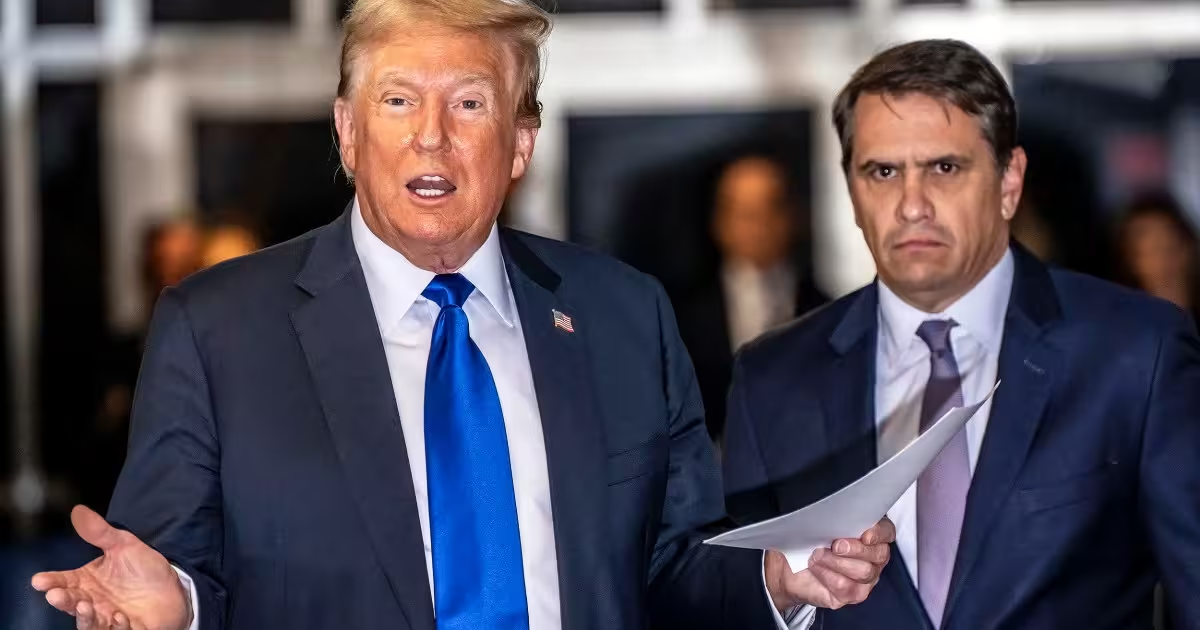
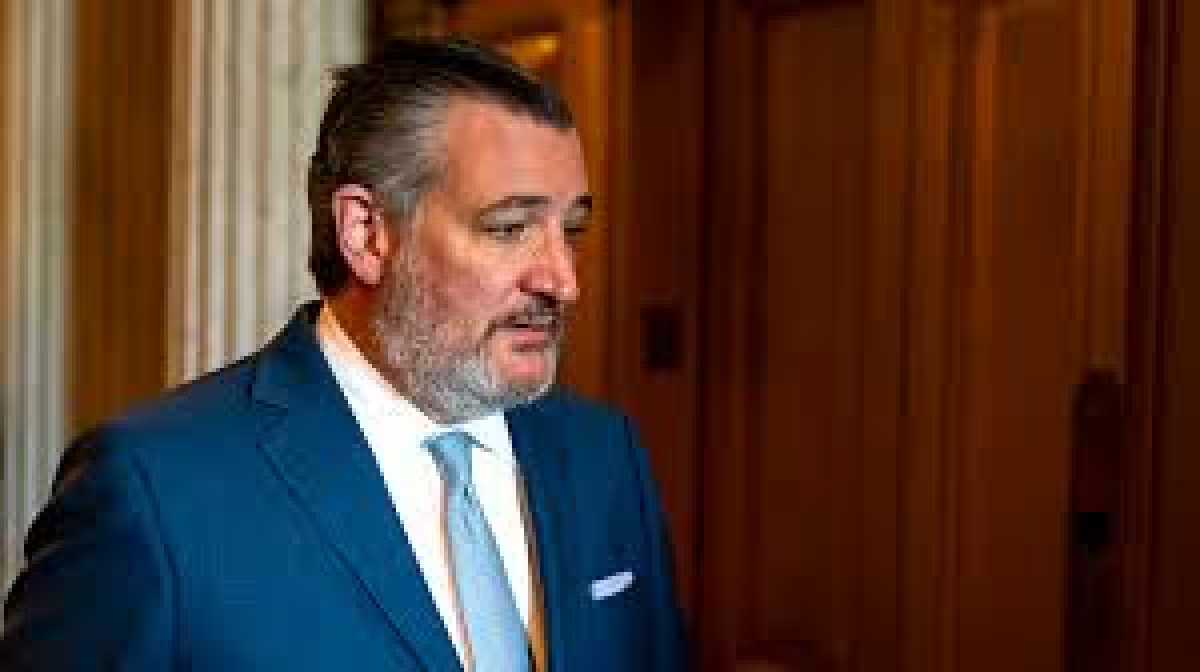
The public response began almost immediately after Todd Blanche announced murder charges against Raúl Castro on Wednesday, tied to the 1996 shootdown of two civilian aircraft flown by Brothers to the Rescue. At 1:54 p.m. Wednesday, the Party for Socialism and Liberation posted six pre-produced graphics denouncing the indictment, calling it a “BASELESS INDICTMENT OF RAUL CASTRO” and “A PRETEXT FOR ANOTHER WAR.” Early Thursday at 3:18 a.m., Vijay Prashad posted on X that Cuba is not a menace to the world and that the United States is the menace, while Manolo De Los Santos and leaders from CodePink shared the message. By 1:46 p.m. Thursday, BreakThrough News had published a video of defiant Cubans, including one man who said, “We won’t hand over Raúl.”
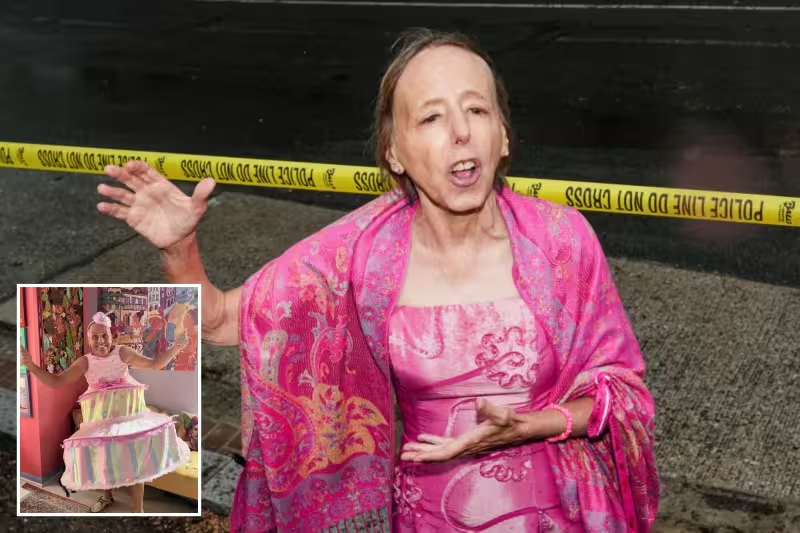
Digital said its investigative series is examining allegations that the communist government of Cuba built an influence network inside the United States, and the report said the rapid response followed the indictment announcement. The same supplement that mentioned Hasan Piker said he was on a Cuba aid convoy in March with Ilhan Omar’s daughter Isra Hirsi, organized by Medea Benjamin, president of the Arc of Justice Foundation. That supplement said Benjamin made at least seven trips to Gaza between 2009 and 2012, met Hamas officials including Ismail Haniyeh, and, with Tighe Barry, met Hamas leaders including Ahmed Yusef, who handed them a letter for President Obama in 2009.
The details leave one question hanging over the investigation: whether the government can prove the activism was independent advocacy or part of a coordinated foreign influence effort. For now, the speed of the response, the size of the network and the named contacts abroad suggest investigators are treating it as more than a symbolic fight over Cuba.