Kenny Atkinson played it coy before tonight’s game when reporters asked whether the Cavaliers would alter their starting five, answering only: "We'll see."
That answer, reported by Chris Fedor, stood in sharp contrast to how the team actually arrived at tipoff: Cleveland was never making a lineup change for tonight's game, the decision to remain with Dean Wade as the fifth starter had been made well before the matchup, and Wade started the game.
The simple facts are straightforward and close together on the timeline. Pregame, Atkinson was asked about a potential lineup change and replied, "We'll see." Before tonight, the team decided to stay with Dean Wade as the fifth starter. Tonight, Cleveland used Wade in that role.
The weight of the story is in that small discrepancy between the coach’s public posture and the team’s private decision. A single three-word reply from a coach can create the impression of an open question; a lineup set in advance makes that impression false. The result: reporters and fans parsing pregame comments were given a hint of possibility that the roster had already closed off.
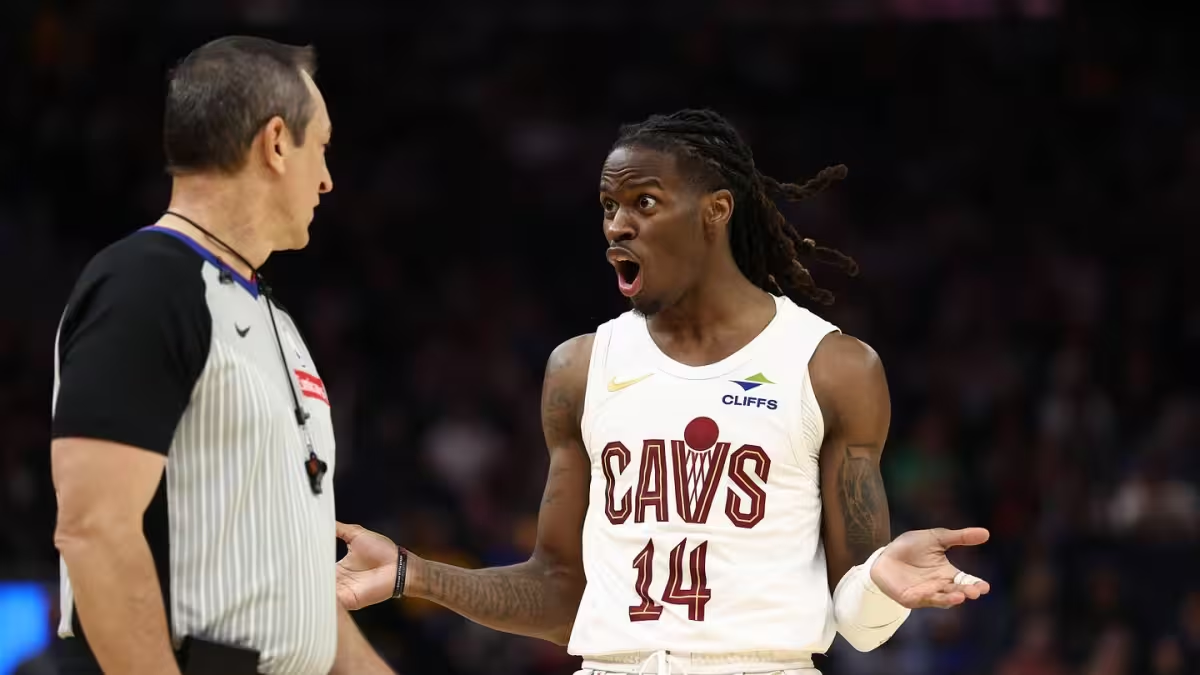
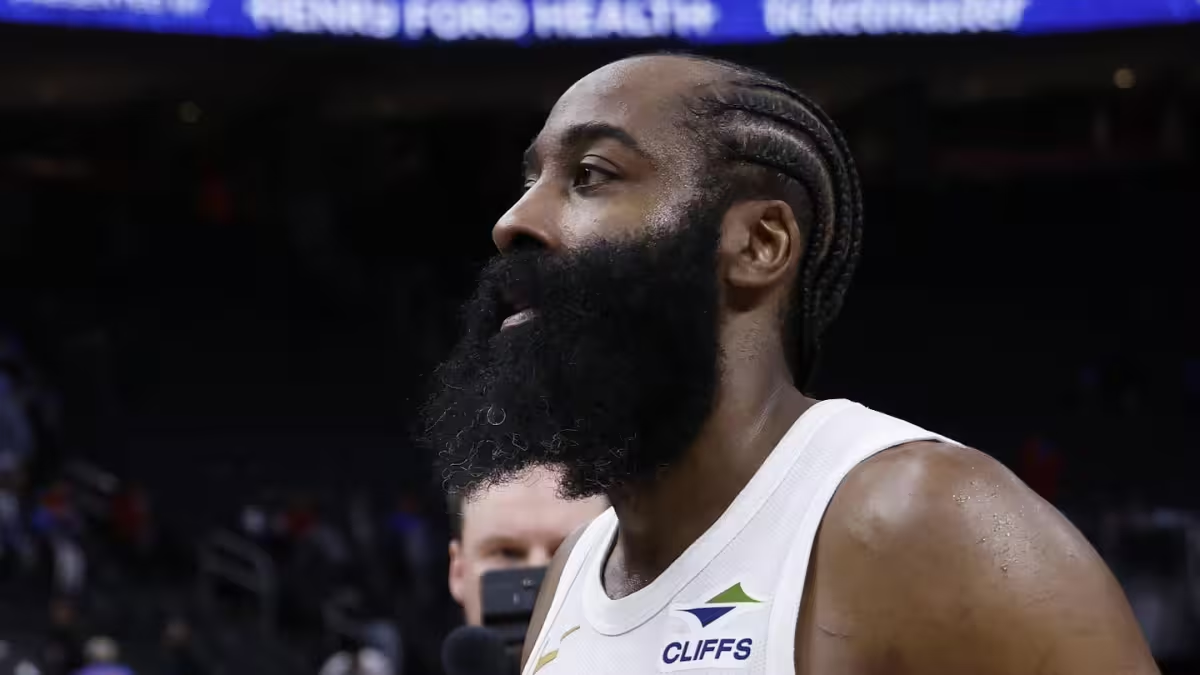
Context matters here. The reporting frames this around a narrowly defined question — would the team change its fifth starter? — and the answer from the club’s staff was already settled. The report that the club had decided before the contest not to change the fifth starter turns Atkinson’s pregame coyness from a straight news signal into a public-facing maneuver that did not reflect the team’s concrete plan.
That mismatch is the story’s tension. Coaches routinely manage information before games; a noncommittal "We'll see" can be a tactic to keep opponents guessing or to manage locker-room expectations. But when the internal decision has already been made, the coyness becomes noise rather than useful ambiguity. It raises the question of whether the coach intended to suggest flexibility for strategic reasons, or simply preferred to avoid discussing decisions that were not going to change.
For Dean Wade, the practical effect was immediate and unambiguous: he was the fifth starter tonight. For Atkinson, the effect was reputational — the coach's offhand line received attention precisely because it implied a pending change that never existed. The citation of the coach's three-word reply by itself proved insufficient to alter what the team had already set.
What happens next is small but important. The episode sharpens how reporters will treat similar pregame responses in the future: a brief, noncommittal answer can no longer be read at face value when teams have already finalized decisions. It also places a modest premium on clarity from coaching staffs when the public narrative matters to fans and media alike.
Ultimately, the clearest takeaway is this: Atkinson's "We'll see" put out a different story than the one the Cavaliers had already written. The team entered the night with Dean Wade slotted as the fifth starter and did not alter that plan — whatever Atkinson's words suggested, the rotation was settled well before the first tip.