
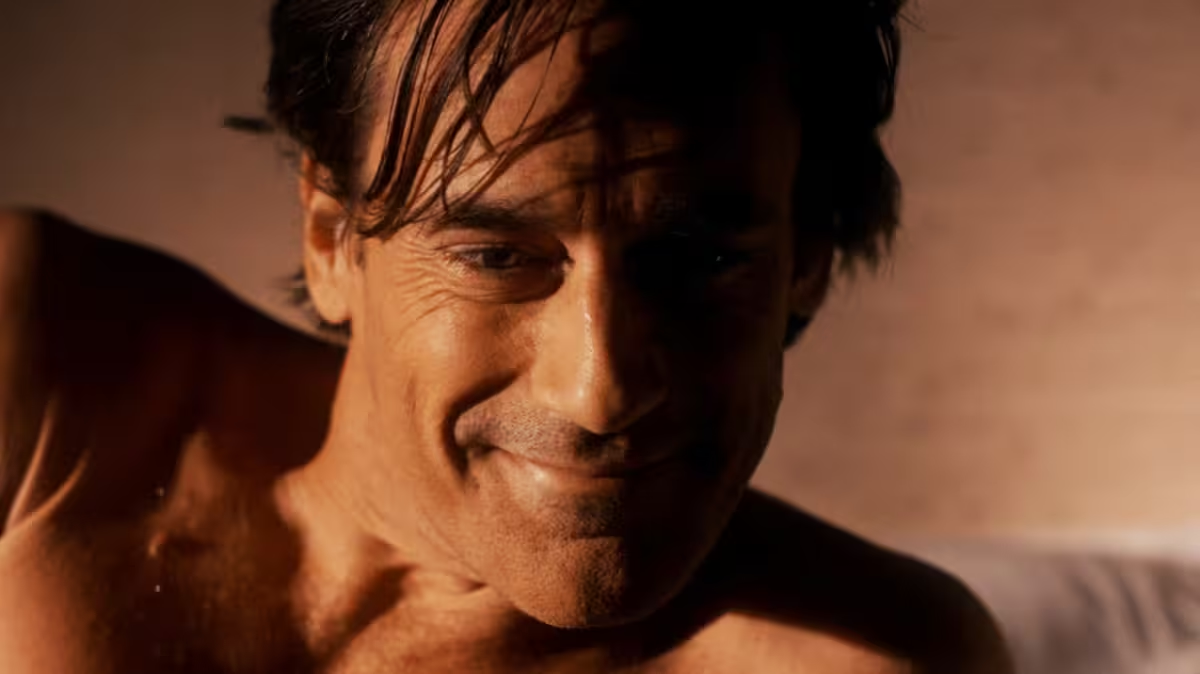
Bill Pullman has reunited on screen with Geena Davis in the Netflix science-fiction mystery series The Boroughs — and his character, Jack, is killed at the end of the first episode by a mysterious creature that Sam Cooper discovers siphoning brain fluid from Jack’s sleeping body.
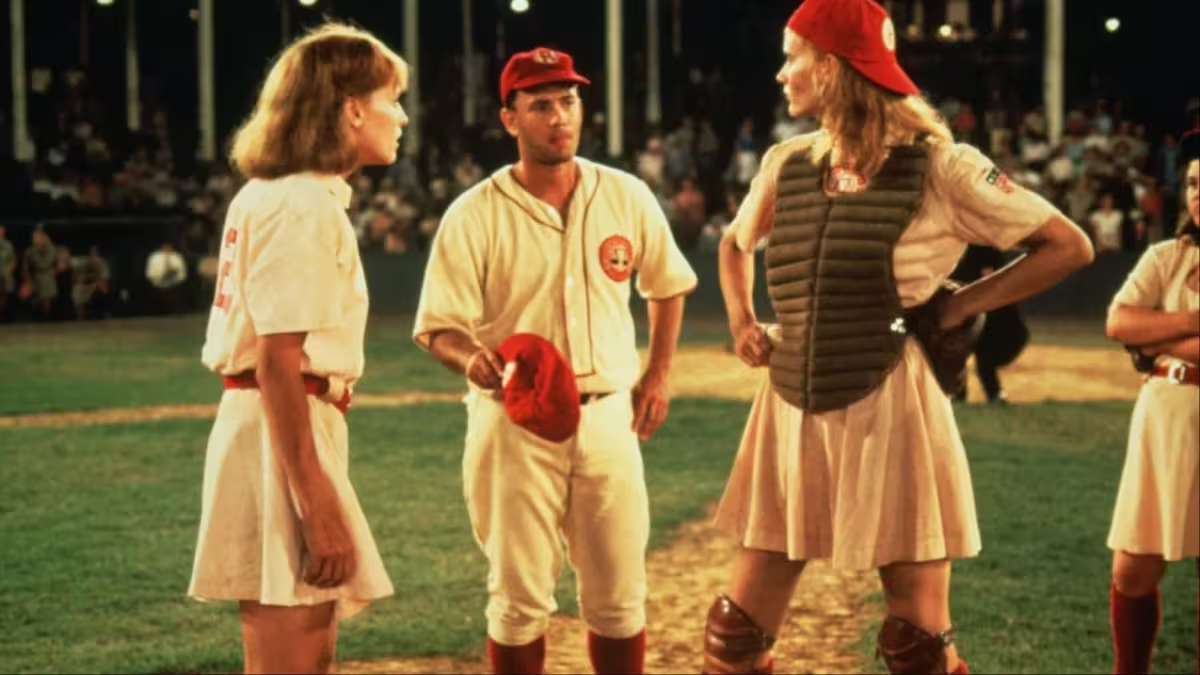
Pullman, who stars opposite Davis — she plays Renee while Alfred Molina plays Sam Cooper, a reluctant new resident — said the work on the series felt like a reunion with a colleague he has known for decades. Davis and Pullman portrayed wife and husband in 1992’s A League of Their Own; Pullman appeared toward the end of that film as Dottie Hinson’s husband Bob, a soldier who had been fighting in World War II. They also appeared together in 1988’s The Accidental Tourist, the film based on Anne Tyler’s 1985 novel.
At the center of Pullman’s memory of A League of Their Own is a detail he still uses to explain how he builds a performance. "I come into it from the war. I’ve been injured. It’s in the script that I got shot in my foot, and I was at rehearsals we had in Chicago. The DP, [Miroslav Ondříček], had a limp, and I thought ‘This is kind of interesting, you know, to be doing these scenes, and he’s kind of there watching rehearsals, and he’s limping. And then in comes Tom Hanks, and I realized he’s decided to have a limp," Pullman said. "[I thought] ‘This is a lot of limping people here, I might have to change [my performance].’" Pullman added, "My leg’s not really broken, but I’m acting it, and I just wanted to be as real as possible." "So I just stuck with watching what [Miroslav] did and mimicked that."
For Davis, the pairing felt natural: she described their history and ease as a "natural connection." The reunion in The Boroughs is therefore both an artistic echo and a deliberate casting choice: two actors who have worked together on two films now meet again in a serialized mystery that gives them a very different dynamic — she as a lead, he as a brief but pivotal neighbor.
The decision to take a television role was not always straightforward for Pullman. He recalled a period when he was wary of television because he "didn’t want to sign a five to seven year contract and not have any control of where the story goes, where my character goes, it just was so antithetical to what I trained in and what I understood to be really satisfying about beginning, middle, and end." That reluctance helps explain why his role in The Boroughs is deliberately short: "But this one, ‘Oh Jesus, sign me up.’ Really? This is a great group of people. This is a great premise, and this is the one that I [die in] and then I don’t have to do the dirty work of going on all those other episodes and writers coming up with story lines and everything," he said. "Yeah, I wanted it. So there was a little bit of loss and grief."
The tension in the casting and in Pullman’s own account is the contrast between long-form television’s usual promise of extended arcs and the actor’s appetite for a contained arc that begins and ends on the screen. Jack’s death in episode one is the literal resolution Pullman sought: it freed him from committing to years-long serial storytelling while still giving him a memorable moment that propels the series’ mystery.
Pullman said he felt a pang of awkwardness at the series premiere, "standing up there with my costars," but that awkwardness is part of the bargain he made: a short, intense role that reconnects him with Davis and the old habits of observing and mimicking small physical truths — like a limp spotted in rehearsals in Chicago — to make a performance ring true. In the end, Pullman took the part because it offered the control he had long missed: a beginning, a middle, and an end.