
Cameron Brink has spent the season answering two questions at once: can she recover from a major knee injury and can she turn flashes into consistent production for the Sparks? The latest answer arrives in numbers — over the past four games she has averaged 10 points, 3.8 rebounds and more than two blocks while playing more than 19 minutes per game.
Brink’s turnaround came after a season-opening night that left more questions than answers. She came off the bench against the Las Vegas Aces, played eight minutes, attempted zero shots and finished with three rebounds, three personal fouls and three turnovers. “We need Cam to produce,” Lynne Roberts said after that game. Roberts added that “We need Cam to bring that defensive energy. We have so much confidence and belief in her. She’s got to get out on the floor with some confidence and do what she’s capable of doing.”
The weight of those comments is real in the room and on the stat sheet. Brink was the No. 2 overall pick in the 2024 WNBA Draft and missed 13 months after tearing her ACL and meniscus 15 games into her rookie season. She was slowly re-integrated last season and played 19 games after the injury; she has played 38 career games and is already 10th all-time in blocks in Sparks history.
Her recent minutes have produced highlight plays and tangible impact. Roberts called one sequence, a block on Caitlin Clark, “That was quite the highlight.” Roberts added, “That’s what we see in practice, she’s been like that. I was just smiling. … I’m so proud of her.” Teammate Nneka Ogwumike said Brink “has really leaned into who she is” and that Brink’s self-assurance “really plays out when she’s on the court as well.”

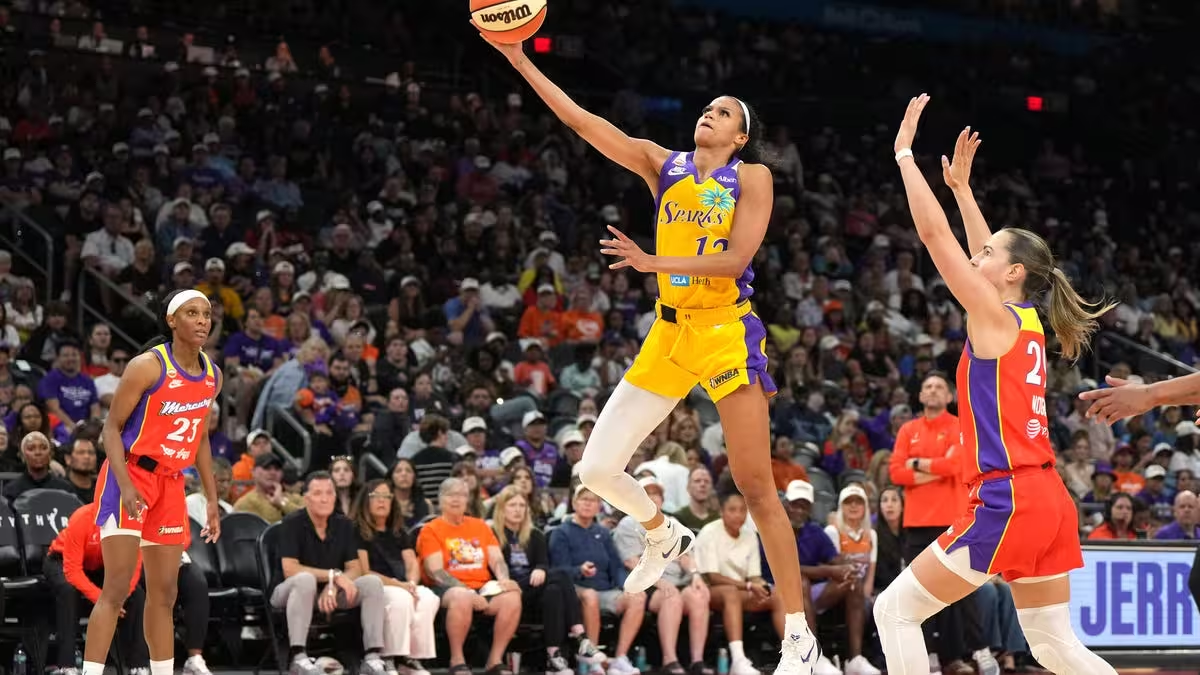
Brink has backed up the talk with performances. She scored 11 points and grabbed five rebounds in an 87-78 loss to Indiana and provided 10 points in 16 minutes during the Sparks’ victory over the Toronto Tempo. The club lists her season averages at 8.0 points and 4.6 rebounds per game.
Still, the picture is not all upward. Through the first four games Brink averaged 16.2 minutes per game and the Sparks were minus-29 points when she was on the court in that span. The gap between individual numbers and team impact frames the tension Roberts has been blunt about: she wants Brink as part of a unit. Roberts has said she wants at least two of Brink, Dearica Hamby and Nneka Ogwumike on the floor at all times. Hamby’s 27 points and 15 rebounds in Phoenix helped the Sparks beat the Mercury there; that kind of two-way presence alongside Brink is what Roberts is looking to build.
Brink is aware the margin for error is small. “My teammates aren’t gonna trust me if I don’t believe in myself,” she said. “I’ve had a slow start, but I’m putting in the work with the coaches. We watch film, shoot a little extra.” She also noted, “I definitely feel like I have an understanding for just the speed of the game, the nuances and what we’re doing. The playbook this year is much easier because it was the same as last year.”
The tension is structural as well as personal. Brink came off the bench in the season opener and — like last year — has been used as a reserve despite high expectations that come with being a top draft pick. Her recent stretch shows what she can do when given extended minutes: more than two blocks per game over the last four contests and the scoring lift that follows. Yet the minus-29 on-court differential through the first four games and the rocky season debut are reminders that production must translate to team performance.
The key question now is simple and decisive: can Brink sustain this two-way burst and convert it into the steady minutes Roberts wants next to Hamby and Ogwumike? If she does, the Sparks get a rim protector and floor spacer who can change lineups; if she doesn’t, Brink risks remaining a high-upside bench piece despite being the No. 2 pick and carrying a short but injury-marred track record. For Brink, the work is already visible — film study, extra shots, and the confidence her teammates praise — but the next step is converting that work into positive team margins on the court.