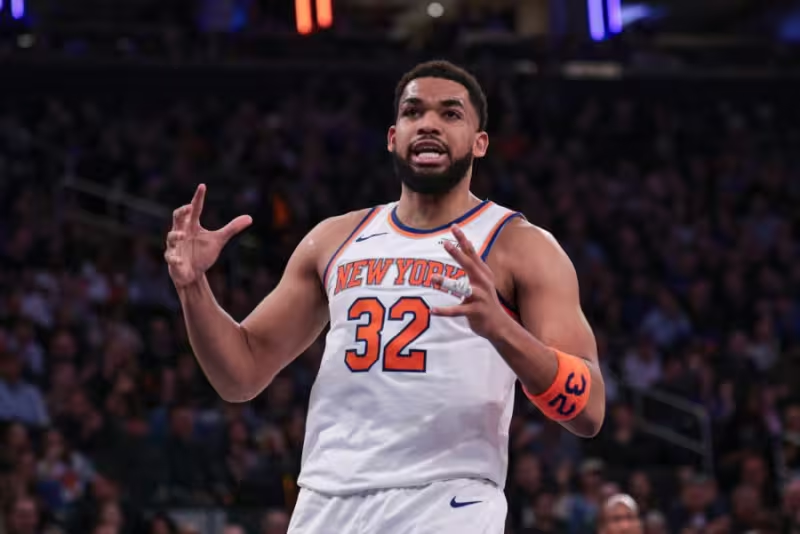
Landry Shamet played 17 minutes and made every three-point attempt he took as the New York Knicks rallied from a 22-point fourth-quarter hole to beat the Cleveland Cavaliers 115-104 in overtime on April 25, 2026.
The comeback collapsed a seemingly insurmountable lead and was bookended by Shamet’s threes: one that a Hoops Rumors article said started the rally with 7 minutes left in the fourth, another that the article said tied the game at the end of regulation, and a third that, according to the same piece, put the Knicks up by seven in overtime. Shamet finished Game 1 with nine points and one rebound, shooting a perfect 3-for-3 from long range.
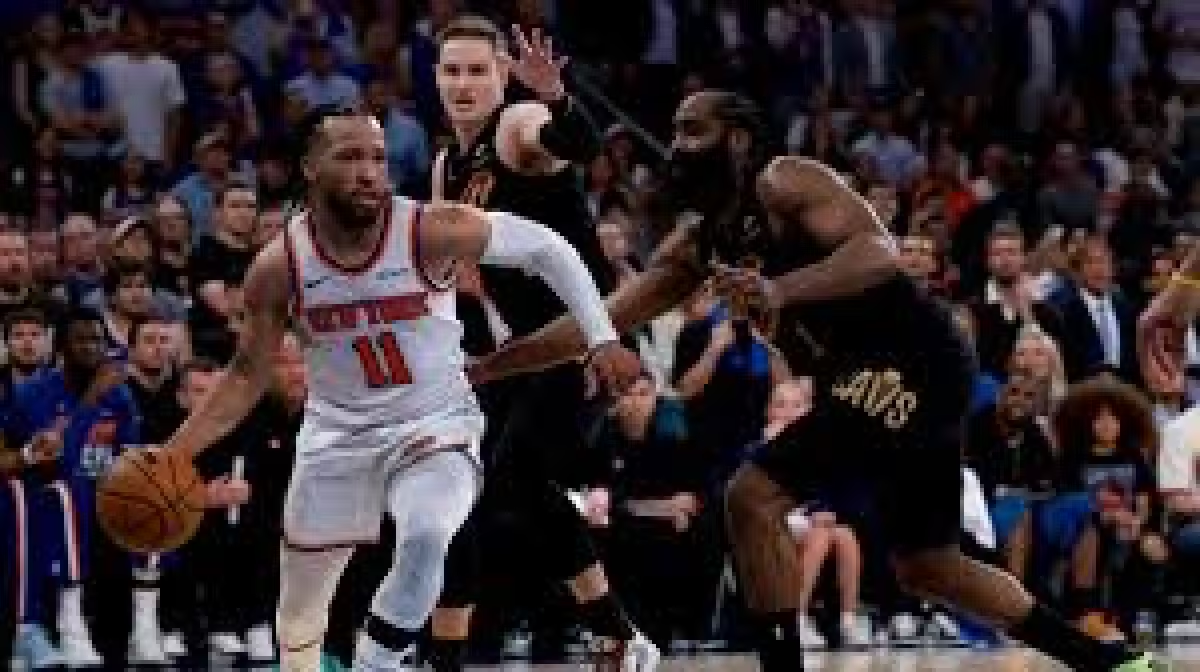
Jalen Brunson was the other force behind the win, scoring 38 points and adding six assists, five rebounds and three steals. His late scoring and playmaking pushed New York through to the overtime period and helped snatch the lead back after Cleveland’s fourth-quarter surge.
Knicks coach Mike Brown singled out Shamet after the game. "Landry Shamet was great. Landry Shamet was great on both ends of the floor. He came up big. You are not going to stop a guy like Donovan Mitchell, you just have to make him work. Landry tried like heck to make him work. He was fantastic. He was the difference in the ballgame tonight on both ends of the floor" the coach said, pointing to the veteran guard’s clean shooting and the defensive effort that disrupted Cleveland’s attack.
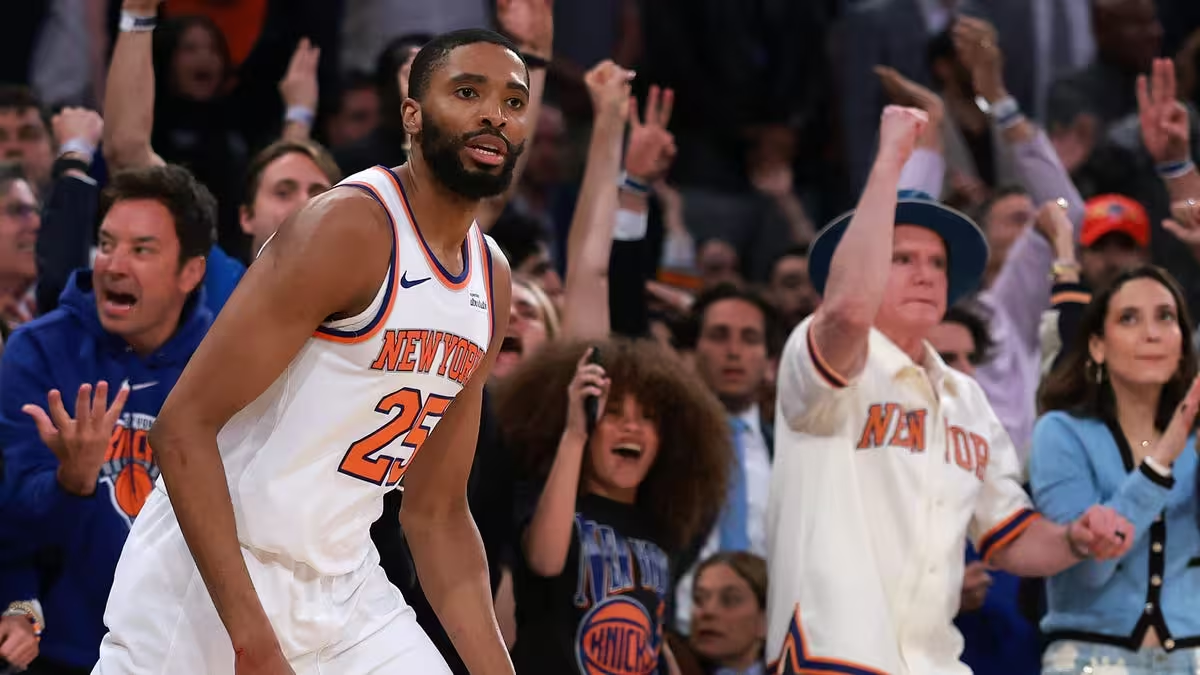
The performance and the final score — 115-104 in overtime — matter beyond one box score. The NBA described New York’s 22-point fourth-quarter comeback as the largest in a conference final game since 1997 and the second-largest in any playoff game in that stretch, a mark that underlines how rare and consequential the rally was for the series’ opener.
Context, however, complicates the simple narrative of one man’s hot night. New York had been riding a version of its offense that leaned on Karl-Anthony Towns as a point center; a supplementary article noted Towns had produced a 130.5 offensive rating across the seven games before Cleveland. In Game 1, the Cavaliers’ frontcourt of Evan Mobley and Jarrett Allen did a better job than expected at neutralizing Towns, creating the very deficit the Knicks were forced to overturn.
Towns himself pushed back against an individual-focus reading of the game. "I think the Knicks found a way to win tonight, and that’s all that matters," he said. "It’s not about the individual performances, it’s about this team finding a way to put up a win on the board. I think that’s what’s special." His remarks framed the victory as collective even as Brunson and Shamet provided the headline moments.
The tension in the story is plain: Shamet logged only 17 minutes, yet his three makes from distance and the defensive attention he provided to Donovan Mitchell became the decisive swing. How sustainable is that kind of bench production? Can New York win a series when Towns is limited by Cleveland’s interior defense and the bulk of scoring falls to Brunson and a hot-handed reserve?
For now, the judgment is straightforward. Shamet’s flawless night from deep and his two-way effort altered the game at its tightest moments and forced Cleveland into scrambles it could not recover from. If the Knicks can coax more of those one-shift, high-impact bursts out of limited minutes, they will be a far harder team for the Cavaliers to close out in the series. If they cannot, Game 1 may remain an outsize fluke rather than a template.