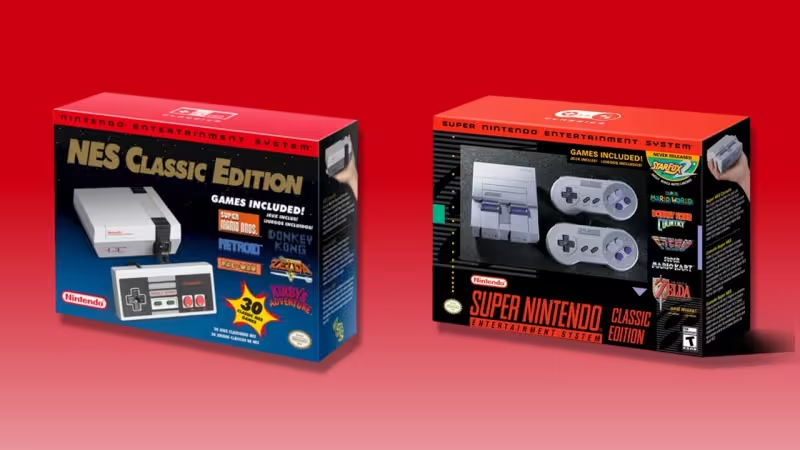
Reggie Fils-Aime says Nintendo launched the NES Classic Edition in 2016 and the SNES Classic Edition in 2017 to keep the company afloat at the end of the Wii U years.
Those two small machines arrived in two successive years and were simple by design: the NES Classic Edition packed 30 built-in games on one device, and the SNES Classic followed the next year. Fils-Aime cast the pair as a deliberate commercial move, saying, "The other thing we did is, in two successive years, we launched those micro legacy devices. If you remember those, right? The small NES and then the following year the small SNES. We did that to sustain our business because we needed something to sell at volume come the holiday season. So it was a series of commercial ideas, knowing full well that… you know, the Wii U was on life support."
The numbers behind that explanation are sharp: after its first year, the Wii U's sales saw a massive drop off, and Nintendo was not in a good spot business-wise toward the end of the console's lifecycle. With the mainstream 8GB Wii U model pulled from retailers amid weak interest and the company leaning into indie partnerships, the tiny retro boxes were a fast way to create product that customers would buy at scale for the holidays.
Context matters here: the NES and SNES Classics were launched specifically during the tail end of the Wii U era to sustain revenue. Some fans took those releases as a sign of a new strategy and hoped Nintendo would continue with mini versions of later platforms — names like N64 and Game Boy came up repeatedly — but Nintendo has not released similar devices based on the N64 or the Game Boy.
The tension in the story is simple. The micro consoles were popular and made sense as a stopgap, but they also raised customer expectations for more retro hardware that Nintendo chose not to meet. Instead of a steady line of mini releases, the company moved on: Nintendo later became successful with the Nintendo Switch, and many classic games can be played on the Nintendo Switch and Switch 2, reducing the commercial need for separate plug-and-play boxes.
The conclusion is straightforward. The NES and SNES Classics were designed and timed to buy Nintendo breathing room in a difficult moment — to produce something cheap to build, quick to ship, and easy for consumers to buy in holiday volumes — and they did precisely that. By the time the Switch arrived and became a commercial recovery, the strategy that produced those tiny consoles had served its purpose: they sustained sales during the Wii U slump and helped bridge the company to the era where legacy games are largely accessed through current hardware rather than a parade of mini retro systems.