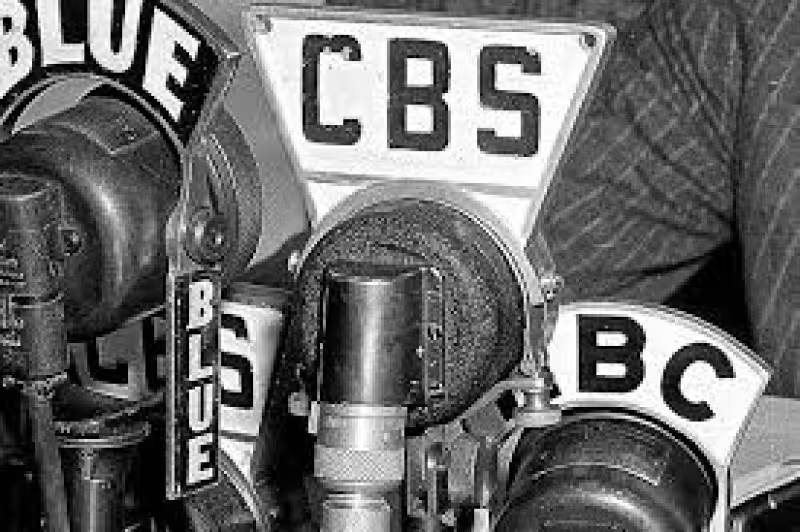
CBS News Radio signed off the air Friday night after nearly a century of broadcasting, ending a service that sent news to an estimated 700 stations across the United States. The final reports marked the close of a run that began in September 1927 and helped define radio news for generations of listeners.
For the people who grew up with it, the loss felt personal. Steve Kathan, a longtime voice associated with the service, said, “It's been around for a long time. Really, an American institution is what we're losing here,” a line that captured how deeply the network was woven into daily life long before on-demand audio and streaming feeds became routine.
CBS announced in March that it would shut down its radio news service, citing financial troubles and what it described as challenging economic realities. The decision came as the company pointed toward a broader shift to digital reporting, a change that has been reshaping how audiences get news and how broadcasters pay for it.
The service’s final night also drew a retrospective look back at what CBS News Radio meant in American journalism. Its signature broadcast, World News Roundup, remains the longest-running newscast in the country. The network said the program and the service itself “served as the foundation for everything we have built since 1927,” underscoring how much of CBS’s identity grew out of the radio operation.
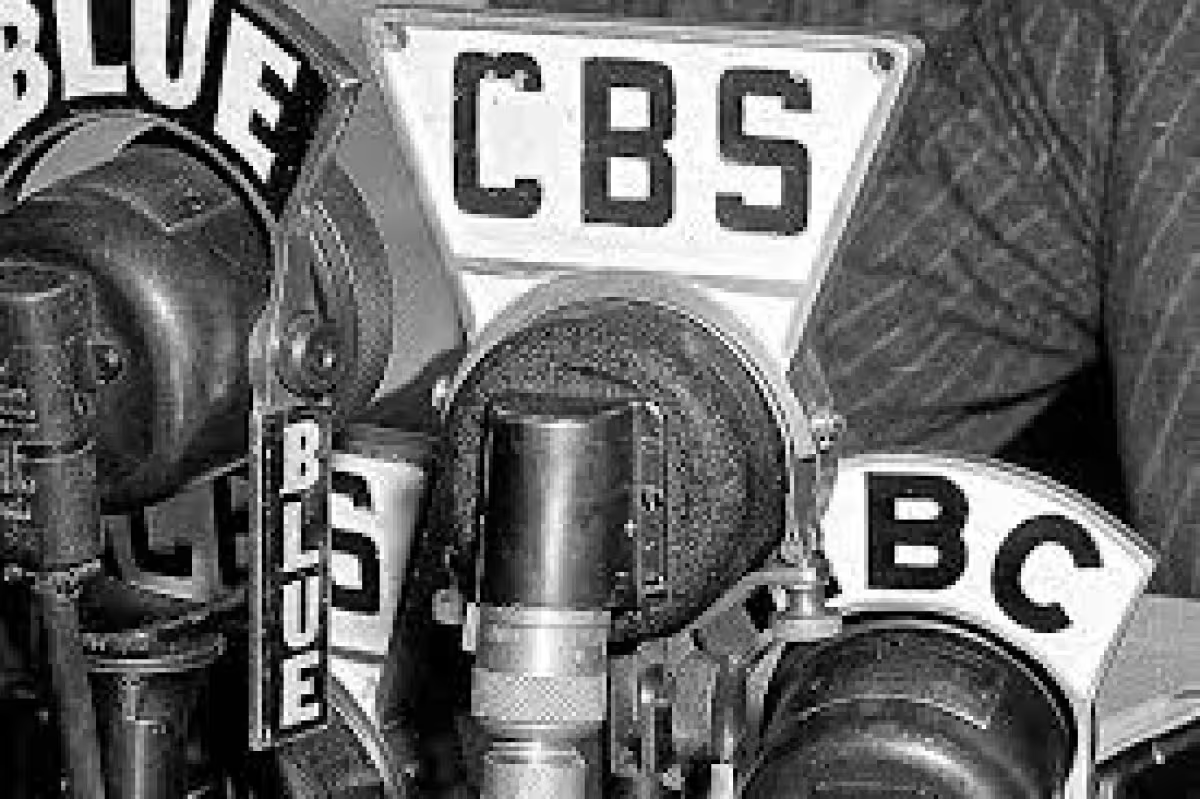
That legacy was built in the thick of history. CBS News Radio first hit the airwaves seven years after what is widely recognized as the first commercial radio broadcast, and over the decades it carried coverage of Pearl Harbor, D-Day, Queen Elizabeth II’s coronation, the Cuban missile crisis, the New York City blackout of 1977, the Gulf War, the 9/11 terrorist attacks and the 2003 Space Shuttle Columbia disaster. Its reach was amplified by the voices attached to it, including Edward R. Murrow, Robert Trout, Douglas Edwards, Charles Osgood and Dan Rather.
Murrow became one of the service’s defining figures after his voice was first heard on air in 1938. He later delivered rooftop reports from London during World War II and from the Buchenwald concentration camp after the Germans had fled. In one of his early broadcasts, he told listeners from Vienna, “I'm not searching for adjectives to make this sound dramatic, I'm just telling you what I've seen.”
The service also captured moments that became part of American popular memory. The first broadcast of baseball’s World Series could be heard on CBS News Radio in 1938, and the network aired an interview with Babe Ruth a year later. Allison Keyes later described her own work on 9/11 from Lower Manhattan by saying, “People needed to know what was going on that day, in real time, no filter, no politics. Here's what's happening.”
Dan Rather said CBS Radio should be remembered for becoming “a national institution very important to the development of news other than newspapers,” adding that it was “a part, and I would argue not a small part, of what held the country together.” That is the scale of what ended Friday: not just a feed to 700 stations, but a piece of the country’s broadcast memory, retiring because the economics no longer supported it.
The final reports aired Friday night, and WTOP said the service also offered a retrospective program titled Good Night and Good Luck. The question now is not whether CBS News Radio mattered; the record already answers that. The question is how many other pieces of legacy broadcast news can survive once the math no longer works.