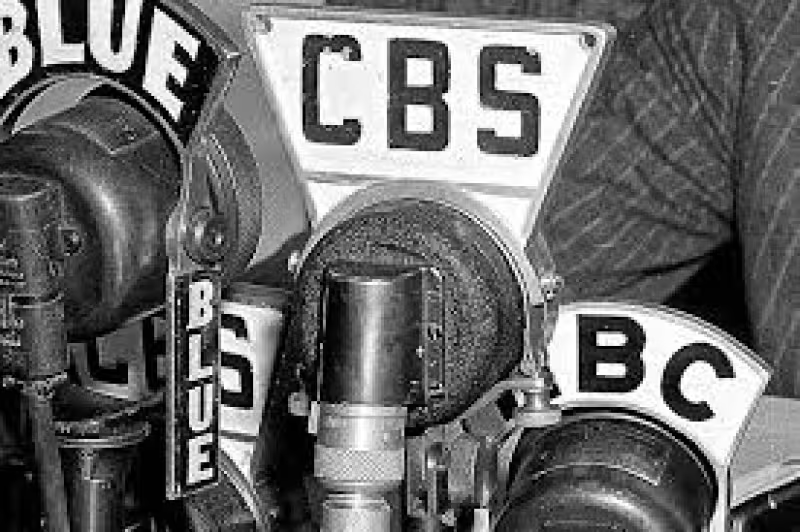
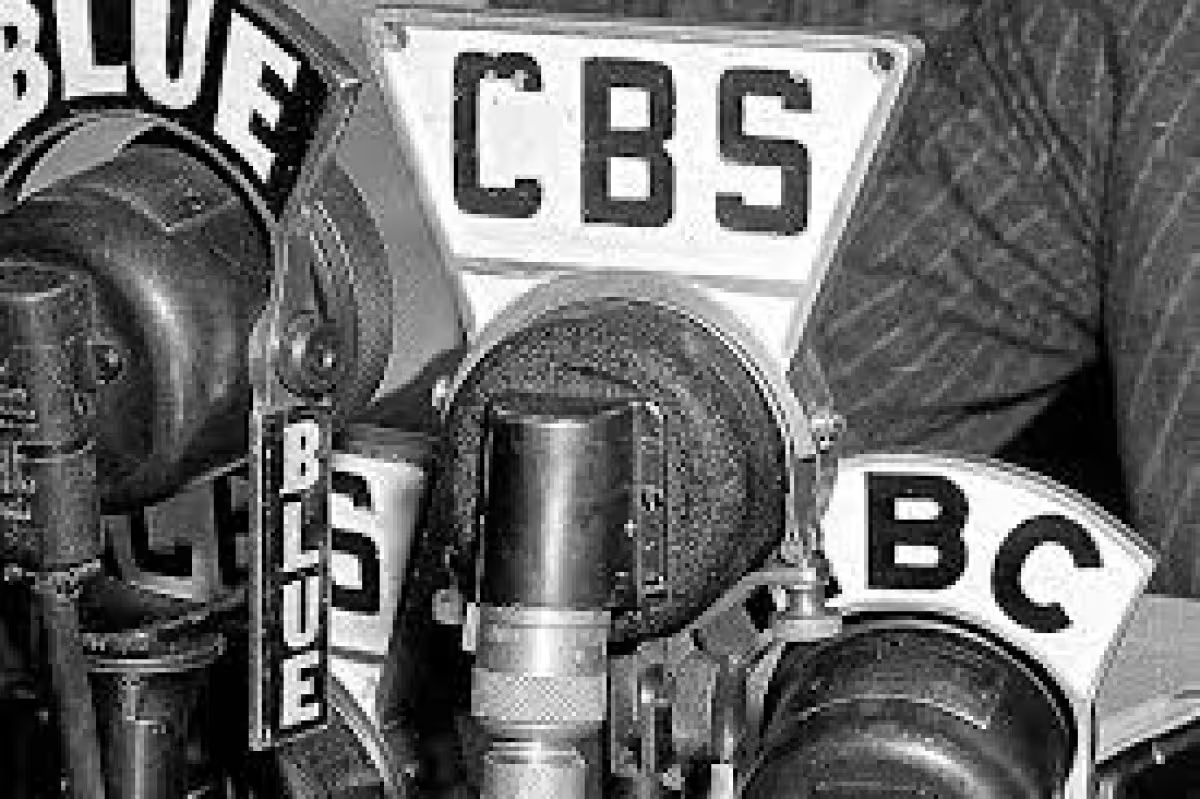
CBS News Radio signed off the air on Friday night, ending nearly 100 years of broadcasts that once carried breaking news, war reports and the voices of some of the most familiar names in American radio.
The service, which reached an estimated 700 stations across the United States, closed with a final report and a retrospective program, Good Night and Good Luck. Its shutdown, announced in March, came after CBS cited financial troubles and challenging economic realities.
For listeners and broadcasters, the loss is more than the disappearance of a feed. CBS News Radio launched in September 1927 and became home to Edward R. Murrow, Robert Trout, Douglas Edwards, Charles Osgood, Dan Rather and others whose work helped define radio news. Its signature broadcast, World News Roundup, remains the longest-running newscast in the country, a rare survivor from an era when network radio still set the national pace.
The service also carried some of the country’s most defining moments. It covered the attack on Pearl Harbor, the D-Day invasion, Queen Elizabeth II’s coronation, the 1962 Cuban missile crisis, the New York City blackout of 1977, the Gulf War, the 9/11 terrorist attacks and the 2003 Space Shuttle Columbia disaster. The first broadcast of baseball’s World Series was heard on CBS News Radio in 1938, and the network aired an interview with Babe Ruth in 1939.
Dan Rather, who once anchored for CBS, said the network should be remembered as a national institution that mattered to the development of news beyond newspapers, and he argued that it helped hold the country together for many years. Steve Kathan, another voice associated with the service, called it an American institution and said that is what is being lost.
That sense of history was built one bulletin at a time. Edward R. Murrow’s voice was first heard on air in 1938, and his London reports during the Blitz and later accounts from Buchenwald after the Germans had fled became part of radio’s moral authority. In a retrospective, Murrow was heard saying he was not searching for adjectives to make the moment dramatic and was simply telling listeners what he had seen.
The final night also put the service’s most recent work in the same frame. Allison Keyes, who covered the news from Lower Manhattan on 9/11, said people needed to know what was happening in real time, without filter or politics. That was the promise CBS News Radio made for decades, and the reason its shutdown lands as more than a corporate cut.
The question now is not whether the service mattered. Friday night answered that. What remains is how many of the habits it helped create — the live reporting, the national relay, the idea that a voice on the radio could bind a country together — can survive in the places it leaves behind.